Safran, one of Europe's largest aerospace suppliers, raised its full-year profit target on Tuesday after a stronger-than-expected first half. The company now expects full-year operating profit of €6.4 billion to €6.5 billion, up from its previous forecast, after its operating margin hit a record 18.4% in the first six months of the year.
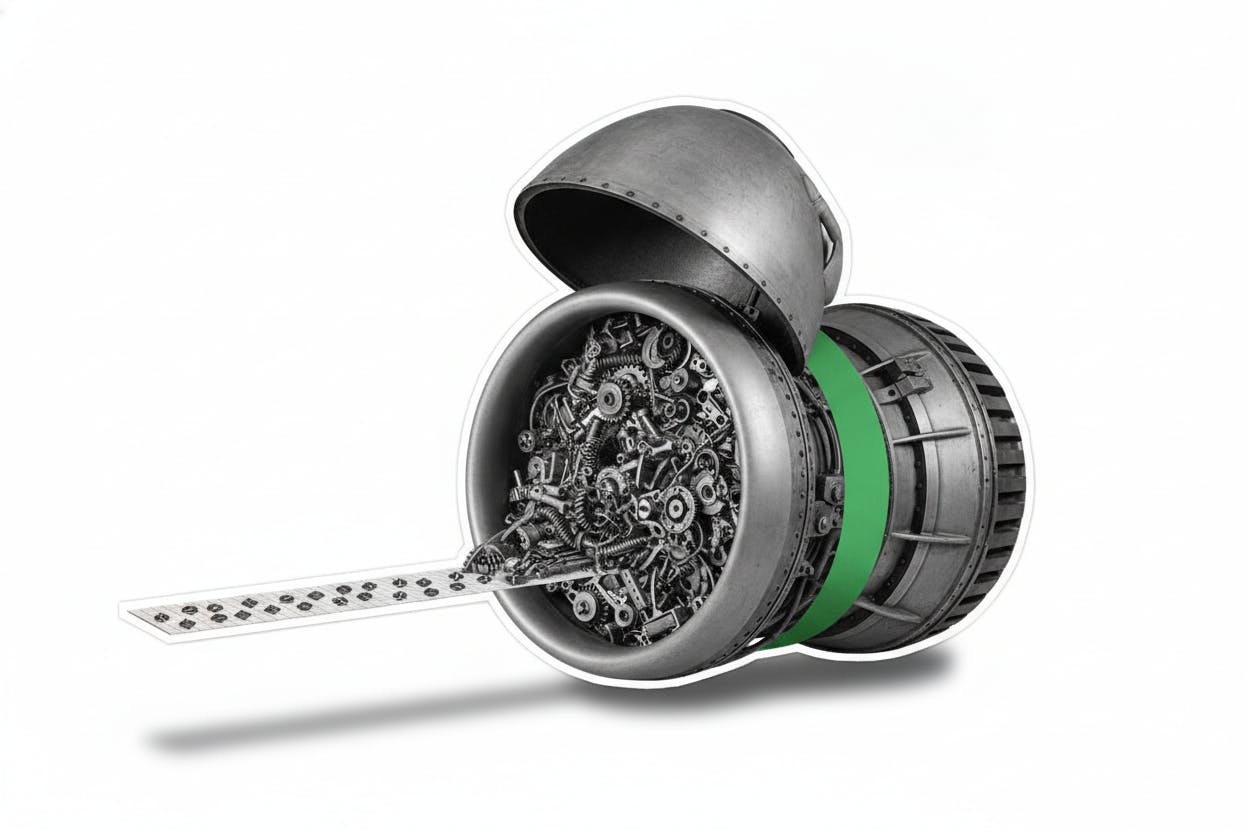
The better-than-expected performance was driven by strong demand for spare parts for civil jet engines. Safran makes money two ways: selling new engines and then servicing them for decades. The second part is often the better business, because spare parts and shop visits typically carry higher margins than building and shipping new engines.
Why spare parts matter more than new engines
Safran's earnings are closely tied to how much planes fly, rather than how many new planes are delivered. When airlines fly more, they need more replacement parts and more frequent engine overhauls. That means Safran's aftermarket business tends to be more stable and profitable than its original equipment sales.
The company's record margin reflects this dynamic. While new engine sales can be lumpy and depend on delivery schedules from planemakers like Airbus and Boeing, the aftermarket business is driven by the global fleet of planes already in service. As air travel continues to recover and grow, demand for spare parts has remained strong.
This is a pattern seen across the aerospace industry. Companies like West Pharmaceutical and Compass Group have also benefited from steady demand for their high-margin consumables and services, even as broader economic conditions shift.
What this means for investors
For everyday investors, Safran's update highlights the importance of understanding a company's business model. Not all revenue is created equal. A company that earns a significant portion of its income from recurring, high-margin services — like spare parts and maintenance — may be more resilient than one that relies heavily on one-off sales of big-ticket items.
Safran's record margin also suggests that the company is managing costs well and benefiting from pricing power in its aftermarket business. When a company can raise prices on spare parts without losing customers, it often signals strong demand and limited competition.
However, investors should also be aware of risks. The aerospace industry is cyclical and sensitive to economic downturns. If air travel slows, demand for spare parts could decline. Additionally, supply chain disruptions or labor shortages could affect Safran's ability to meet demand.
Other companies have recently lifted their outlooks as well. Cadence Design Systems raised its forecast on strong demand for AI chip design tools, while Welltower boosted its outlook as senior housing occupancy climbed. These updates show that companies in different sectors are finding ways to grow even in a mixed economic environment.
Looking ahead
Safran's new profit target of €6.4-6.5 billion is a clear signal that management expects the strong aftermarket demand to continue. Investors will be watching for updates on engine delivery schedules, airline flight data, and any signs of a slowdown in air travel.
The company's next earnings report will provide more detail on whether the record margin is sustainable or a one-time boost. For now, Safran's performance underscores the value of aftermarket services in the aerospace industry — and why investors pay close attention to companies with strong recurring revenue streams.