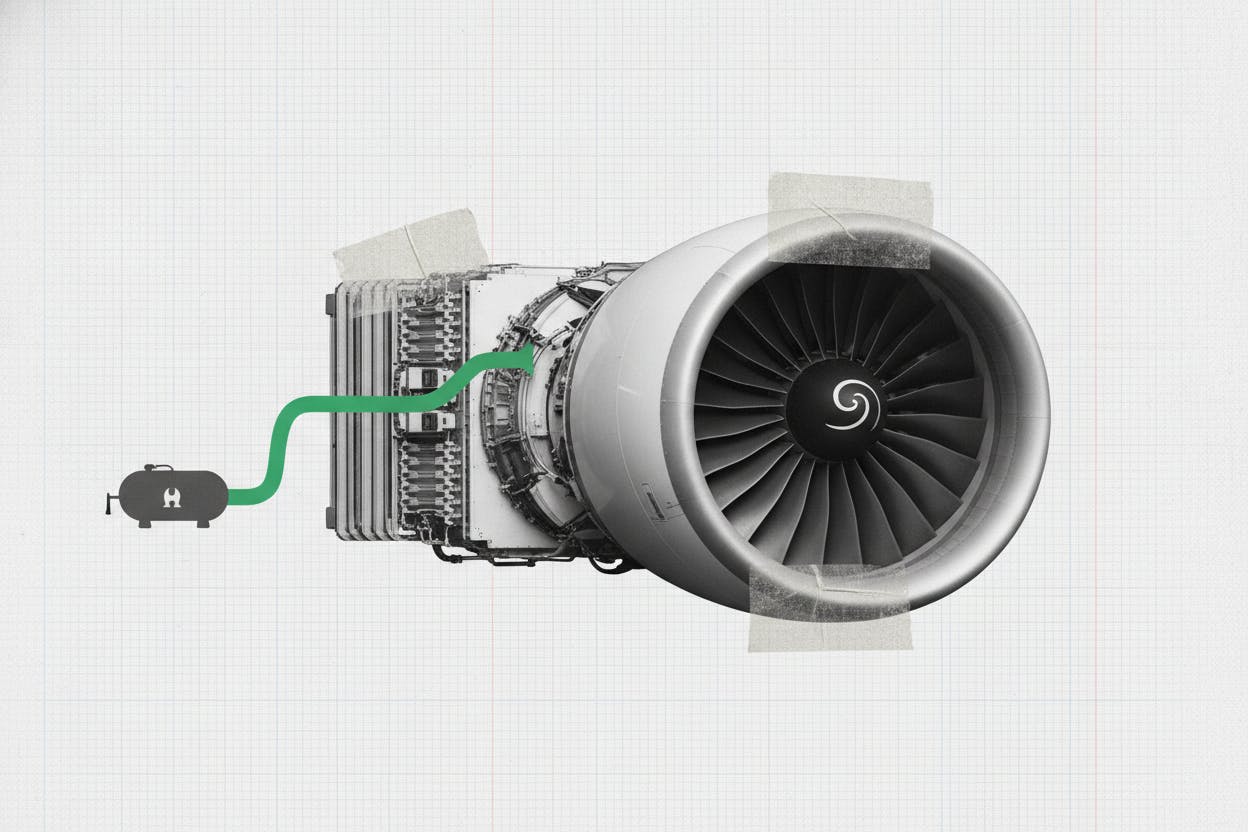
Two of Europe's biggest aerospace names are teaming up to push aviation beyond traditional jet fuel. Airbus and MTU Aero Engines, a German jet-engine maker, announced plans to form a joint venture in 2027 to develop and sell a fully electric hydrogen fuel-cell aircraft engine. The move signals a strategic bet on hydrogen as a long-term power source for planes, rather than incremental improvements to today's gas-burning turbines.
What the partnership involves
Hydrogen fuel cells work by converting hydrogen gas into electricity through a chemical reaction, with water vapor as the only byproduct. That makes them a zero-emission power source during flight, a key goal for an industry under pressure to cut its carbon footprint. Airbus and MTU say the joint venture will handle both development and sales, creating a dedicated entity to push the technology from the lab toward commercial reality.
Structuring the effort as a joint venture matters for several reasons. It gives the project its own governance, funding plan, and intellectual property framework, which helps both companies share the technical risk and development costs. It also creates a clearer path to commercialization, since the venture will be responsible for selling the engine, not just designing it. For investors, that means the program won't be buried inside broader corporate budgets—it will have its own targets and spending discipline.
The 2027 date is about forming the vehicle, not putting an engine on a wing. Certification and production are still years away, but the timeline gives the market a concrete checkpoint to watch. This approach is similar to other aerospace joint ventures, such as the Carlsberg and Sapporo joint venture in Southeast Asia, where a separate entity helps focus resources and accountability.
What it means for investors
For shareholders in Airbus and MTU, the joint venture shifts the story from distant revenue hopes to a series of nearer milestones. Instead of waiting for sales that won't materialize for years, investors can track progress on testing, certification planning, and manufacturing readiness. That changes how the market evaluates the program.
Joint ventures tend to ringfence risky projects, meaning the hydrogen engine effort will have its own budget and decision-making. That often leads investors to judge the venture less on early revenue—there won't be much—and more on whether spending stays disciplined and technical goals are met. For Airbus and MTU, that puts the spotlight on research and development intensity and capital spending. If interim milestones look credible, the market may be more willing to tolerate near-term losses without punishing the parent companies' margins or cash flow.
The broader context is that aviation is under pressure to decarbonize, and hydrogen is one of the leading candidates for long-haul, zero-emission flight. Airbus has been exploring hydrogen concepts for years, and MTU brings deep expertise in engine design and manufacturing. The joint venture formalizes that collaboration and gives it a commercial structure.
For everyday investors, the key takeaway is that this is a long-term bet. Hydrogen fuel-cell aviation is still in its early stages, and the technology faces significant hurdles around hydrogen production, storage, and airport infrastructure. But the joint venture creates a clearer framework for tracking progress, which can help investors assess whether the program is on track or running into trouble.
Airbus has been ramping up its delivery pace recently, as noted in analyst reports boosting 2026 forecasts, and the company's strong commercial jet business provides the financial firepower to fund long-term projects like this. MTU, meanwhile, is a key player in engine maintenance and manufacturing, and the joint venture could open a new revenue stream if hydrogen technology takes off.
Investors should watch for updates on testing milestones, certification timelines, and any cost-sharing agreements with airlines or regulators. The joint venture's governance structure and funding plan will also be important to monitor, as they will determine how much financial risk each parent company bears.
In the near term, the announcement is a statement of intent rather than a revenue event. But for those following the clean aviation space, it provides a concrete milestone to track—and a reminder that the shift to hydrogen is moving from concept to commercialization, even if the finish line is still far off.