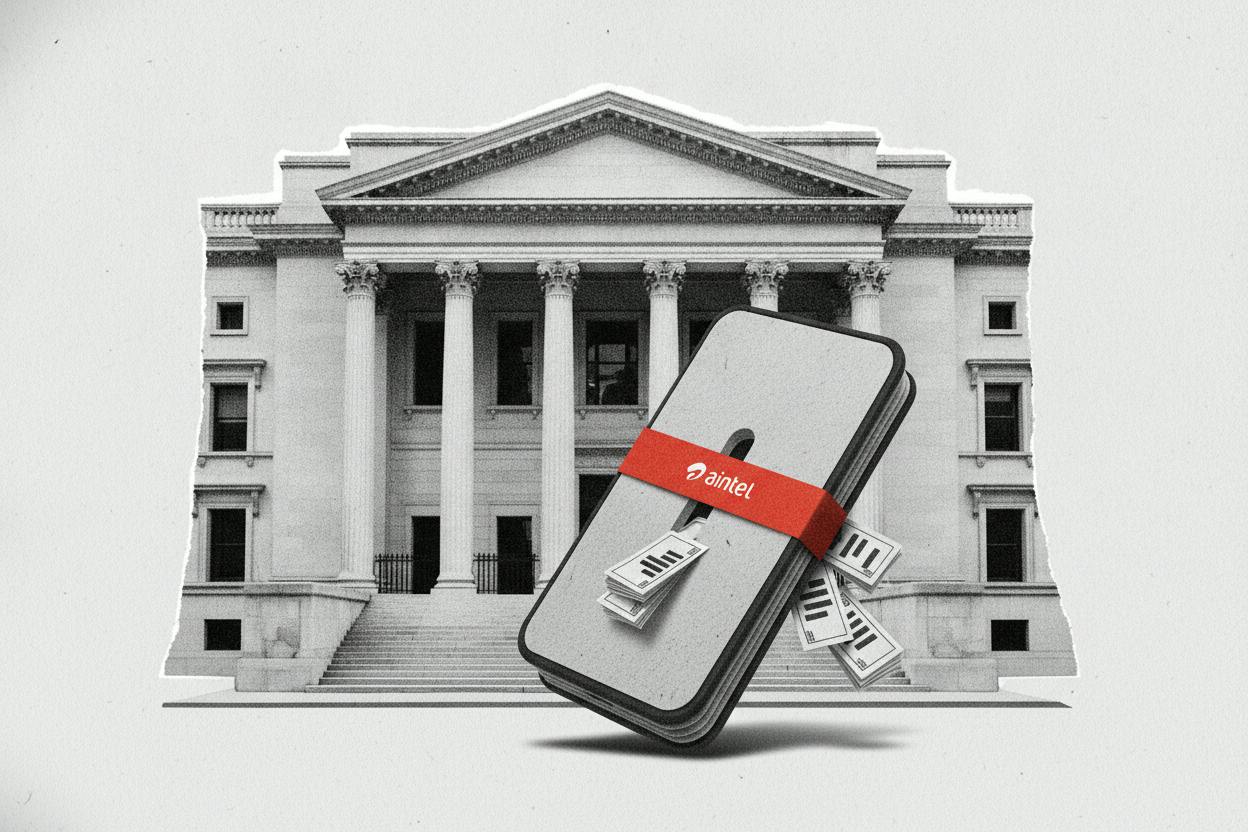
Airtel Africa is preparing to list its mobile money business, Airtel Money, on the London Stock Exchange, according to a report in the Financial Times. The unit could seek a valuation of between $8 billion and $9 billion while raising at least $800 million from investors, the report said. If completed, the deal would rank among the larger London listings in recent years and would give public-market investors a rare direct stake in one of Africa's biggest mobile payments networks.
For everyday investors, the headline number matters less than what it signals: a major African fintech is choosing London to raise growth capital, at a time when the UK market has struggled to attract large new listings. That makes the Airtel Money deal a test case for both the company and the exchange.
What exactly is Airtel Money?
Airtel Money is the mobile money arm of Airtel Africa, a telecoms group operating across more than a dozen African countries. Mobile money works like a bank account that lives on a phone: users load cash into a digital wallet through a local agent, then send, receive and store money, pay bills, or buy airtime. In many markets where traditional bank branches are scarce, these wallets have become the primary way people handle money.
The business model is straightforward. Airtel Money earns a small fee on transactions, cash withdrawals and deposits, and increasingly on adjacent services such as micro-loans, savings and merchant payments. Because the service rides on Airtel's existing telecom network, the incremental cost of adding a user is relatively low, which is why mobile money operators can generate high margins as they scale.
This is not a niche product. Mobile money has become core financial infrastructure in parts of Africa, and Airtel competes with other telecom-led wallets as well as newer digital banks. The unit's growth has been one of the main reasons investors have paid attention to Airtel Africa's shares in recent years.
Why London, and why now?
London has long been a preferred venue for African companies seeking international investors, thanks to its time zone, deep pool of emerging-market funds and experienced listing infrastructure. But the UK market has had a quiet stretch for new issues, with several high-profile companies choosing New York instead. A successful Airtel Money float would be a meaningful win for the London Stock Exchange, which has been working to rebuild its pipeline of large listings.
The timing also reflects a broader thaw in IPO markets. After a prolonged freeze driven by higher interest rates and volatile equity markets, issuers have been testing investor appetite again. Airtel Money's parent has reportedly been weighing a listing for some time, and the FT's report suggests the process is now at an advanced stage. Note that IPO plans can change: valuations, deal sizes and even the choice of exchange are often revised during the marketing process as bankers gauge demand.
There is also a sector angle. Fintech listings have been mixed in recent years, with some high-profile names trading below their offer prices after listing. Investors are likely to scrutinise Airtel Money's growth rate, transaction volumes, regulatory exposure across multiple countries and the competitive threat from banks and other wallets. The reported $800 million-plus raise would give the unit capital to invest in technology, expand into new markets and deepen its lending and merchant offerings.
What it means for investors
For ordinary investors, the key question is what a listing would actually put on the table. A float of this size would likely attract institutional demand first, with retail investors potentially getting access through the offering or, more likely, buying shares once they trade on the secondary market. That means the practical decision point comes after the IPO, when the shares have a public price and the company has published detailed financial disclosures.
Several things are worth watching:
- The final valuation. An $8-9 billion price tag would be a substantial multiple for a mobile money business. Whether investors accept it will depend on growth and profitability metrics disclosed in the prospectus.
- The use of proceeds. If the money funds expansion and lending, it could accelerate growth but also add credit risk. If it mostly pays down parent-company debt, the growth story is less direct.
- Regulatory spread. Airtel Money operates across many countries, each with its own central bank rules for mobile money. That diversification is a strength, but it also means multiple layers of compliance and currency risk.
- The London market backdrop. A strong debut could encourage other African and fintech issuers to follow, while a weak one would reinforce the challenges facing the LSE.
It is also worth remembering that parent company Airtel Africa would likely retain a majority stake after the float, meaning public shareholders would own a minority of the unit. That structure is common in carve-out IPOs, but it can affect how much influence new investors have over strategy and capital allocation.
For now, the story is one to track rather than act on. IPO details such as the final price range, the exact number of shares sold and the listing date are typically confirmed only in the weeks before trading begins. Investors who follow African markets or the fintech sector will want to read the prospectus carefully when it lands, and compare Airtel Money's economics with those of listed peers before deciding whether the valuation leaves room for upside.
The broader takeaway is that Africa's mobile money industry is maturing to the point where its largest players can access global public markets. That is a milestone for the sector, and it gives investors outside the continent a new way to participate in a payments market that has grown far beyond simple airtime top-ups.