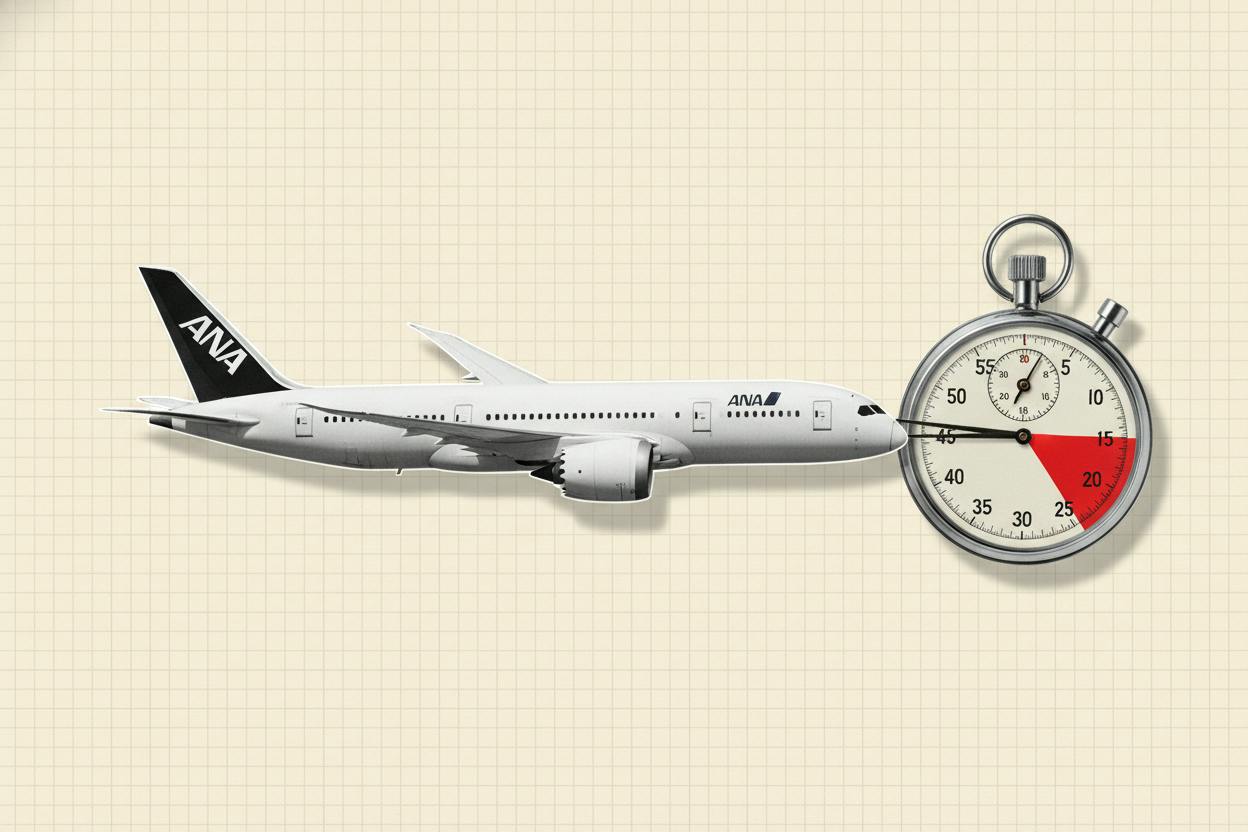
Japan's largest airline group, All Nippon Airways (ANA), has taken the first formal step toward acquiring RegionalPlus Wings, the holding company that owns regional carriers AIRDO and Solaseed Air. The move, announced as a non-binding memorandum of understanding, sets a target of completing a share exchange on April 1, 2027.
The deal is not final yet. ANA and RegionalPlus Wings plan to work toward a definitive agreement by late December 2026. If all goes as planned, the two regional airlines would become part of the ANA Group, though their brands and local route networks are expected to remain intact.
Why ANA wants the regional carriers
ANA's stated rationale is scale. By bringing AIRDO and Solaseed Air under its umbrella, the group can integrate their scheduling, sales, pricing, and purchasing into its larger operation. That could help the regional carriers cut costs and improve efficiency, while preserving their role in serving smaller communities across Japan.
AIRDO is based in Hokkaido, Japan's northernmost main island, and focuses on routes connecting Sapporo with other domestic cities. Solaseed Air operates primarily in the Kyushu region in the south, linking regional airports with major hubs. Both are relatively small players in a domestic market dominated by ANA and Japan Airlines (JAL).
The timing of the announcement is closely tied to regulatory changes in Japan. In May, the government relaxed rules that had previously limited large airlines from investing in certain existing carriers. That deregulation opened the door for consolidation, and ANA is now moving to take advantage of it.
What the deal means for the Japanese airline market
If completed, the acquisition would strengthen ANA's already dominant position in Japan's domestic air travel market. It would also reduce the number of independent regional carriers, a trend that has been accelerating as smaller airlines struggle with rising costs and a shortage of pilots.
For passengers, the immediate impact is likely to be minimal. The brands are expected to remain, and ANA has said it wants to preserve the local route networks and community ties that AIRDO and Solaseed Air have built. Over time, however, travelers might see more integrated schedules and shared loyalty programs, as ANA folds the carriers into its broader network.
The deal also fits a broader pattern in Japan, where consolidation is reshaping several industries. In banking, for example, regional lenders have been merging to cope with low interest rates and a shrinking population. In retail, convenience store chains are facing pressure from discount competitors. Airlines are now part of that same story.
What it means for investors
For investors, the key takeaway is that ANA is betting on consolidation to drive long-term efficiency gains. The company has not disclosed financial terms, so it is too early to assess the price or the potential impact on ANA's balance sheet. But the move signals that ANA sees value in absorbing smaller rivals rather than competing with them.
Investors should also watch how the deal is structured. A share exchange means that RegionalPlus Wings shareholders would receive ANA shares in exchange for their stakes. That could dilute existing ANA shareholders, depending on the terms. The final agreement, expected by late December 2026, will provide more clarity.
There is also regulatory risk. While Japan's May deregulation made this deal possible, competition authorities could still scrutinize the acquisition if it gives ANA too much control over domestic routes. Similar deals in other countries have faced conditions, such as requiring the sale of certain slots or routes.
For now, the announcement is a signal of intent rather than a done deal. Investors should treat it as a development to monitor, not a reason to rush into a position. The airline industry is capital-intensive and sensitive to fuel prices, economic cycles, and travel demand, so any acquisition carries risks as well as potential rewards.
ANA's move also highlights the broader trend of consolidation in Japan's transport sector. As the population ages and domestic travel demand matures, airlines are looking for ways to cut costs and improve efficiency. Buying regional carriers is one way to do that, but it is not without challenges. Integrating different corporate cultures, IT systems, and labor agreements can be difficult, and the benefits may take years to show up in the bottom line.
Investors with exposure to ANA or to Japanese airline stocks generally should keep an eye on the progress of this deal. The next major milestone is the definitive agreement, which will likely include more details on pricing and structure. Until then, the clock is ticking, but the outcome is far from certain.