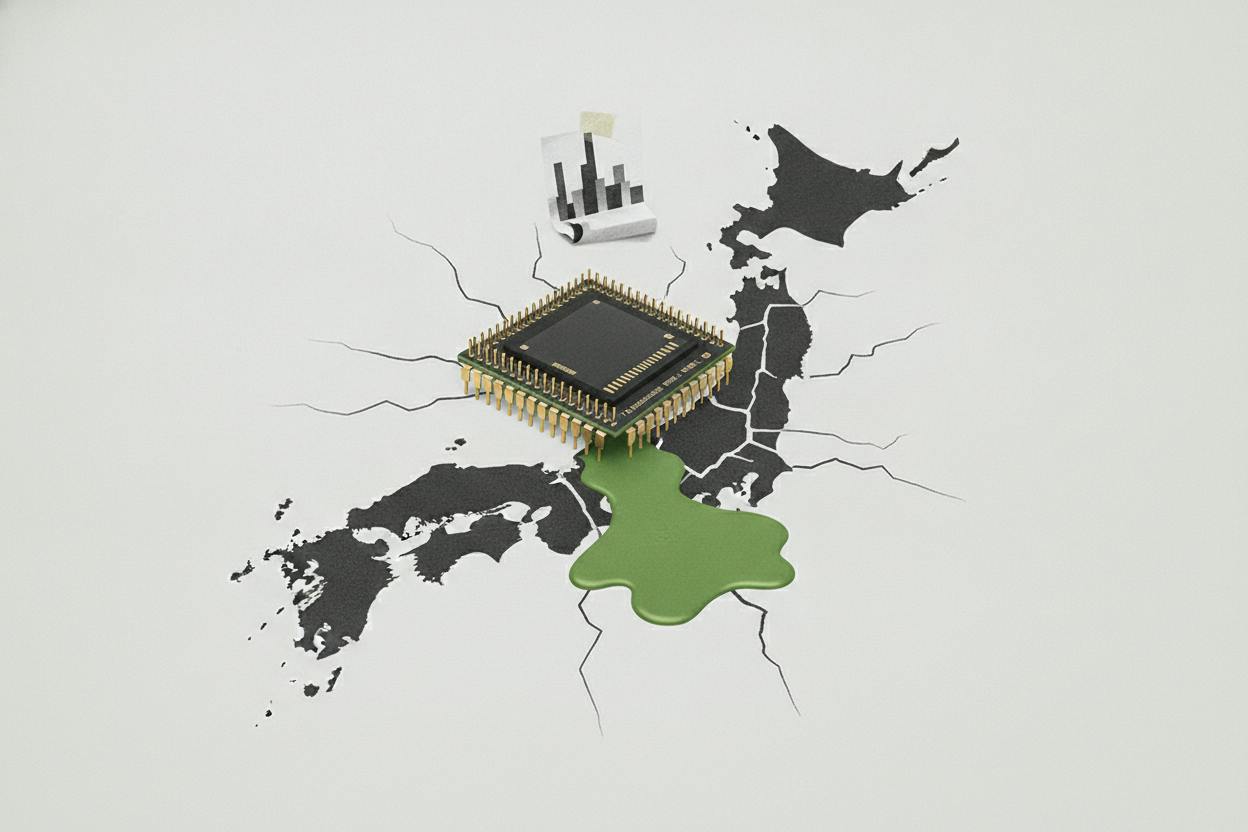
Japan's benchmark Nikkei 225 fell about 3% on Friday, led by a sharp selloff in semiconductor and artificial-intelligence-linked shares, after late results from Amazon and Intel renewed concerns that the AI boom is consuming enormous amounts of cash.
Tokyo stocks opened lower after a weak session on Wall Street and extended losses as investors digested the two US updates. Reuters reported that the results highlighted heavy spending and "massive cash burns," dragging down US AI and chip peers in after-hours trading and spilling into Japan's technology-heavy market.
Among the hardest hit were chip-equipment makers Advantest and Tokyo Electron, which fell 9.1% and 5.6% respectively, with other AI-adjacent names also under pressure.
Why AI spending is suddenly under the microscope
The AI trade has been one of the most powerful market themes in recent years. Companies that make the chips, servers and data-center equipment powering AI models have seen their valuations soar as investors bet on years of explosive growth.
But that growth comes with a hefty price tag. Building and running AI systems requires vast amounts of computing power, which in turn demands expensive semiconductors, networking gear and energy-hungry data centers. Amazon, through its cloud division AWS, and Intel are both spending heavily to compete in this space.
When quarterly updates show that spending is rising faster than the revenue it generates, investors start to question whether the returns will justify the outlay. That is essentially what happened here: the market read the Amazon and Intel numbers as a sign that the AI investment cycle may be more cash-intensive — and slower to pay off — than previously assumed.
This is not the first time AI spending has rattled markets. Similar concerns have flared before, particularly when major technology companies reported earnings that showed capital expenditure climbing sharply. Each time, the debate returns to the same question: is this a durable, profitable build-out, or an arms race that erodes margins?
Japan's market is especially sensitive to chip news
Japan's equity market has become a key barometer for the global chip cycle. Companies like Advantest, which makes testing equipment for semiconductors, and Tokyo Electron, a major supplier of chip-making tools, are deeply tied to the fortunes of global chipmakers.
When US chip and AI stocks wobble, Japanese suppliers often feel the impact the next trading day, because their order books depend on the same capital-spending budgets that US giants control. That linkage explains why a 3% drop in the Nikkei can be driven by news that originated thousands of miles away on Wall Street.
The selloff also reflects how crowded the AI trade has become. When a large number of investors hold the same positions, any hint of disappointment can trigger outsized moves as they rush to reduce exposure.
The Bank of Japan is the other thing on investors' minds
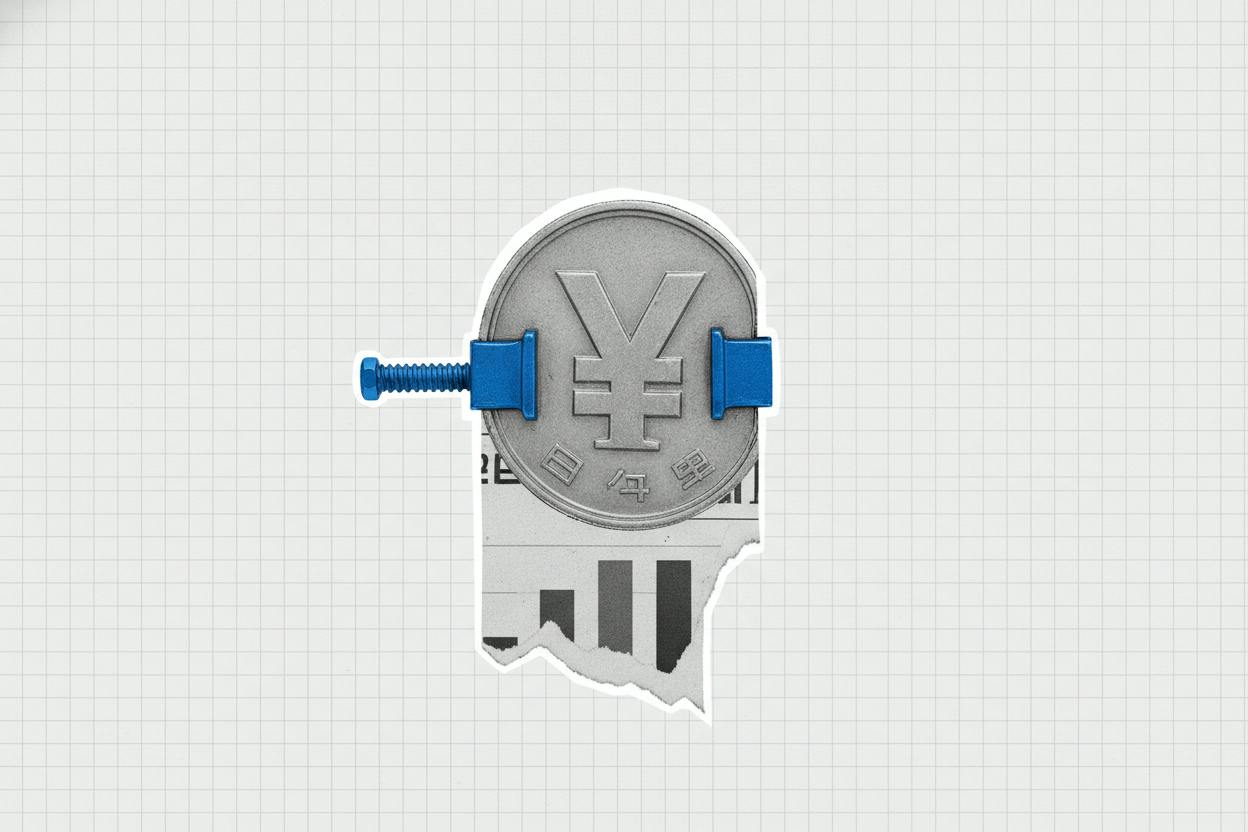
Adding to the cautious mood, investors are watching the Bank of Japan for signals on whether it might raise interest rates in December. Japan has kept borrowing costs ultra-low for years, a policy that has supported stocks and weakened the yen.
Any hint that the BOJ is preparing to tighten would be significant. Higher Japanese rates would strengthen the yen, which tends to weigh on exporters and can make Japanese assets less attractive to foreign investors who had benefited from cheap funding. It would also mark another step away from the era of ultra-loose monetary policy that has shaped global markets for more than a decade.
For now, the BOJ has not made a decision, and investors are parsing comments rather than reacting to concrete action. But the combination of AI-spending doubts and rate-hike uncertainty is a potent mix for a market as tech-heavy as Tokyo's.
What it means for investors
For everyday investors, this episode is a reminder of two things.
First, the AI theme is not a one-way bet. The companies at the center of it are spending enormous sums, and the market will periodically question whether those investments will pay off. That does not mean the AI story is over — it means volatility is likely to remain a feature, especially around earnings seasons.
Second, global markets are deeply interconnected. A result from a US e-commerce and cloud company can move Japanese chip-equipment makers within hours. Investors with exposure to technology funds, semiconductor ETFs or international equity portfolios may see these cross-border ripples in their own holdings.
What to watch next: further commentary from major technology companies on their capital-spending plans, any signals from the Bank of Japan ahead of its December meeting, and whether US chip stocks stabilize or extend their declines. If the selling deepens, it could test the broader assumption that AI spending will keep growing regardless of near-term returns.
Related reading: big tech and software stocks tumble as AI revenue questions linger, and European stocks hit a two-month high as earnings offset steady ECB rates.