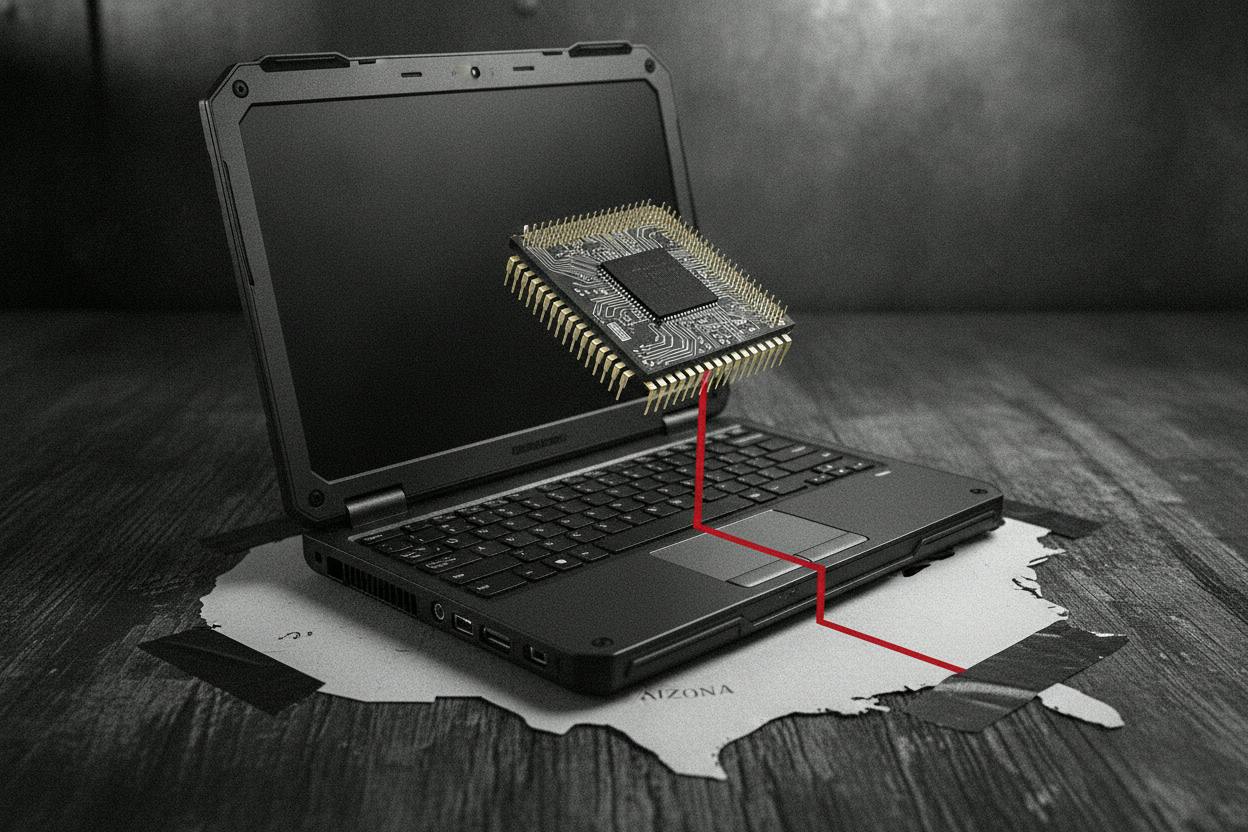
Defense technology company Anduril and chipmaker Qualcomm have announced a partnership to build rugged laptops for the US military and government, called BlueChip. The devices will run on Qualcomm's Snapdragon X processors, which will be manufactured by Taiwan Semiconductor Manufacturing Company (TSMC) at its Arizona fabrication plant. Anduril says the circuit board assembly will take place at its Ohio facility, with plans to localize more components over time.
The collaboration is part of a broader push toward an end-to-end American supply chain for defense electronics, a priority for both companies and for government buyers concerned about security and reliability.
What is BlueChip?
BlueChip is a line of rugged laptops designed for military and government use. Anduril, founded by Palmer Luckey, is known for its drones and weapons systems, but it has been expanding into the computers that run modern military software. The pitch for BlueChip is that it can perform more artificial intelligence work directly on the device—a process called “inference,” where a trained AI model runs locally to analyze data. This reduces the need to send sensitive information to the cloud, which is a key concern for defense and intelligence agencies.
For government buyers, security reviews and procurement rules often hinge on both how data is handled and where critical components are made. A laptop that keeps data on-device and uses US-made chips could face fewer hurdles in getting approved for sensitive missions.
Why Qualcomm is involved
Qualcomm is a major player in smartphone chips but is relatively new to the laptop processor market. By pairing its Snapdragon X chips with a “trusted supply chain” story and built-in security features, Qualcomm is aiming to compete for high-value defense and government contracts, not just consumer PCs.
Qualcomm CEO Cristiano Amon confirmed that the Snapdragon X chips for BlueChip will be made by TSMC in Arizona. This is significant because it addresses concerns about relying on overseas manufacturing for critical defense technology.
What it means for investors
For investors, the deal highlights two trends. First, it could open a steady stream of government orders for Qualcomm if BlueChip passes procurement and security reviews. Government contracts tend to be sticky—once a device is approved, it can be hard to replace, providing recurring revenue.
Second, it underscores a shift in AI spending toward “edge” computing, where analysis happens on the device near the data source, rather than in the cloud. This could steer budgets toward rugged hardware and secure laptop chips, benefiting companies like Qualcomm and Anduril.
Anduril, for its part, gains another product to bundle alongside its drones and weapons systems, potentially strengthening its position in the defense tech market.
Broader context
The push for domestic chip manufacturing is part of a larger trend. The CHIPS Act, passed in 2022, has incentivized companies like TSMC to build fabs in the US. TSMC's Arizona plant is expected to produce advanced chips, including those used in AI and defense applications.
This deal also comes as defense spending on technology grows, with governments around the world looking to modernize their militaries with AI and advanced computing. The AI buildout is a major theme for investors, and this partnership shows how AI is moving into physical, mission-critical devices.
For everyday investors, the key takeaway is that the intersection of AI, defense, and domestic manufacturing is creating new opportunities for companies that can navigate the complex requirements of government contracts. While no one should buy a stock based on a single announcement, this deal is a reminder that the AI boom is not just about data centers and cloud services—it's also about the hardware that runs on the edge.
As always, it's important to consider the risks. Qualcomm faces competition from established laptop chip makers like Intel and AMD, and Anduril is a private company, so its financials are not public. But for those watching the defense tech and semiconductor sectors, this is a development worth keeping an eye on.