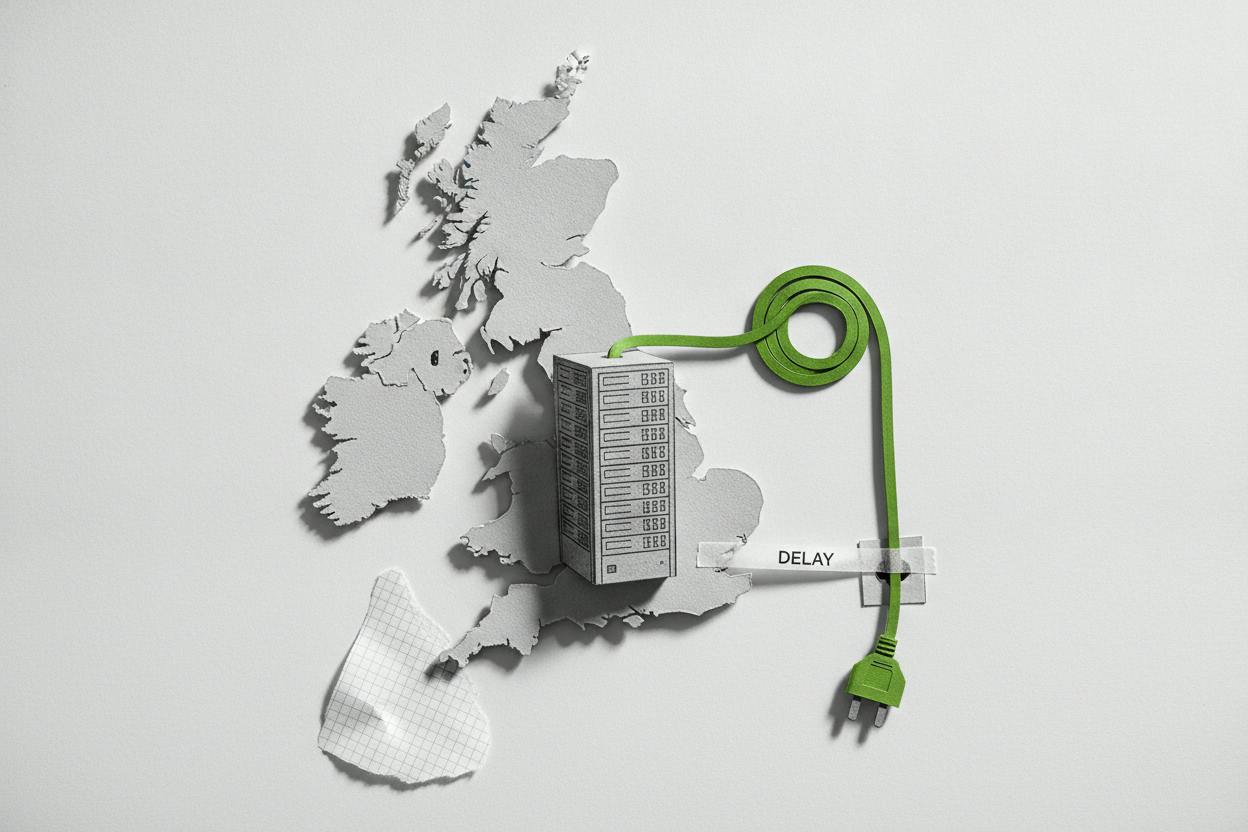
Microsoft has pulled out of a planned data center project with Nscale in Loughton, Essex, according to a report from The Telegraph. The decision comes after repeated delays, with UK grid officials reportedly telling Nscale they do not expect to supply electricity to the site until the 2030s. The news highlights a growing bottleneck for the AI boom: getting enough power to the facilities that run the technology.
What is Nscale and why does this matter?
Nscale is a company that builds and operates data centers—large warehouses packed with servers that provide the computing power needed for artificial intelligence. These facilities are the physical backbone of AI, hosting the hardware that trains and runs models like those from OpenAI and Anthropic.
The company recently filed for an initial public offering (IPO) in the United States. In its prospectus, Nscale said that Microsoft and Anthropic are expected to be major customers. But The Telegraph reported that Microsoft has terminated its agreement tied to the Loughton project. That is a significant blow, because having a tech giant like Microsoft as a customer is often a key selling point for investors in AI infrastructure companies.
The power problem
The core issue, according to the report, is electricity. The Loughton site may not be connected to the UK power grid until the 2030s. That timeline makes it nearly impossible for Nscale to deliver the computing capacity it promised, and it reflects a wider challenge across the industry. Data centers consume enormous amounts of electricity, and in many regions, grid connections are taking years longer than expected.
This is not just a UK problem. Across the globe, utilities and grid operators are struggling to keep up with surging demand from AI. In the US, some projects have faced similar delays, and investors have started to question whether the revenue from AI data centers will be enough to cover the debt used to build them. As we've noted, AI data center bonds have slid as those doubts grow.
What it means for investors
For everyday investors, this news is a reminder that the AI boom is not just about software and chips—it's also about physical infrastructure, and that infrastructure is hitting real-world limits. Power availability is becoming a key risk factor for any company building data centers, and it can affect everything from construction timelines to profitability.
Nscale's IPO is now under a cloud. If a major customer like Microsoft is walking away from a specific project, investors will want to know how that affects Nscale's revenue projections and its ability to sign new deals. The company may still find other customers, but the loss of Microsoft's backing on this project is a red flag.
For the broader market, this story adds to a growing list of concerns about the AI data center buildout. Chip stocks have slid on similar worries, and AI data center IPOs have stalled as Treasury yields climb. The message is clear: investors are becoming more selective about which AI infrastructure projects they fund.
What to watch next
Keep an eye on Nscale's IPO filing for any updates on its customer agreements and power supply plans. Also watch for how other data center developers handle grid connection delays—some are turning to alternative power sources, like gas power islands, to speed things up.
For the UK, this episode underscores the need for grid upgrades if the country wants to attract AI investment. For investors, it's a cautionary tale: the AI revolution may be digital, but it still runs on electrons, and those electrons aren't always easy to come by.