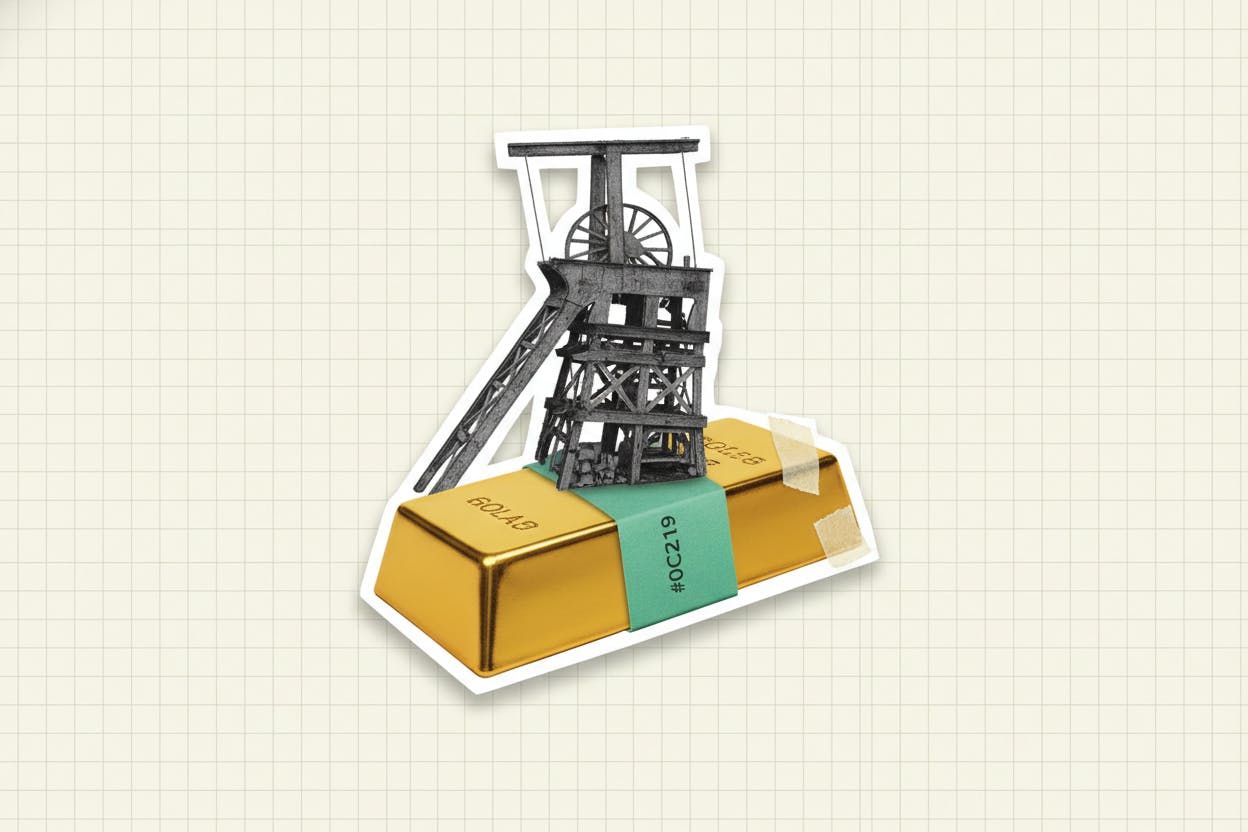
AngloGold Ashanti, one of the world's largest gold miners, reported a 58% jump in second-quarter profit, driven almost entirely by surging bullion prices. The company also proposed a $2 billion share buyback and increased its quarterly dividend, signaling confidence in its cash flow despite operational setbacks.
The results highlight a familiar theme in the mining sector: when commodity prices rise, producers can still make money even if they dig up less ore. For everyday investors, it's a reminder that gold miners are often a leveraged play on the metal's price—profits can swing sharply with even modest moves in gold.
What the numbers show
AngloGold's headline earnings—a measure that excludes certain one-off items—rose to $1.01 billion in the three months ending June 30, up from $639 million a year earlier. That's a 58% increase, a figure that would be impressive in any quarter but is especially notable given that production fell.
Output dropped 7% year-on-year to 744,000 ounces. The decline was partly due to the sale of the Serra Grande mine in Brazil, which removed that operation from the company's books. But there were also problems at the Obuasi mine in Ghana, where production tumbled 32% because of equipment failures, operational issues, and disruptions following a fatality in April.
Despite those headwinds, the company's bottom line improved dramatically. The reason: gold prices were significantly higher than they were a year ago. When the metal's price rises, every ounce sold brings in more revenue, and that can more than compensate for lower volume.
Why gold prices are doing the heavy lifting
Gold has been on a strong run, driven by a mix of central bank buying, geopolitical uncertainty, and expectations that interest rates may eventually fall. Lower rates tend to make gold more attractive because the metal pays no interest, so investors are willing to hold it when bond yields are low.
For AngloGold, the higher prices meant that even with fewer ounces produced, the company generated enough cash to fund a $2 billion share buyback—a move that returns capital to shareholders and can support the stock price—and to raise its quarterly dividend.
This is a classic example of how commodity producers can benefit from price tailwinds. But it also underscores a risk: if gold prices were to reverse, the same leverage would work against the company, and profits could fall quickly.
What it means for investors
For investors in AngloGold or other gold miners, the key takeaway is that the metal's price is the dominant driver of earnings. Operational issues, like those at Obuasi, can hurt production, but they may be overshadowed by favorable market conditions.
The buyback and dividend increase are positive signals. They suggest management believes the company's cash flow is strong enough to reward shareholders even while it invests in its operations. Buybacks can also boost earnings per share by reducing the number of shares outstanding, which is often welcomed by investors.
However, it's worth noting that the company's production challenges are not fully resolved. The Obuasi mine's problems, including the fatality, highlight the operational risks inherent in mining. Investors should watch whether the company can stabilize output in the coming quarters.
Gold miners are also sensitive to broader market trends. For example, other commodity producers have also benefited from price surges, but each sector has its own dynamics. Similarly, platinum miners have seen revenue jump on higher metal prices, showing that the pattern extends beyond gold.
For those considering an investment in gold miners, it's important to understand that these stocks can be volatile. They offer the potential for big gains when gold prices rise, but they can also fall sharply if the metal's price drops or if operational problems emerge.
As always, diversification is key. A gold miner like AngloGold can be a way to gain exposure to gold prices, but it's not the same as owning the metal itself. The company's fortunes are tied to its ability to mine efficiently, manage costs, and avoid accidents—factors that can be unpredictable.
In the near term, investors will likely focus on whether gold prices can hold their gains and whether AngloGold can get its production back on track. The buyback and dividend hike provide some cushion, but the real test will be the company's ability to execute on its operations.
For now, the message from AngloGold is clear: when gold prices are strong, even a challenging quarter can look good. But that's a double-edged sword, and investors should be prepared for the flip side.