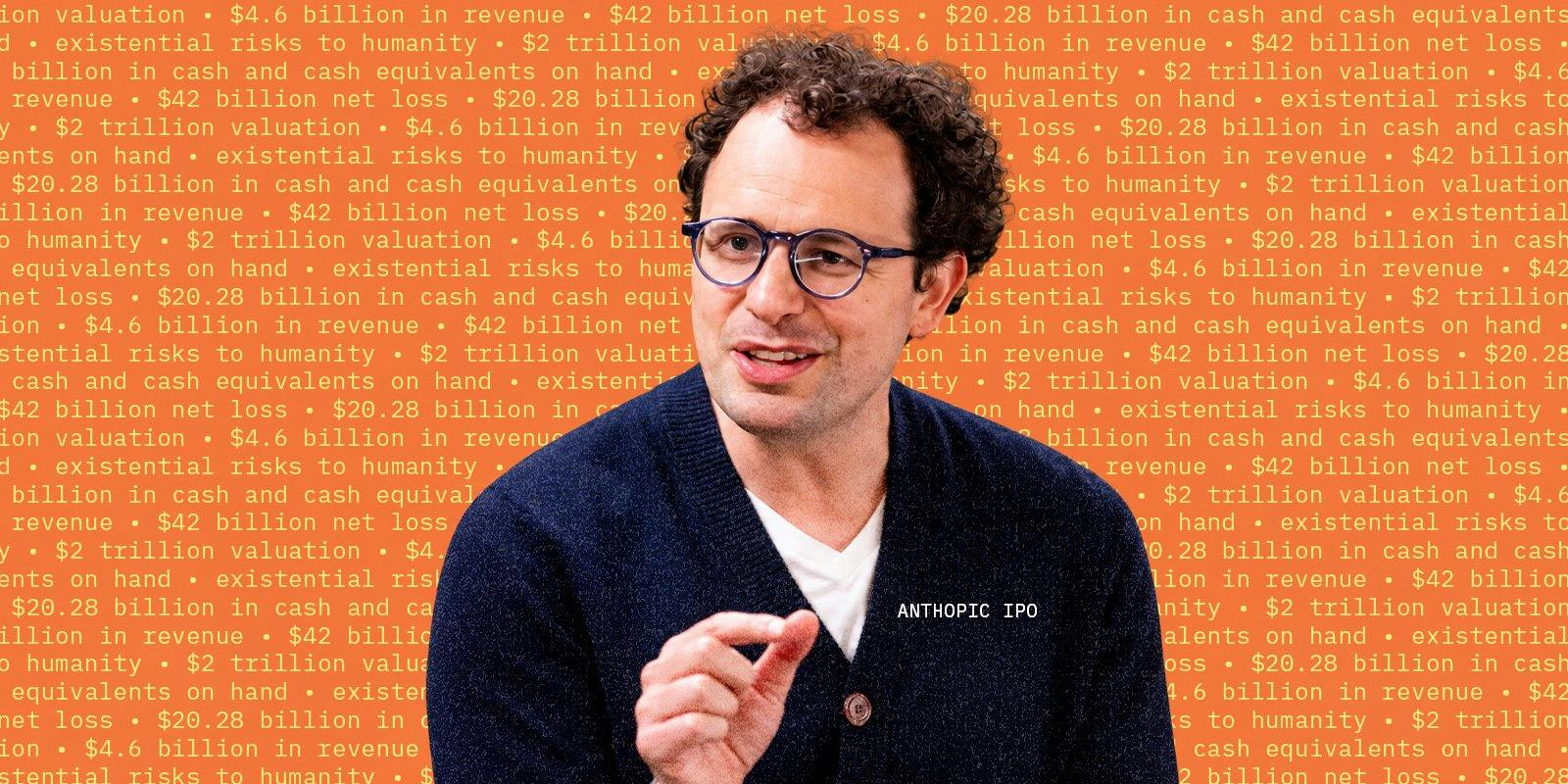
Anthropic, one of the most closely watched artificial intelligence companies in the world, has had details of its draft IPO paperwork leak into public view — and the numbers inside are as striking as the warnings attached to them. According to the leaked documents, the company believes its public debut could value it at as much as $2 trillion. That would make it one of the largest listings in market history, for a business that is still losing money and was founded only five years ago.
The same documents reportedly caution investors that the technology Anthropic is building could pose an "existential risk to humanity," and that widening the use of AI could also widen its capacity to cause harm. It is an unusual combination for a prospectus: a pitch for enormous growth paired with an explicit acknowledgment of catastrophic downside.
What a prospectus is, and why this one matters
When a private company decides to sell shares to the public, it files a registration document — commonly called a prospectus — with regulators. This is the legal document that lays out the business model, the financials, the risks and the ownership structure. It is written to protect the company from later accusations of misleading investors, which is why the risk sections are often blunt and wide-ranging.
Anthropic's filing appears to take that convention seriously. Warning about the dangers of your own product is not standard practice, but for a frontier AI lab it reflects a genuine debate inside the industry about how powerful these systems could become. Investors reading the document will have to weigh that risk language against the growth story the company is selling.
The $2 trillion figure is a target, not a guarantee. Valuations in a filing are typically based on internal expectations and recent private-market rounds, and the final number is set by demand when the shares actually trade. Still, the scale of the ambition tells you how the company wants to be seen: not as a software vendor, but as core infrastructure for the next era of computing.
A loss-making company with a giant price tag
Anthropic is not yet profitable. That is not unusual for a company at this stage of building large-scale AI systems, where the cost of computing power, talent and research is enormous. What is unusual is the gap between those losses and the valuation being discussed. Public-market investors are typically asked to pay up for future earnings, but a $2 trillion price tag implies a level of future profit that few companies have ever achieved.
There are other details worth noting. Reports around the filing suggest the company's founders would retain a majority of voting control after listing — a structure that has become common among founder-led technology firms but which limits the influence of outside shareholders. That arrangement is one of several governance questions investors will want to examine closely.
The broader backdrop matters too. The AI sector has attracted enormous capital over the past few years, but the competitive landscape is shifting. Cheaper models are increasingly winning corporate budgets, which pressures the pricing power of the largest labs. Anthropic has also been adjusting its enterprise discounting, a sign that the fight for business customers is intensifying.
What it means for investors
For everyday investors, the key question is not whether Anthropic is an exciting company — it clearly is — but whether the price being discussed leaves any room for error. A $2 trillion valuation would place it among the most valuable companies in the world on day one. That means the shares would need to deliver years of rapid growth to justify the entry price, and any stumble in revenue, regulation or technology could hit the stock hard.
It is also worth remembering that IPO valuations are set by institutional investors during the roadshow, and retail investors often get access only after the first-day pop — if there is one. Historically, many high-profile tech listings have traded below their debut price months later, particularly when the initial valuation was aggressive.
There is a second layer here that is easy to overlook: the risk warnings themselves. If a company tells you in a legal document that its product could cause catastrophic harm, that is not marketing language. It is a signal that regulation, liability and public backlash are real variables that could affect the business over time. Investors in AI stocks are effectively taking a view on how governments will handle those risks.
Finally, the leaked filing is a reminder of how concentrated the AI trade has become. A handful of companies now account for a large share of market attention and capital flows. That concentration can amplify both gains and losses across a portfolio, which is why many advisers suggest sizing any single high-risk position carefully.
Anthropic has not confirmed the details of the leak, and the final terms of any listing could differ substantially. But the direction of travel is clear: one of the defining AI companies of this era is preparing to ask public markets for an extraordinary amount of trust — and it is being unusually candid about what could go wrong.