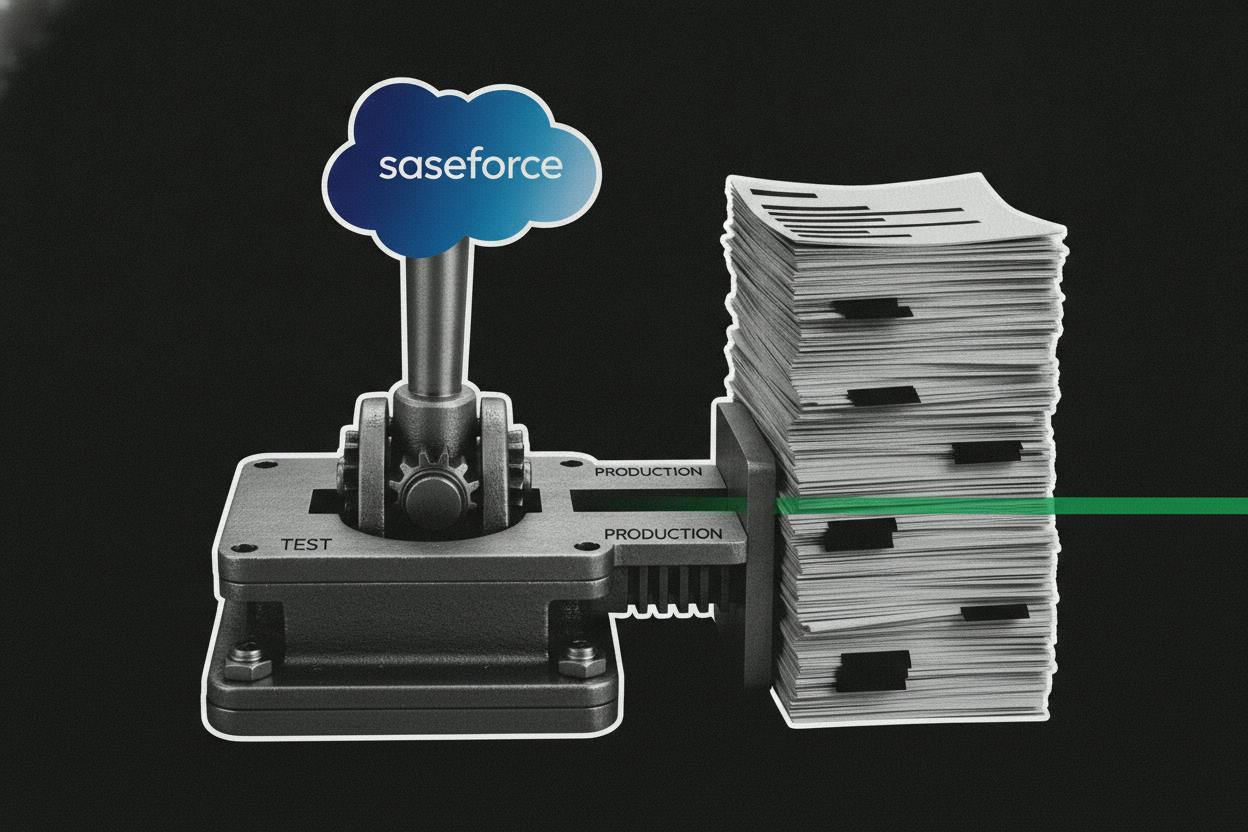
Salesforce's AI agent product, Agentforce, is generating plenty of buzz, but a new survey from investment bank Oppenheimer suggests that interest hasn't yet translated into a wave of big spending. The survey, conducted at Salesforce's annual Dreamforce conference, found that 85% of respondents have tested or deployed Agentforce. However, many of those are still in pilot or testing phases, and overall spending is leaning toward efficiency rather than large-scale expansion.
What the survey shows
Oppenheimer's findings paint a picture of an AI product that has captured the attention of Salesforce's customer base, but one that is still in the early adoption curve. The fact that 85% of respondents have tried Agentforce is a strong signal of interest. Yet, the nuance lies in the details: a significant portion of those trials are still in pilot mode, where companies are evaluating the technology's security, data integration, and real-world time savings before committing larger budgets.
This pattern is common with new enterprise technologies. Companies often run small-scale tests to prove value before rolling out across their entire organization. For Salesforce, this means that while Agentforce is being widely explored, the revenue impact from full deployments may take time to materialize.
Why efficiency is the focus
The survey also noted that spending is skewing toward efficiency. In the current economic environment, many businesses are prioritizing cost savings and operational improvements over speculative investments. Agentforce, which is designed to automate customer service and sales tasks, fits neatly into that efficiency narrative. But the emphasis on efficiency suggests that customers are looking for immediate, measurable returns rather than long-term strategic bets.
This cautious approach is not unique to Salesforce. Across the tech sector, AI-driven demand is strong, but companies are increasingly demanding clear ROI before scaling up. The same dynamic is playing out in other areas, from AI chip manufacturing to enterprise software.
What it means for investors
For investors, the survey offers a mixed picture. On one hand, the high trial rate is a positive sign for Salesforce's ability to attract customers to its AI offerings. On the other, the slow conversion from pilots to full deployments could mean that the revenue boost from Agentforce will be gradual, not immediate.
Salesforce has been positioning Agentforce as a key growth driver, and the company's stock has been sensitive to updates on its adoption. The Oppenheimer survey suggests that while the product is gaining traction, the financial payoff may be more back-end loaded. Investors should watch for signs of pilot-to-production conversion in Salesforce's earnings calls and guidance.
This pattern is reminiscent of other tech adoption cycles. For example, companies in the AI space often see early interest that takes time to convert into sustained revenue. The key metric to monitor is not just how many customers are testing a product, but how many are expanding their usage and increasing their spend.
The broader AI spending backdrop
The survey also reflects a broader trend in enterprise AI spending. While there is undeniable enthusiasm for AI tools, many companies are still in the experimentation phase. Budgets are being allocated cautiously, with a focus on projects that can demonstrate cost savings or efficiency gains quickly.
This is consistent with what we've seen in other sectors. For instance, AI chip demand remains robust, but the end-user adoption is still maturing. Similarly, broader market dynamics can influence how quickly companies are willing to invest in new technologies.
Looking ahead
For Salesforce, the next few quarters will be crucial. The company will need to show that the high level of interest in Agentforce is translating into meaningful revenue growth. Investors will be listening for updates on the number of customers moving from pilots to full deployments, as well as the average deal size.
In the meantime, the Oppenheimer survey serves as a reminder that in the world of enterprise tech, hype and reality often move at different speeds. While Agentforce is clearly on the radar of many Salesforce customers, the journey from trial to full-scale adoption is rarely a straight line.
For everyday investors, the takeaway is to look beyond the headlines. High adoption rates are encouraging, but the real test is whether that interest turns into sustained spending. As always, it's wise to keep an eye on the fundamentals and not get caught up in the excitement of a single survey or product launch.