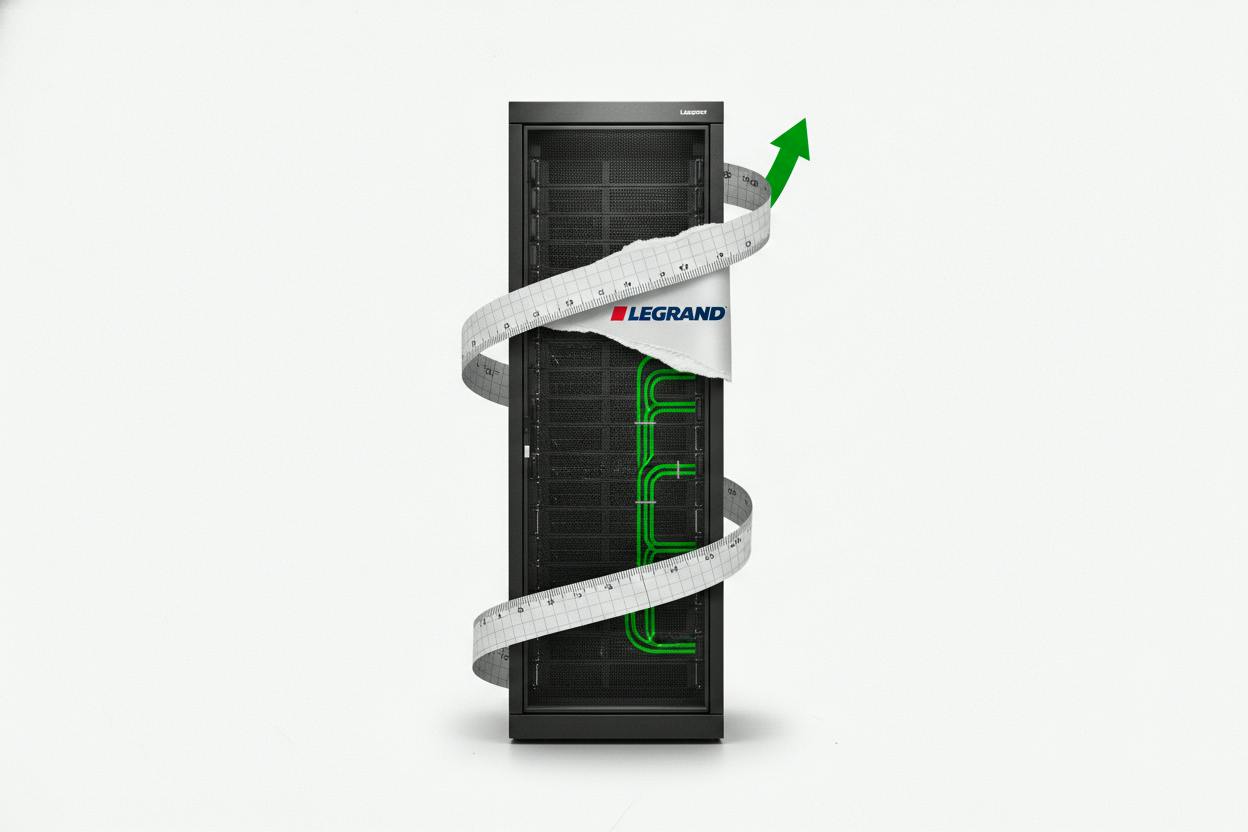
Legrand, the French electrical and digital building infrastructure company, has raised its medium-term growth targets, citing stronger-than-expected demand from data centers as artificial intelligence (AI) spending continues to surge. The company now expects annual organic growth of 6% to 8% between 2027 and 2030, up from its previous outlook.
What's driving the upgrade?
Legrand's data center business has been growing faster than the company anticipated, according to the announcement. The firm, which makes everything from power outlets and cable management systems to smart building controls, has become a key supplier to the data centers that underpin AI computing. As tech giants and cloud providers pour billions into new facilities, demand for Legrand's electrical infrastructure products has climbed.
The company's revised targets reflect a broader trend: AI is reshaping the demand landscape for electrical equipment. Data centers require massive amounts of power and cooling, which translates into more wiring, more enclosures, and more sophisticated power distribution systems. Legrand is well-positioned to capture that spending, and its latest guidance suggests management sees the boom lasting well into the next decade.
What does this mean for investors?
For everyday investors, Legrand's raised guidance is a signal that the AI infrastructure buildout is not just a story about chipmakers and cloud platforms. Companies that provide the physical backbone—electrical gear, cooling systems, and networking hardware—are also benefiting. Legrand's update echoes similar moves by other infrastructure players, such as Schneider Electric's recent bid for Shelly and BlackRock's $25 billion data center push, highlighting the sector's momentum.
However, investors should note that organic growth of 6% to 8% is a medium-term target, not a guarantee. It assumes that AI-related demand remains strong and that Legrand can execute on its strategy. The company's ability to hit these numbers will depend on factors like supply chain stability, competition, and the pace of data center construction globally.
Broader context: AI infrastructure spending
The AI boom has triggered a wave of investment in data centers, with some estimates suggesting US AI infrastructure spending could reach $10.3 trillion by 2032. That spending is not just going to servers and chips; it also flows into the buildings themselves. Electrical infrastructure is a critical component, and companies like Legrand are direct beneficiaries.
Legrand's raised outlook also comes as other firms in the AI supply chain are seeing similar tailwinds. For instance, DayOne's US IPO is testing investor appetite for AI data centers, and Seligman Ventures has doubled its fund to $1 billion to back AI data center infrastructure. These developments underscore the scale of investment flowing into the sector.
What to watch next
Investors will be watching Legrand's quarterly results to see if the momentum continues. Key indicators include order books, revenue growth in the data center segment, and management commentary on AI-driven demand. The company's ability to maintain pricing power and manage costs will also be crucial, especially if inflation or supply chain issues resurface.
For those with exposure to Legrand or similar infrastructure names, the raised targets are a positive sign. But as with any growth forecast, it's wise to treat them as a roadmap rather than a promise. The AI cycle could slow, and competition in the electrical equipment space is intense. Still, for now, Legrand's outlook reflects a confident view that the data center boom has legs.
Bottom line
Legrand's decision to lift its 2030 targets is a clear acknowledgment that AI is transforming the electrical infrastructure industry. The company's data center business is growing faster than expected, and management sees that trend continuing for years. For investors, it's another reminder that the AI revolution extends far beyond the tech sector—it's also a story about the physical infrastructure that powers it.