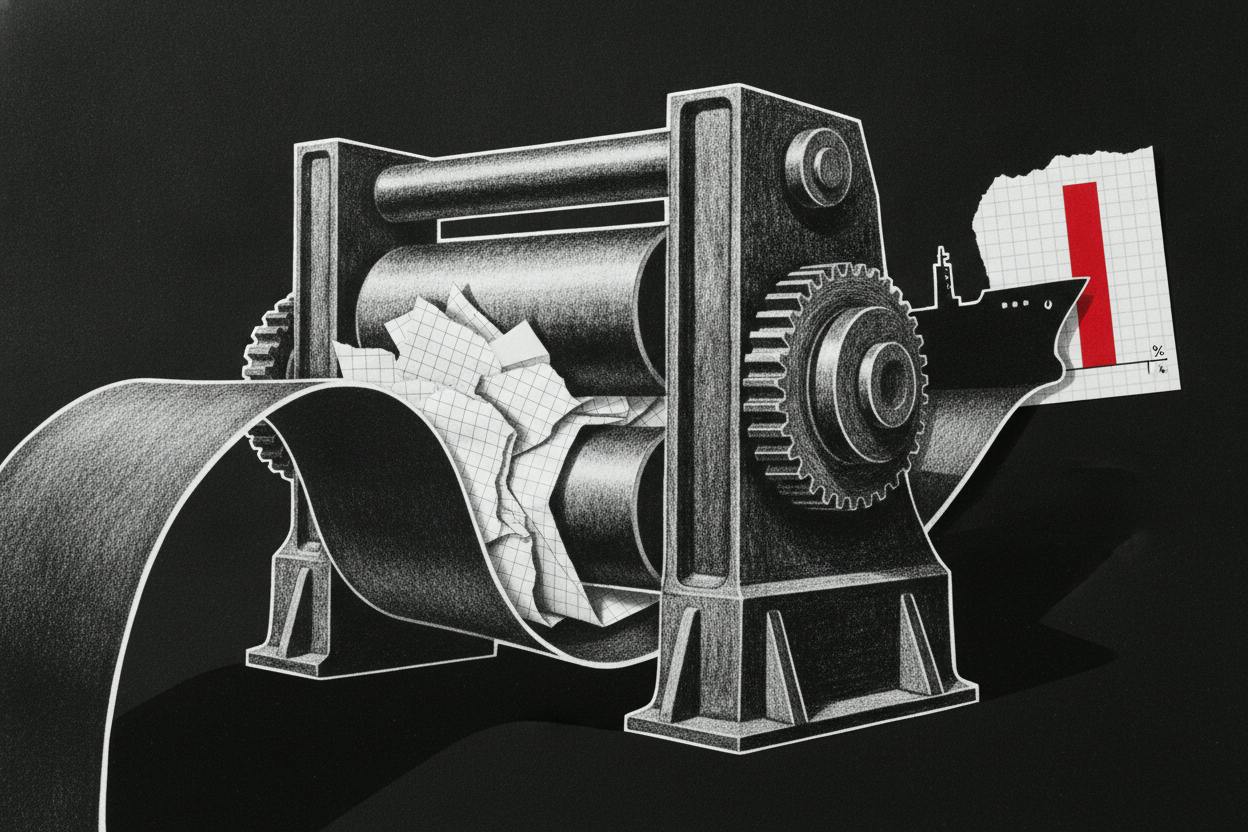
ArcelorMittal's ambitious $900 million expansion at its Pecem steel mill in Brazil is still in the evaluation phase, as the company waits for import pressure, particularly from Asia, to ease. The project, which would add a hot-rolled coil line, remains on hold until market conditions improve.
What's happening at Pecem?
Jorge Oliveira, who heads ArcelorMittal's Brazil operations, told Reuters that the steelmaker is still weighing a 5-billion-real (about $894 million) project to install a 1.5-million-metric-ton-per-year hot-rolled coil line in the northeastern state of Ceará. The plan involves building a hot-strip mill, which would allow Pecem to convert semi-finished slab into higher-value coil, keeping more of the profit margin in-house rather than shipping the slab elsewhere for processing.
Hot-rolled coil is a key steel product used in construction, automotive manufacturing, and appliances. By producing it locally, ArcelorMittal could capture more value from its Brazilian operations and reduce reliance on imported coil.
Why is the project stuck?
The main obstacle is competition from imported steel, especially from Asia. According to the company, Asian imports currently hold about 18% of the Brazilian market, well above the 12% level that ArcelorMittal says is needed to justify the investment. At the current import share, the economics of the new line don't add up.
This is a common dilemma for steelmakers worldwide. When cheap imports flood a market, domestic producers struggle to compete on price, making large capital investments riskier. The steel industry is highly cyclical, and companies often delay or cancel projects when the outlook is uncertain.
ArcelorMittal is not alone in facing these headwinds. European steelmakers have warned that a demand rebound may not come until 2027, reflecting a broader global slowdown in steel consumption. In Brazil, the situation is compounded by high interest rates, which have cooled construction and manufacturing activity.
Brazil's economic backdrop
Brazil's central bank has been keeping interest rates elevated to combat inflation. The bank recently held its benchmark rate at 13.75%, a level that makes borrowing expensive for both companies and consumers. This dampens demand for steel-intensive goods like cars and buildings, further weakening the case for expansion.
Meanwhile, the central bank chief has pushed back against expectations of imminent rate cuts, suggesting that borrowing costs could stay high for a while. For ArcelorMittal, that means domestic demand may remain sluggish, even as it grapples with import competition.
What it means for investors
For everyday investors, this news is a reminder that large industrial projects are not always a sure thing. Companies often announce ambitious plans, but they can be delayed or shelved if market conditions deteriorate. ArcelorMittal's decision to keep the Pecem project in "study mode" reflects a cautious approach to capital spending.
Investors should watch a few key indicators. First, the level of steel imports into Brazil—if the 18% share falls closer to the 12% threshold, the project could move forward. Second, domestic demand trends, which are tied to interest rates and economic growth. Third, global steel prices, which affect the profitability of both imports and domestic production.
It's also worth noting that ArcelorMittal is a global player, and its Brazil unit is just one part of a larger portfolio. The company's overall performance depends on many factors, including operations in Europe, North America, and elsewhere. Other steelmakers have shown that a strong product mix and operational efficiency can drive profits, even in challenging markets.
For now, the Pecem expansion remains a waiting game. If import pressure eases and demand picks up, the project could get the green light. Until then, ArcelorMittal is content to study the numbers and keep its options open.
As always, investors should consider the broader context. Steel is a cyclical industry, and timing is everything. A project that doesn't make sense today might be viable in a year or two. The key is to monitor the market signals and understand that companies like ArcelorMittal are making decisions based on long-term profitability, not short-term headlines.