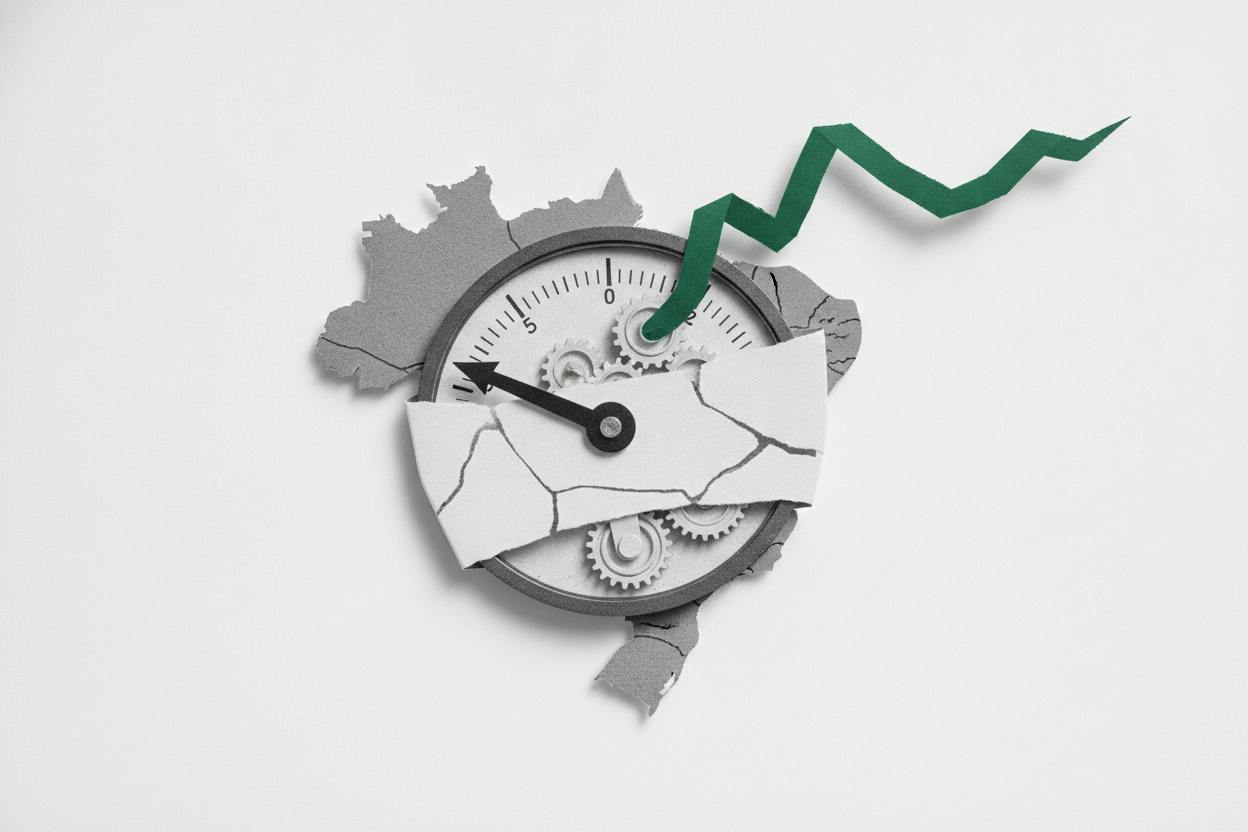
Brazil's central bank left its benchmark Selic rate unchanged at 13.75% on Tuesday, and the accompanying minutes revealed a growing concern: inflation risks are building even as the economy shows signs of cooling. The decision to pause—after a series of cuts earlier in the cycle—signals that policymakers are not ready to ease further, and may keep borrowing costs elevated for longer than many investors had hoped.
What's behind the pause?
The minutes from the Banco Central do Brasil's meeting point to several supply-side pressures that have clouded the inflation outlook. Higher oil prices, the weather phenomenon El Niño, changes to labor rules, and a weaker Brazilian real—which policymakers linked to domestic policy uncertainty—were all cited as factors pushing prices up.
At the same time, the bank warned that growth could slow further. It pointed to "high-frequency" data and softer retail indicators in parts of the economy that rely on credit, where borrowing costs remain steep. That slowdown is a double-edged sword: weaker demand can help prevent one-off price shocks from turning into broader, longer-lasting inflation, but it also means the economy is feeling the pinch of high rates.
Inflation above target, expectations drifting
The minutes noted that both headline and underlying inflation have moved above the top of the central bank's target band. Meanwhile, inflation expectations have drifted away from the official 3% goal. That combination raises the bar for any future rate cuts, because the bank's credibility depends on bringing prices back toward target.
For context, Brazil's inflation targeting framework sets a central goal with a tolerance band. When inflation runs above that band, the central bank typically needs to keep policy tight to anchor expectations. The longer expectations stay elevated, the harder it becomes to bring inflation down without a painful economic slowdown.
What it means for investors
For everyday investors, the key takeaway is that Brazil may be stuck in a "higher-for-longer" interest rate environment. ABC Brasil, a Brazilian bank, said it expects the Selic to remain at 13.75% through at least the end of 2027. That would mean years of elevated borrowing costs for consumers and businesses, and a continued drag on economic activity.
The minutes also highlight a classic emerging-market loop. When investors perceive more fiscal and policy uncertainty, they demand extra compensation to hold local assets. That often shows up first in the currency and in longer-term interest rates. If the real weakens, imports become more expensive, and some domestic prices follow—pushing inflation up through what economists call the "exchange-rate pass-through" channel.
That dynamic makes it harder to pull inflation expectations back toward the 3% target. As a result, the central bank has an incentive to keep policy tight even if growth is below potential. The outcome can be persistently high long-term borrowing costs, and a currency that remains sensitive to fiscal headlines, because any fresh weakness can quickly worsen the inflation picture the bank is trying to contain.
Broader context
Brazil's situation is not unique. Central banks across the globe are wrestling with similar trade-offs between fighting inflation and supporting growth. In Europe, for example, Hungary's inflation bump may keep its central bank on hold, while Norway's core inflation has cooled, easing pressure for further hikes. In the U.S., investors are watching October CPI data for signs that inflation is cooling, though rent could keep it sticky.
For Brazil, the immediate focus will be on whether inflation expectations start to move back toward target, and whether the real stabilizes. If those improve, the central bank might find room to cut rates sooner than ABC Brasil expects. If not, the Selic could stay at 13.75% for a long time, keeping borrowing costs high and weighing on the economy.
For investors with exposure to Brazilian assets—whether through stocks, bonds, or the currency—the message is to expect continued volatility and to watch inflation data and policy signals closely. The central bank's next moves will depend on how these risks evolve, and the minutes make clear that the bar for easing is high.