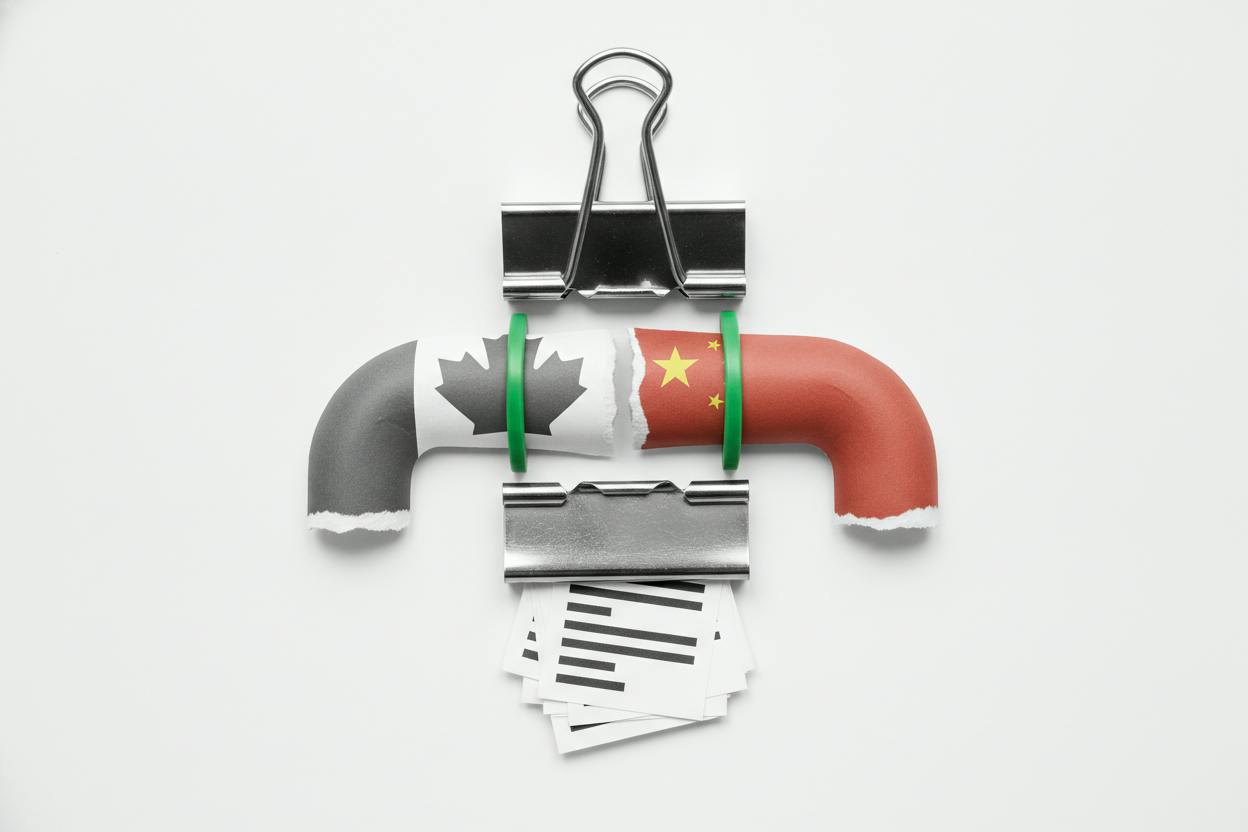
Canada and China have taken steps to deepen their financial relationship, signing a memorandum of understanding between their finance ministries and establishing a new regulatory dialogue, just days before Prime Minister Mark Carney heads to China for the APEC summit.
The agreements were announced after a meeting in Vancouver between Canadian ministers François-Philippe Champagne and Maninder Sidhu and Chinese Vice Premier He Lifeng. The two sides agreed to intensify discussions on economic and financial issues, setting up a more structured framework for cooperation.
What was signed?
The centerpiece is a Memorandum of Understanding (MoU) between the two countries' finance ministries. An MoU is a formal agreement that outlines areas of mutual interest and sets a framework for ongoing talks—it's not a binding treaty, but it signals a commitment to regular communication. Instead of relying on one-off visits, the two governments will now have a standing mechanism for discussing fiscal policy, financial stability, and other shared concerns.
More practically, the two sides also launched a new regulatory dialogue between Canada's Office of the Superintendent of Financial Institutions (OSFI) and China's National Financial Regulatory Administration (NFRA). OSFI is Canada's banking and insurance regulator, while NFRA oversees China's financial sector. This channel is designed to let regulators share information and coordinate on issues like banking supervision, risk management, and cross-border financial activity.
This is a notable step because regulatory relationships are often the backbone of financial cooperation—they allow authorities to address problems before they become crises and to align rules that affect banks and investors operating in both countries.
Why now?
The timing is tied to Prime Minister Carney's upcoming visit to China for the APEC forum, a major Asia-Pacific economic gathering. The agreements appear to be a way to lay groundwork for that trip, signaling that both sides are interested in a more predictable and cooperative economic relationship.
Canada and China have had a complicated economic relationship in recent years, with tensions over trade, technology, and human rights. But financial cooperation has often proceeded on a separate track, as both countries see benefits in stable cross-border investment and banking ties. For China, access to Canadian financial markets and expertise is valuable; for Canada, China remains a major trading partner and a source of investment.
The move also comes as global markets are watching China's economic slowdown and its efforts to attract foreign capital. China's trade surplus has narrowed recently, and the country is eager to show it remains open for business. Setting up formal financial channels is one way to reassure international investors.
What it means for investors
For everyday investors, this is unlikely to change your portfolio overnight, but it's a positive signal for anyone with exposure to Canadian or Chinese financial markets. Formal cooperation between regulators can reduce uncertainty, which is generally good for cross-border investment. Banks and financial firms that operate in both countries—like some of Canada's major banks—could benefit from clearer rules and easier access to each other's markets.
It also comes at a time when Canada's own financial sector is in focus. Financial stocks have been leading market rallies, and any news that eases cross-border frictions could support that trend. Meanwhile, the Bank of Canada is navigating a delicate path on interest rates, with weak jobs data cooling expectations for a hike. A more stable relationship with China removes one potential source of economic volatility.
That said, investors should keep expectations in check. An MoU and a regulatory dialogue are building blocks, not breakthroughs. They don't guarantee new trade deals or investment flows. They do, however, create a forum for addressing disputes and exploring opportunities, which is often a prerequisite for deeper economic ties.
Looking ahead, the real test will be whether these channels produce tangible outcomes—like easier market access for Canadian financial firms in China, or smoother handling of cross-border banking issues. For now, the agreements are a modest but meaningful step in a relationship that has seen better days.
As Carney heads to APEC, investors will be watching for any further announcements on trade or investment. The new channels don't promise a thaw in all areas, but they do suggest both sides are willing to keep talking—and in finance, that's often half the battle.