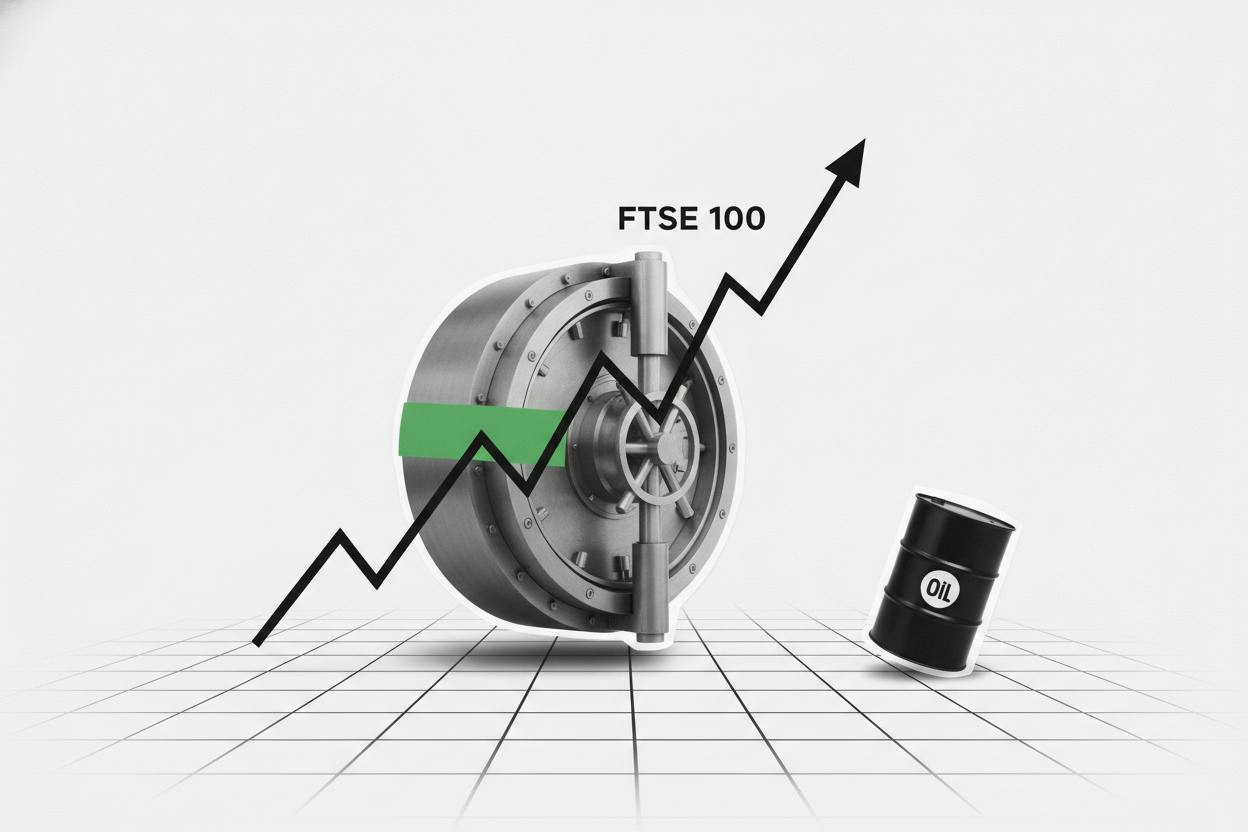
London's FTSE 100 managed a modest gain on Tuesday, as strength in defense and banking stocks outweighed a slide in energy shares. The move came as investors weighed fresh signals from the Bank of England about a possible interest rate hike in December, while oil prices cooled below $90 a barrel.
The benchmark index, which is heavily weighted toward banks, oil majors, and defense contractors, showed its ability to rotate leadership. When one sector stumbles, others can step in to keep the index afloat.
What drove the move?
The main catalyst for bank stocks was not a new earnings report but a shift in rate expectations. Bank of England Deputy Governor Clare Lombardelli told the Guardian that she would not rule out a December rate hike. That comment was enough to move the needle: money markets now price in roughly a 50% chance of a quarter-point increase, according to LSEG data.
For banks, higher expected policy rates can be a tailwind. Lenders typically reprice their loan rates faster than the interest they pay on deposits, at least in the early stages of a rate cycle. That can widen net interest margins—the difference between what banks earn on loans and what they pay out to savers—and boost near-term profits. Shares like Barclays moved higher on this logic, helping the index look past weakness in the energy sector.
Meanwhile, oil prices slipped as fears of near-term supply disruption eased. Brent crude fell below $90 a barrel, a level that had been a psychological support for energy stocks. Lower crude prices tend to weigh on the revenues and profits of oil producers, and the FTSE 100's energy heavyweights felt the drag.
Why defense and banks matter
Defense firms also provided a lift, though the brief does not specify which companies or what drove their gains. In general, defense stocks are often seen as defensive plays—they tend to be less sensitive to economic cycles because government spending on military equipment is typically stable or growing. They can also benefit from geopolitical tensions and increased defense budgets across Europe.
The FTSE 100 is unique among major indices because it is dominated by a handful of sectors: energy, banks, mining, and consumer staples. When one of those sectors struggles, the index can still rise if others perform well. Tuesday's session was a textbook example of that rotation.
What it means for investors
For everyday investors, the key takeaway is that rate expectations can move bank stocks quickly. When a Bank of England hike goes from "unlikely" to "live," bank shares often react before the broader market does. The channel is simple: higher rates can increase banks' net interest income, because many loans reset faster than deposit rates, so the gap between what banks earn and what they pay can widen temporarily.
That's why rate-hike odds can translate into relative strength for names like Barclays and the wider financials slice of the FTSE 100. It also explains how the index can still grind higher on days when energy is a drag, since banks and oil majors are both big parts of the benchmark but tend to respond to different drivers.
Investors should also note that a 50% probability is not a certainty. The Bank of England's next decision will depend on incoming data, including inflation and wage growth. If those numbers come in hot, a hike becomes more likely; if they cool, the odds could fade just as quickly.
For those with exposure to UK equities, the lesson is to watch the rate path and the oil price. Both are powerful forces that can shift the balance of the FTSE 100 from one day to the next. And as always, diversification across sectors can help smooth out the bumps.
In related news, deal activity remains brisk across European banks and global mining assets, which could also influence sentiment in the coming weeks. And for a broader view of how oil slides can affect other markets, Canada's TSX saw a similar pattern, with miners benefiting from lower oil prices.