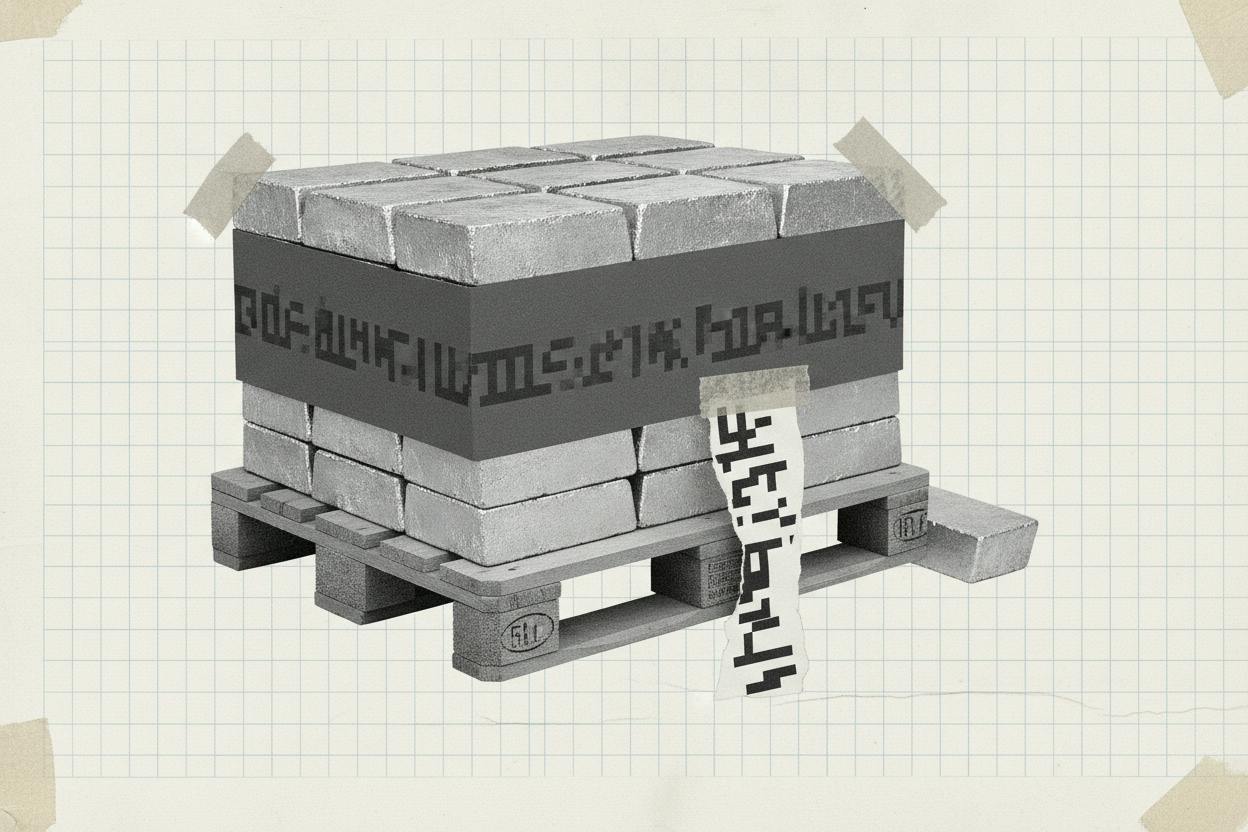
New data from the London Metal Exchange (LME) shows that the aluminum sitting in its registered warehouses is almost entirely Russian. In October, 216,900 metric tons of the 216,950 tons of on-warrant aluminum were of Russian origin, leaving just 50 tons of Indian metal as an alternative. That means 99.98% of the available stock came from Russia.
This isn't a story about a flood of metal. Total on-warrant inventories actually fell 4% to 216,950 tons by the end of last month, the lowest level since March 2025. Russian-origin stock slipped by 9,725 tons, but it still dominates the exchange's deliverable supply.
What does 'on-warrant' mean?
For everyday investors, the jargon can be a hurdle. 'On-warrant' refers to metal that is stored in LME-approved warehouses and has a warrant—a document that proves ownership and makes the metal deliverable against LME futures contracts. When you trade aluminum futures on the LME, you're agreeing to take delivery of physical metal if you hold the contract to expiry. The on-warrant stock is the pool of metal that can actually be delivered.
So when nearly all of that pool is Russian, it matters for anyone using the LME to hedge or price aluminum. It means that if you need physical metal, your options are extremely limited unless you're willing to accept Russian-origin material.
Why Russian aluminum dominates
Russia is one of the world's largest aluminum producers, and its metal has historically flowed into LME warehouses when other buyers shy away. Since 2022, many Western consumers and traders have voluntarily avoided Russian metal due to sanctions and reputational concerns, even though aluminum itself is not directly sanctioned by most Western governments. That has pushed more Russian metal into LME-registered warehouses, where it sits until someone is willing to take it.
The situation is not new. For months, the LME has reported that Russian-origin metal makes up the vast majority of its aluminum stocks. But the latest data shows the concentration has become even more extreme, with only a token amount of non-Russian metal available.
This is a structural issue for the LME, which aims to provide a neutral, global marketplace. If the exchange's warehouses become a dumping ground for one country's metal, it can distort prices and undermine confidence in the benchmark.
What it means for investors
For investors, the key takeaway is about supply dynamics, not a recommendation to buy or sell. The low on-warrant inventories suggest that the aluminum market is relatively tight—there isn't a lot of spare metal sitting around. That can support prices, especially if demand picks up.
However, the heavy reliance on Russian supply is a risk factor. If sanctions were to tighten or if Russia were to restrict exports, the LME could face a shortage of deliverable metal, which could cause sharp price swings. Conversely, if more non-Russian metal enters the system, it could ease concerns and put downward pressure on prices.
Investors should also watch broader trends in the aluminum market. For instance, aluminum prices have slipped as China's exports surge, but supply concerns remain. China is the world's biggest aluminum producer and exporter, and its actions can significantly affect global prices.
Another factor to monitor is the ongoing $6.6 billion Guinea alumina deal involving China Aluminum International, which could reshape the supply chain for alumina, the key raw material for aluminum. If approved, it could increase the availability of non-Russian alumina and potentially reduce the dominance of Russian metal in the long run.
The bigger picture
The LME's aluminum situation is part of a larger story about commodity markets adjusting to geopolitical shifts. Since Russia's invasion of Ukraine, many Western companies have sought to reduce their exposure to Russian commodities, including oil, gas, and metals. But for aluminum, the transition has been slow, and the LME's warehouses have become a visible sign of that unfinished shift.
For ordinary investors, the practical implication is that aluminum prices may remain volatile, influenced by both supply tightness and geopolitical events. If you hold aluminum-related stocks or ETFs, it's worth understanding that the market's foundation is narrower than it appears.
In the near term, all eyes will be on whether non-Russian producers can increase output and whether the LME takes any steps to address the concentration. For now, the exchange's warehouses remain, for all practical purposes, a Russian-only storehouse.