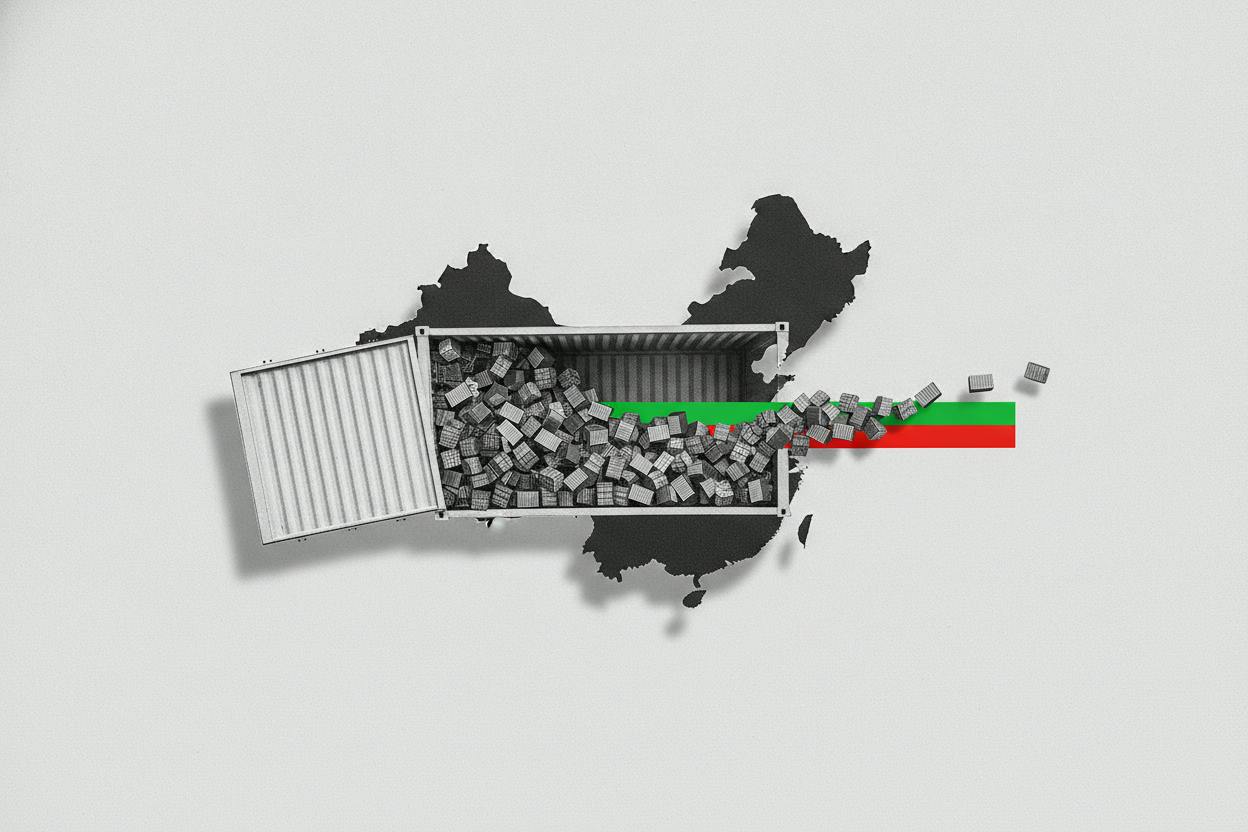
China's trade surplus narrowed in October as imports grew faster than exports, a shift that lands just ahead of next week's APEC summit where President Xi Jinping and former President Donald Trump are expected to meet. The General Administration of Customs reported a surplus of $105.28 billion for the month, down from September's $133.53 billion.
Exports still rose a solid 35.2% year-on-year to $412.33 billion, but the bigger story was imports, which climbed 41.6% to $307.05 billion. That surge in purchases from abroad shrank the gap between what China sells to the world and what it buys from it.
The narrowing surplus matters for more than just trade politics. A trade surplus is also a net inflow of foreign currency. When China sells more than it buys, dollars and other currencies flow into the country, which can put upward pressure on the yuan unless authorities step in to manage the flow. A smaller surplus means less of that mechanical support for the currency.
What's behind the import jump?
The 41.6% jump in imports is a sharp acceleration, though the brief doesn't specify which goods drove the increase. In general, a surge like this can reflect stronger domestic demand, higher prices for commodities like oil and metals, or companies stocking up on inputs and equipment. It can also be a sign that Chinese businesses are buying more foreign components and materials to feed their export machine.
Zooming out, the first ten months of the year still produced a hefty $1.043 trillion surplus. So October's narrowing looks more like a monthly swing than a full reversal of China's trade position. The country remains a massive net exporter, and the longer-term flow of dollars into the system is still substantial.
The timing is notable. With the APEC summit set for Shenzhen, trade rules and tariffs are likely to be high on the agenda. The import-led narrowing adds nuance to the usual narrative that China simply exports too much. It shows that China is also buying more from the rest of the world, which could be a talking point for Chinese officials seeking to push back against accusations of unfair trade practices.
What it means for investors
For currency markets, a $105.28 billion surplus means less immediate support for the offshore yuan (CNH). When China's surplus is very large, more net dollars typically flow in, and authorities may need to manage those inflows to keep the currency from rising too quickly. A smaller monthly surplus usually means less near-term pressure in that direction, making the yuan more sensitive to headlines and policy signals.
The data can also matter at the margin for global bond markets. If fewer trade dollars are coming in, there may be slightly less need for Chinese authorities to park excess foreign currency in liquid dollar assets such as US Treasuries. But the scale is key: with a $1.043 trillion surplus so far this year, the overall flow backdrop is still huge. Any market impact is likely to show up as day-to-day sensitivity around APEC trade messaging rather than a clean break in the trend.
For everyday investors, the takeaway is that trade data like this is a piece of the puzzle for understanding currency moves and global trade tensions. A narrowing surplus can ease some pressure on the yuan, but it doesn't change the big picture of China's export dominance. As the APEC summit approaches, watch for headlines about tariffs and trade deals—those are more likely to move markets than a single month's trade numbers.
Related coverage: the dollar's recent moves and US inflation expectations are also on investors' radar this week.