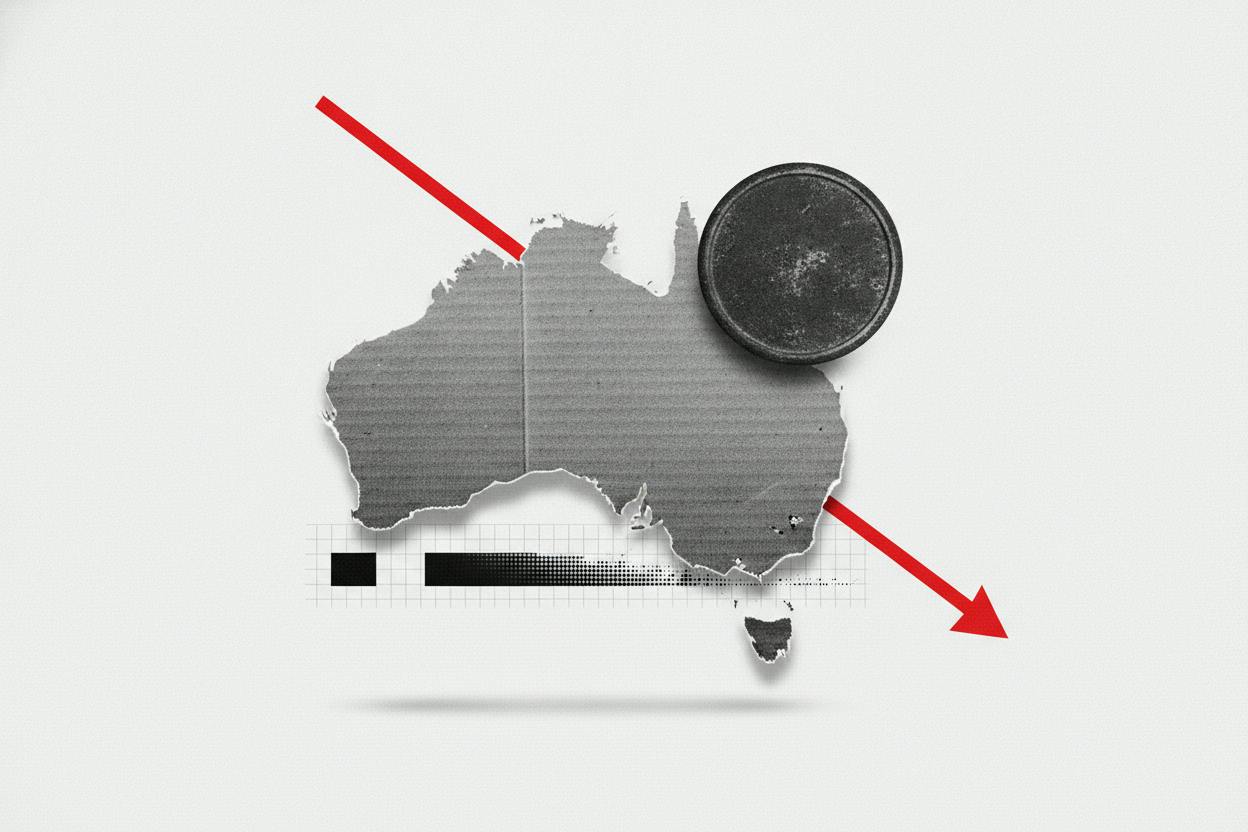
Australian businesses are feeling the squeeze, according to the latest survey from National Australia Bank (NAB). The bank's business conditions index slipped to its weakest level in six years during October, while confidence among firms sank further into negative territory. The data adds to a growing pile of evidence that the economy is cooling, and it complicates the Reserve Bank of Australia's (RBA) fight to bring inflation back to target.
What the numbers show
NAB's business conditions index fell 1 point to -2 in October, the lowest reading since August 2020, according to a Reuters report citing the bank. That means more businesses reported deteriorating conditions than improving ones. Confidence, which measures how firms view the months ahead, dropped another point to -15 — far below the long-run average of +5. Forward orders, a key indicator of future demand, also weakened, suggesting the softness may persist.
The survey is closely watched by economists and investors because it captures the mood of the real economy — how companies are faring with sales, employment, and orders. A reading below zero indicates that more firms are experiencing downturns than upturns, and the current level points to a broad-based slowdown.
Why it matters for the RBA
The weak business data lands at an awkward time for the RBA. The central bank has raised interest rates five times, bringing the cash rate to 4.85%, in an effort to cool demand and push inflation back into its 2%-3% target band. Higher rates are meant to slow spending and investment, but they also weigh on business conditions.
If businesses are already struggling, further rate hikes could tip the economy into a sharper downturn. Yet if the RBA pauses or cuts rates too soon, inflation could stay stubbornly high. The survey suggests the economy is losing momentum, which may give the RBA room to hold rates steady at its next meeting, but it also raises the risk of overtightening.
Recent data has been mixed. While October CPI is expected to cool, rent and other services costs could keep inflation sticky. Meanwhile, consumer confidence has hit a four-year low, and another survey showed confidence near record lows after the last rate hike. The combination of weak business and consumer sentiment suggests the economy is slowing, but inflation remains above target.
What it means for investors
For everyday investors, the NAB survey is a signal that the Australian economy is cooling. That has implications for company earnings, particularly for businesses tied to domestic demand, such as retailers, builders, and consumer services. If conditions continue to deteriorate, profit growth could slow, and share prices may reflect that.
On the other hand, weaker economic data could reduce the likelihood of further rate hikes, which would be a relief for borrowers and for stocks that are sensitive to interest rates, such as property and utilities. However, if the economy slows too much, the RBA might eventually need to cut rates, which could boost bond prices and support certain sectors.
Investors should watch upcoming inflation data and RBA statements for clues about the next move. The central bank is walking a tightrope between taming inflation and avoiding a recession. The NAB survey adds to the case that the economy is losing steam, but it doesn't yet signal a collapse.
In the meantime, the Australian share market has shown resilience, with stocks set to rise as oil prices ease, but the underlying business climate remains fragile. For those with exposure to Australian equities, it's worth keeping an eye on how companies report trading conditions in the coming months.
The broader picture
The NAB survey is just one piece of the puzzle, but it aligns with other indicators pointing to a slowdown. Globally, central banks are facing similar dilemmas, as inflation remains above targets while growth weakens. The RBA's next move will depend on a range of data, including jobs, inflation, and business sentiment.
For now, the message from Australian businesses is clear: conditions are tough, and confidence is low. How the RBA responds will shape the economic outlook for the year ahead.