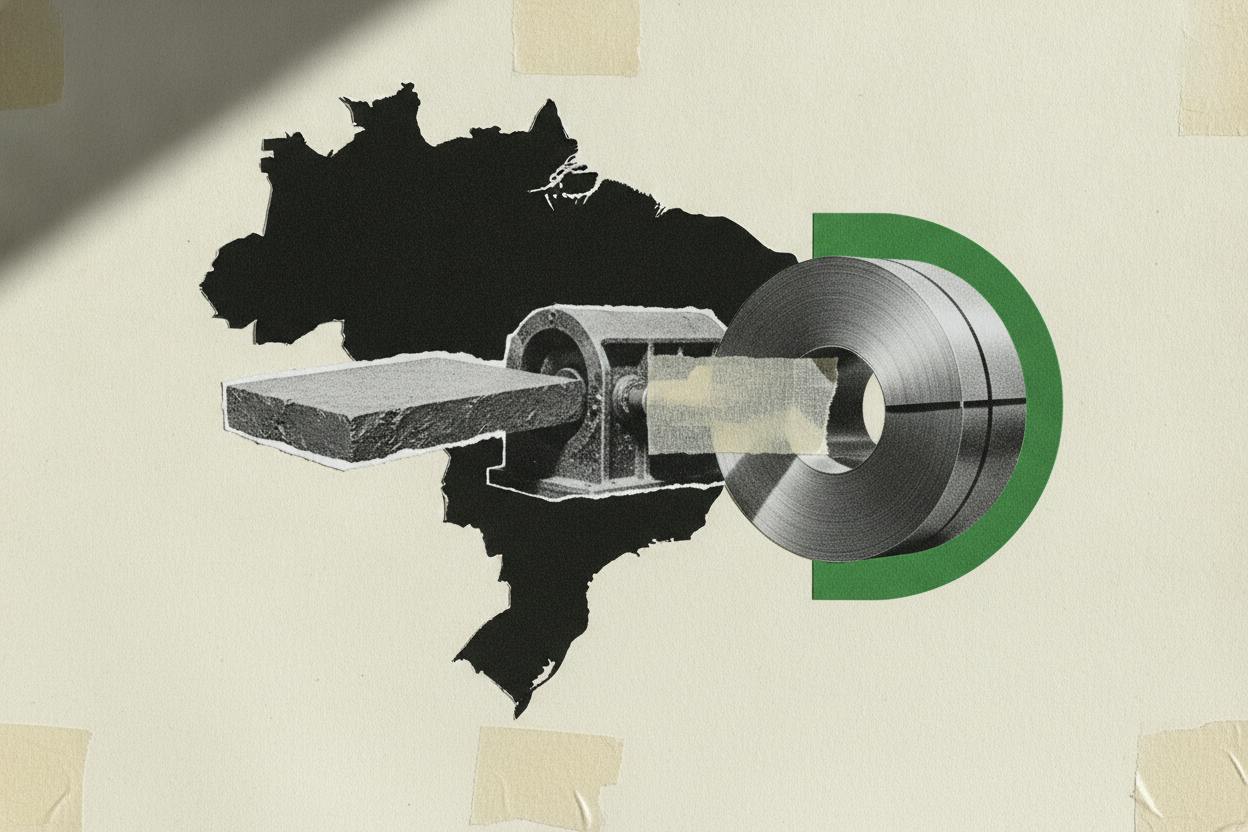
ArcelorMittal, the world's largest steelmaker, is considering a 5 billion Brazilian reais (about $961 million) expansion at its Pecem mill in Brazil. The plan would add a hot-rolled coil (HRC) line and increase the plant's annual capacity by 1.5 million metric tons, according to a Bloomberg report citing Jorge Oliveira, CEO of ArcelorMittal's Brazilian operations. A final decision is expected by the end of the year.
What's behind the expansion?
The investment isn't just about making more steel. It's about making more of the right kind of steel. Currently, Pecem produces semi-finished steel slabs, which are then sold to other mills that roll them into finished products. By adding a hot-rolled coil line, ArcelorMittal would be able to convert more of those slabs into finished flat steel on-site.
Finished flat steel—like hot-rolled coil—typically commands higher prices than semi-finished slabs. It also opens the door to a broader range of customers, from automakers to appliance manufacturers and construction firms. For ArcelorMittal, that means a better product mix and potentially fatter margins, even if overall tonnage doesn't change dramatically.
The move fits a broader industry trend: steelmakers are increasingly trying to move up the value chain, capturing more of the profit that comes from processing raw steel into usable products. It's a strategy that can also reduce exposure to volatile slab prices, which tend to swing with global supply and demand.
Why Brazil?
Brazil is a key market for ArcelorMittal, which has operated there for decades. The country is rich in iron ore, a key steelmaking input, and has a large domestic market for steel. Pecem, located in the northeastern state of Ceará, is strategically positioned near deep-water ports, making it easy to export finished steel to other parts of South America, the United States, and beyond.
The expansion would also help ArcelorMittal compete more effectively with regional players and imports. Brazil has been a battleground for steel pricing, with domestic producers facing pressure from cheaper imports, particularly from China. By boosting local finished-steel capacity, ArcelorMittal could better defend its market share and potentially reduce reliance on imported coils.
This isn't the first time ArcelorMittal has invested in Brazil. The company has been steadily upgrading its Brazilian operations, and this project would be one of its largest single investments in the country in recent years.
What it means for investors
For everyday investors, this news is a signal about ArcelorMittal's strategic direction. The company is betting that demand for higher-value steel products will remain strong, and that investing in downstream processing will pay off over the long term. It's a capital-intensive move, though, and the company will need to manage its balance sheet carefully.
The decision is still pending, and the final go-ahead could hinge on a range of factors, including steel prices, construction costs, and the broader economic outlook in Brazil and globally. If approved, the project would likely take several years to complete, meaning the financial benefits wouldn't show up immediately.
Investors should also keep an eye on how this fits into ArcelorMittal's global portfolio. The company has been pruning assets in some regions while doubling down in others. Brazil appears to be a priority, and this expansion could strengthen its position as a low-cost producer of finished steel.
For those holding ArcelorMittal shares, the key question is whether the investment will generate returns above its cost of capital. Steel is a cyclical industry, and timing matters. If the project comes online during a downturn, it could weigh on returns. But if demand holds up, the improved product mix could boost profitability.
As with any major capital project, there are risks: construction delays, cost overruns, and shifts in steel prices could all affect the outcome. But the move underscores ArcelorMittal's confidence in the long-term outlook for steel demand, particularly in the Americas.
For now, investors will be watching for the final decision by year-end, and for any updates on how the project might be financed. The expansion is a reminder that even in a mature industry like steel, companies are still finding ways to invest in growth and efficiency.