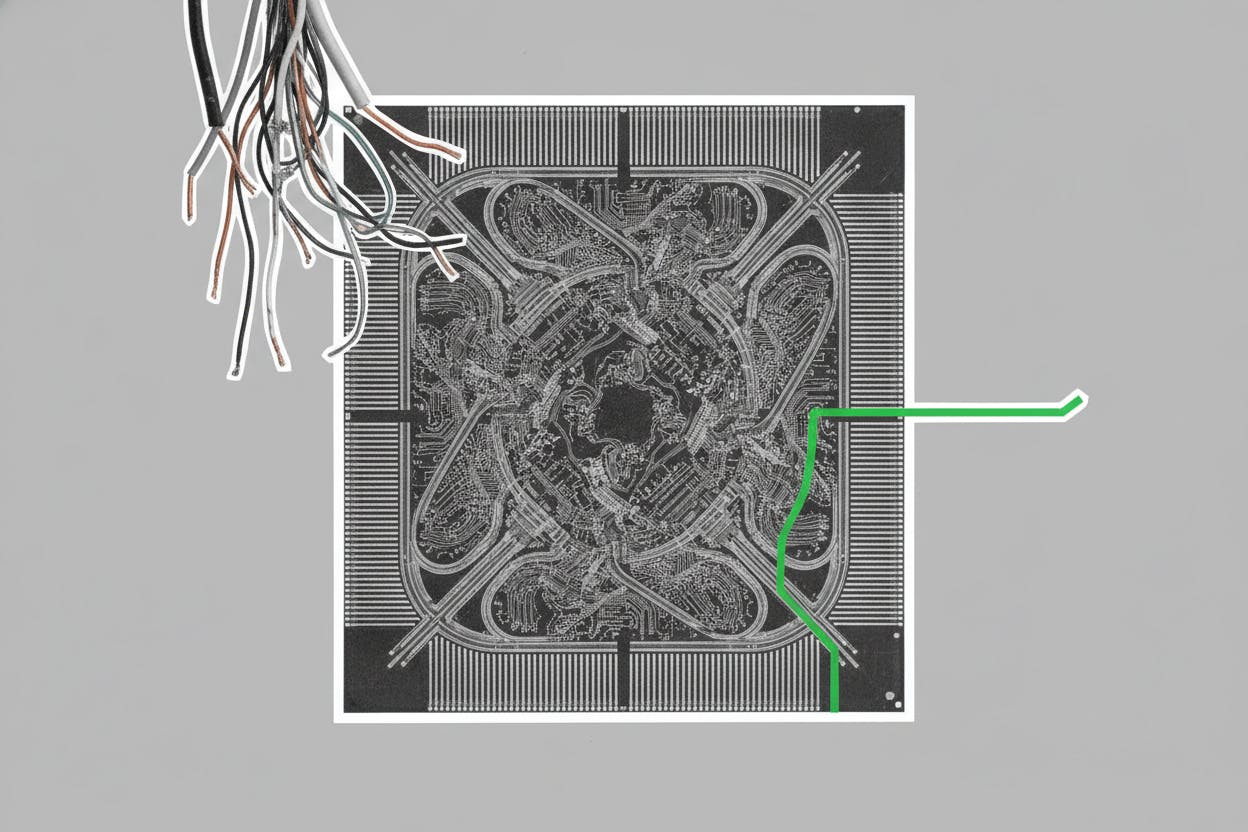
Wall Street is taking a fresh look at a lesser-known player in the chip-design world. Oppenheimer, an investment banking firm, has started coverage on Arteris, a company that sells network-on-chip (NoC) intellectual property — the on-chip "traffic system" that moves data between computing blocks inside modern chips.
The thesis is straightforward: as artificial intelligence chips become more complex, more chip designers are likely to license this plumbing rather than build it from scratch. Oppenheimer sees this trend benefiting Arteris alongside Arm, another chip-technology company that shares the commercial NoC market.
What Is Network-on-Chip Technology?
To understand Arteris, it helps to think about how modern chips are built. Today's advanced processors — especially those used for AI, high-performance computing, and automotive applications — are no longer single, monolithic designs. Instead, they are often systems-on-chip (SoCs) or collections of smaller chips called chiplets, all working together.
These components need to communicate quickly and efficiently. That's where network-on-chip technology comes in. It acts like a traffic system inside the chip, routing data between different computing blocks. Without it, the chip would slow down or become too complex to design efficiently.
Arteris sells this interconnect IP to chip companies, which then integrate it into their own designs. The company makes money in two ways: upfront licensing fees and ongoing royalties when chips go into mass production.
The Numbers Behind the Call
Oppenheimer's bullish view is grounded in concrete contract data. According to the firm, Arteris' annual contract value (ACV) — a forward-looking measure of signed licensing agreements — rose 27% to $77 million in 2025. Meanwhile, remaining performance obligations (RPO) — revenue already under contract but not yet recognized — climbed 32% to $116.8 million.
Together, these figures imply nearly 80% visibility into 2026 licensing revenue, Oppenheimer says. That matters because licensing dollars are often recognized over time, so investors care less about a single quarter's sales and more about how quickly that contracted backlog turns into reported revenue.
Oppenheimer also expects royalty growth to improve as more customers move from design work into mass production. When chips start shipping in volume, they typically generate bigger, steadier royalty checks for Arteris.
What It Means for Investors
For everyday investors, the key takeaway is that Arteris' stock story is shifting from demand uncertainty to conversion speed. With nearly 80% of next year's licensing revenue described as "visible," the focus now is on how fast signed contracts show up in the income statement.
That makes the shares more sensitive to updates in ACV and RPO metrics — and to signs that customers are graduating from design projects into mass production, where royalties can ramp and the business starts to look more recurring.
The broader backdrop also matters. The AI boom is driving demand for more complex chips across data centers, automotive systems, and edge devices. This trend has already lifted other chip-equipment companies, as seen in Atlas Copco's recent 27% order surge on chip equipment demand. Similarly, energy IPOs are surging as AI data centers drive record electricity demand, highlighting the ripple effects of AI infrastructure buildout.
For Arteris, the question is whether it can convert its growing contract backlog into sustained revenue growth. If more of its customers move into mass production, the royalty stream could become a meaningful driver of earnings — and that could make the stock more attractive to growth-oriented investors.
Risks to Watch
No investment story is without risks. Arteris operates in a competitive market where Arm is a dominant player. Any slowdown in AI chip development or a shift in design trends could reduce demand for its technology. Additionally, the company's reliance on a relatively small number of large customers means that losing a key client could have an outsized impact.
Investors should also note that licensing revenue can be lumpy, depending on when contracts are signed and how quickly designs move to production. While Oppenheimer's visibility argument is encouraging, it doesn't guarantee that revenue will materialize on schedule.
For now, the market is watching closely. With AI chips getting more complex by the quarter, companies like Arteris that provide essential building blocks could see growing demand — but the proof will be in the execution.