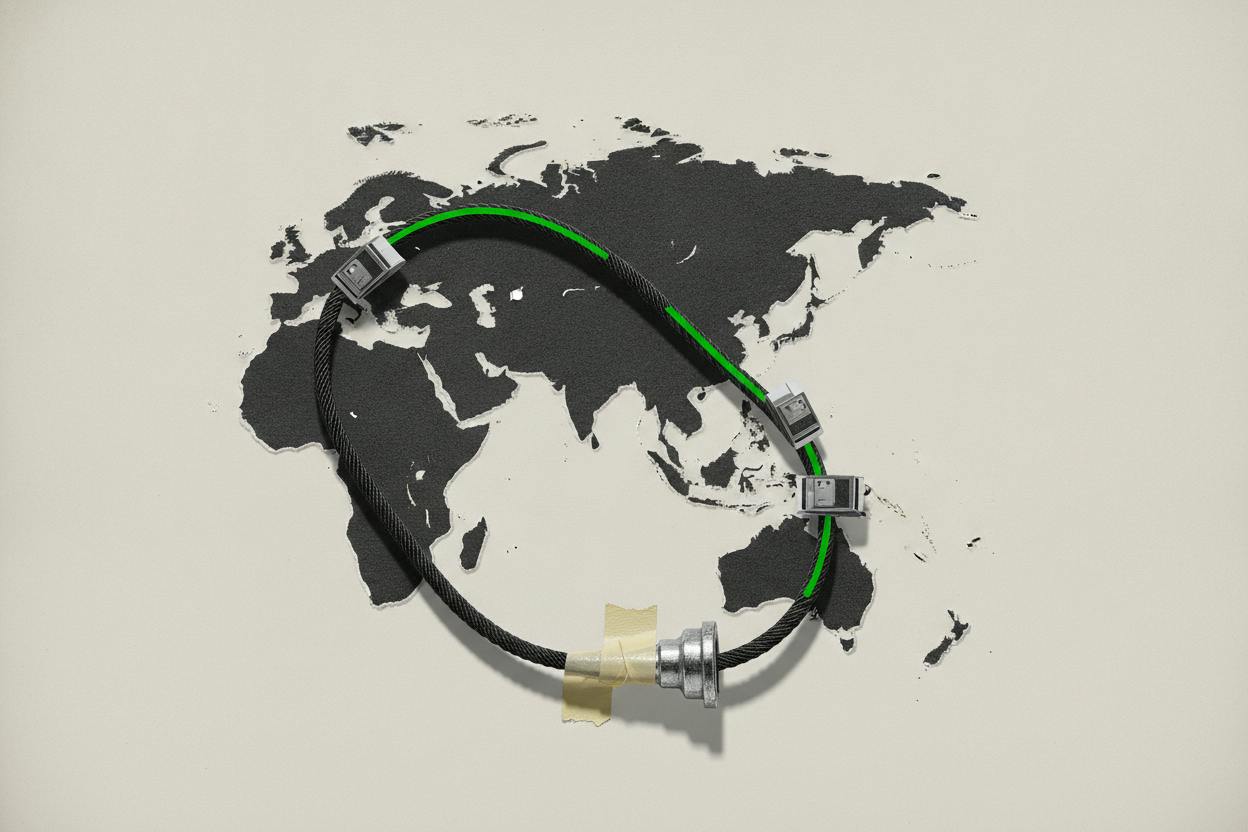
Finance officials from Southeast Asia, China, Japan, and South Korea took a step toward smoother cross-border money movement on Thursday. The group, known as ASEAN+3, agreed to set up a new working group in Kyoto to link payment systems across the region and bring rules for digital assets closer together. They also highlighted a faster emergency lending mechanism that took effect this month under the region's $240 billion Chiang Mai Initiative.
Why cross-border payments are a pain point
Most payment apps in Asia were built for domestic use. But trade, tourism, and online shopping increasingly push money across borders. That creates friction: systems don't always connect smoothly, and countries regulate things like stablecoins and crypto exchanges differently. For an everyday investor, this means sending money to another country can be slow, expensive, or subject to unpredictable rules.
The new Kyoto forum aims to coordinate technical standards and regulatory approaches so transfers can be cheaper, faster, and easier to supervise. Think of it as trying to make the region's payment rails talk to each other, much like how different phone networks eventually allowed calls across borders. The goal is to reduce the friction that currently makes cross-border digital payments clunky.
The Chiang Mai Initiative gets a faster trigger
In the same meeting, deputies highlighted an emergency lending mechanism that took effect this month inside the Chiang Mai Initiative. That's a currency-swap arrangement that lets member countries exchange local currency for hard currency in a crunch. The idea is to get liquidity to a country sooner after shocks like natural disasters or pandemics, before financial stress snowballs.
For markets, the speed of this backstop matters as much as its size. A regional safety net only calms investors if it can move cash quickly. By speeding up access to swap-line liquidity, ASEAN+3 is trying to reduce the risk that a sudden shock turns into a funding squeeze, sharp currency swings, or emergency rate hikes. If investors believe that backstop is credible and fast, they may demand a smaller “just in case” premium to hold local-currency government bonds and currencies across the bloc—especially during global risk-off moments.
What it means for investors
For the average investor, this is about reducing risk in a region that's increasingly important to global growth. If cross-border payments become cheaper and faster, it could boost trade and tourism, which supports corporate earnings. A more credible emergency lending backstop could also make regional assets less volatile during global market stress.
That said, the working group is just a starting point. Aligning rules across many countries with different priorities is hard. And the Chiang Mai Initiative has been criticized in the past for being slow to activate. The faster trigger is a positive sign, but investors will want to see it work in practice.
For those with exposure to Asian markets—through index funds, ETFs, or individual stocks—this development is a quiet but meaningful step toward a more resilient regional financial system. It's not a headline-grabbing event, but it's the kind of behind-the-scenes work that can reduce systemic risk over time.
Looking ahead
The Kyoto working group will need to tackle technical standards, data privacy, and regulatory harmonization—all tricky issues. Meanwhile, the faster emergency lending mechanism will be tested only when a real crisis hits. For now, the commitment is clear: Asia's finance officials want cross-border digital payments to work better, and they're putting structures in place to make that happen.
As always, investors should watch how these initiatives develop. If they succeed, the payoff could be lower transaction costs, more stable currencies, and a stronger regional safety net. If they stall, the friction that exists today will likely persist. Either way, this is a story worth keeping an eye on.