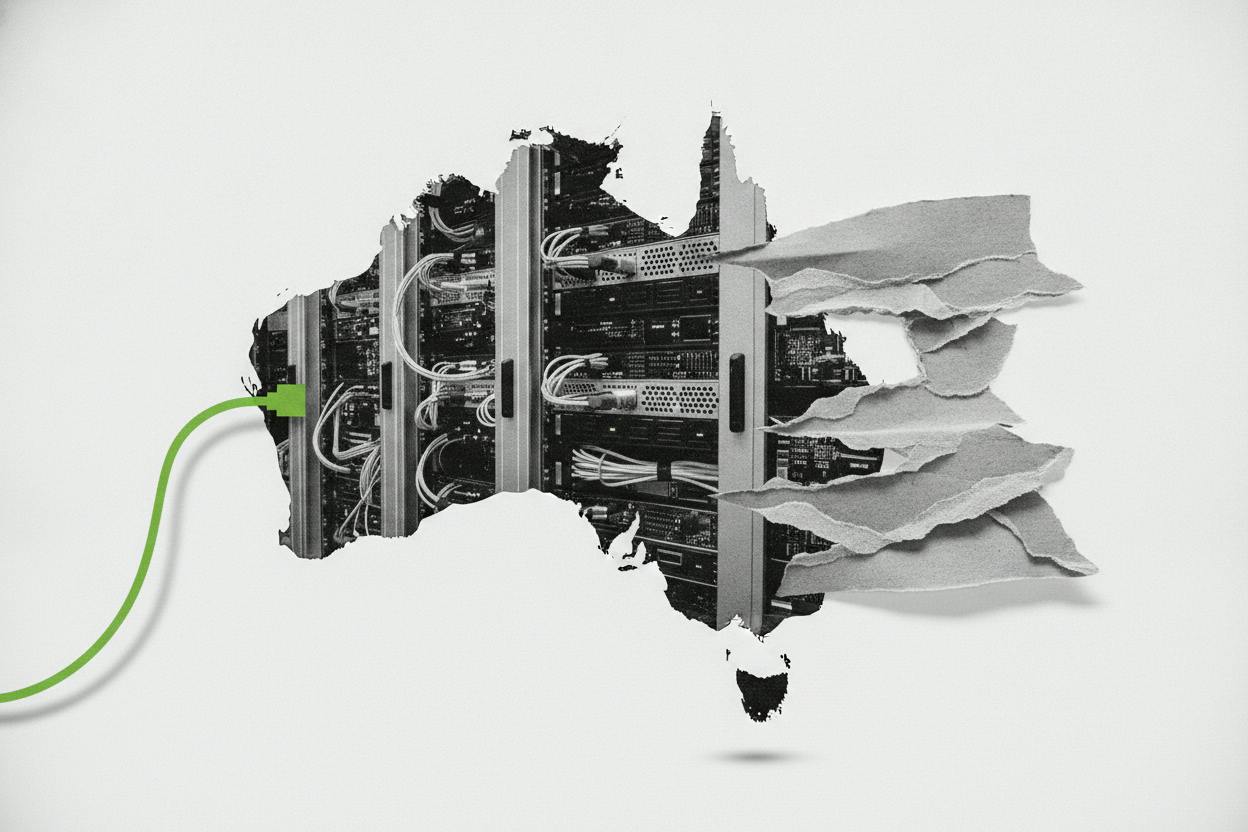
Australian businesses went on an investment spree in the September quarter, with a burst of spending on data center equipment helping to deliver the biggest jump in private capital spending in over a decade. The figures, released by the Australian Bureau of Statistics, show private capital spending rose 12.2% in real terms to A$59.5 billion, far exceeding what economists had expected.
The standout driver was an 87% leap in information media and telecommunications equipment, largely tied to imported servers and other data center gear. That surge reflects the global race to build out artificial intelligence and cloud computing capacity, a trend that has been reshaping investment patterns across developed economies.
What the numbers show
Capital spending, often called capex, is a key measure of business confidence and future productive capacity. When companies invest in new equipment, buildings, and technology, it typically signals they expect demand to grow. The 12.2% quarterly increase is the largest since 2011, a period when Australia was in the midst of a mining investment boom.
But the composition of this spending matters. The heavy reliance on imported hardware means that while the investment line in the national accounts gets a big boost, a significant portion of that spending leaks overseas as imports. In GDP accounting, imports subtract from growth, so the net effect on economic output can be smaller than the headline capex figure suggests.
Still, the rollout of data center equipment isn't just about the hardware. Building and fitting out these facilities requires local construction workers, electricians, grid connections, and specialized labor. That activity can keep the domestic economy busy and put pressure on capacity, even if the servers themselves come from abroad.
What it means for interest rates
This investment pulse could make the Reserve Bank of Australia (RBA) less eager to cut interest rates quickly. When businesses are spending heavily and capacity is tight, there's a risk that demand outruns supply, which can feed into inflation. Central banks often respond by keeping policy tighter for longer to cool things down.
Markets still expect the RBA's next move to be a rate cut, but the strength of this capex data could push those expectations further out. For investors, this creates a classic tug-of-war. Strong investment can support the case for rates staying higher for longer, which tends to show up first in shorter-dated bonds like three-year Australian government bond futures. At the same time, the import-heavy nature of the spending means the GDP growth boost may be less than the headline suggests, which could argue for a more cautious outlook.
As we've seen in other markets, the AI data center boom is reshaping investment patterns globally, with companies borrowing heavily to fund these projects. In Australia, the trend is similar, though on a smaller scale.
What it means for your money
For everyday investors, this data offers a few takeaways. First, the strength in business investment is a positive sign for the overall economy, even if the GDP impact is muted. Companies that supply construction, electrical, and other services to data center projects could see sustained demand.
Second, the interest rate outlook is a double-edged sword. If the RBA holds rates higher for longer, that's good for savers and bond investors but can weigh on stocks that are sensitive to borrowing costs. It also affects mortgage holders, who may have to wait longer for relief on their repayments.
Third, the import leakage is a reminder that not all investment spending translates directly into domestic growth. For investors, it's worth looking beyond headline numbers to understand where the money is actually going.
The data center boom is part of a broader global trend, and investors have been scrutinizing debt-funded data center projects for signs of overbuilding. In Australia, the capex figures suggest businesses are still confident enough to commit to large-scale projects, but the sustainability of that spending will depend on whether the demand for AI and cloud services continues to grow.
For now, the RBA will be watching these numbers closely. If investment keeps surging, the case for a quick rate cut weakens. But if the global AI boom falters, the spending could reverse just as quickly. Either way, the data center story is one that will keep shaping Australia's economic outlook for some time.