The US dollar took a step back on Tuesday, easing from a one-week low as Treasury yields slipped, giving currency traders a moment to reassess before key central bank signals. The dollar index, which measures the greenback against a basket of major currencies, hovered near 103.7 after sliding earlier in the session. At the same time, the 10-year Treasury yield briefly touched 4.8%, a level that has become a focal point for markets in recent weeks.
For everyday investors, the dollar's moves might seem like a distant concern, but they ripple through portfolios in subtle ways. A weaker dollar can boost the value of international investments, lift commodity prices, and affect the earnings of US companies that do business abroad. So when the dollar takes a breather, it's worth paying attention.
Why Treasury yields matter for the dollar
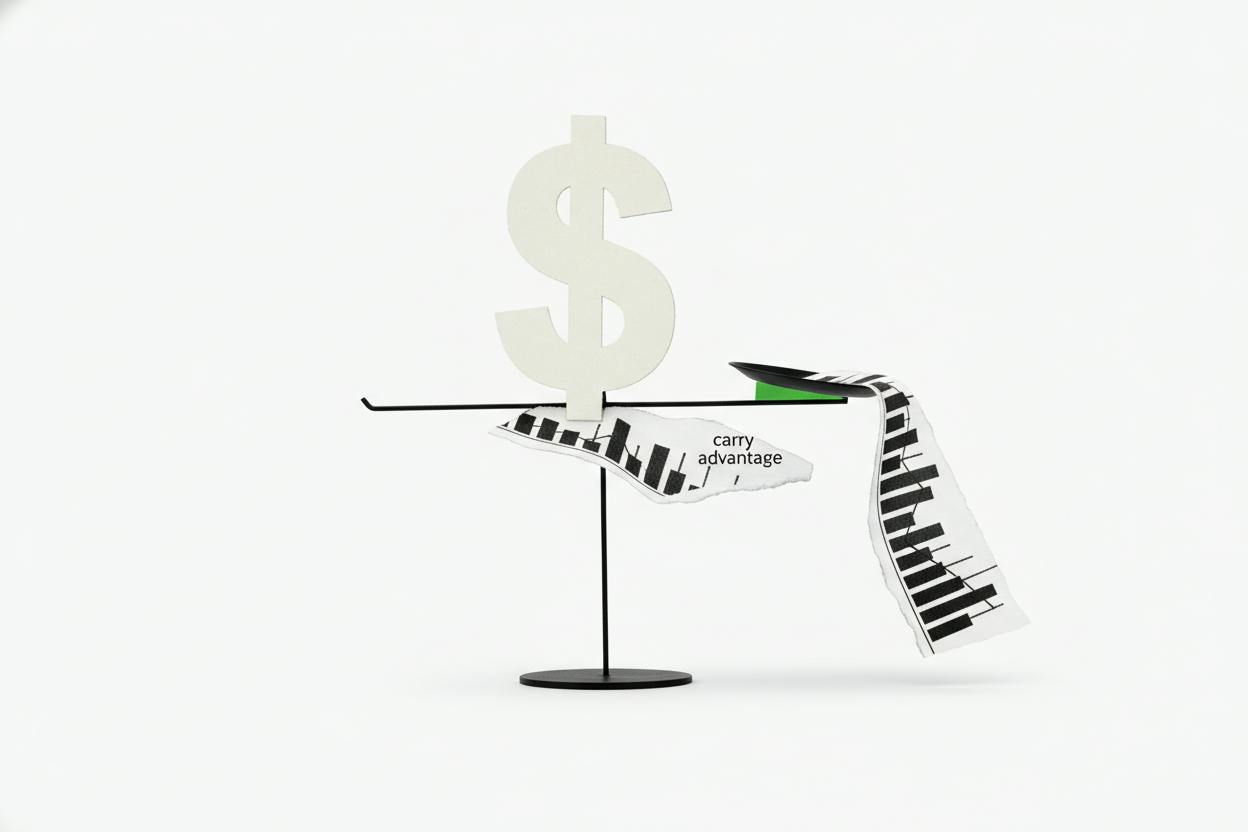
The relationship between Treasury yields and the dollar is one of the most fundamental in global finance. When US yields rise relative to those in other developed countries, investors can earn a higher return by holding dollars. That's known as the "carry" advantage, and it tends to attract foreign capital, supporting the dollar.
But when yields fall, that advantage shrinks. With the 10-year yield dipping toward 4.8%, the extra interest investors can earn by holding US assets over, say, German or Japanese bonds narrows. As a result, some traders who had built positions betting on a stronger dollar—so-called "long USD" trades—may decide to unwind them. That can lead to selling pressure on the greenback, even if the broad dollar index looks relatively calm.
The effect is often most visible in currencies that are sensitive to global growth and yield differentials. The Australian dollar, for instance, rebounded toward 0.6635 after dipping to 0.6557, while the Japanese yen firmed to around 159.06 per dollar. These are the kinds of currencies where shifts in yield gaps tend to show up first.
A thin market around Thanksgiving
Adding to the mix is the time of year. With US markets closed for Thanksgiving later this week, trading volumes are thinner than usual. In such conditions, even modest flows can move prices more than they would in a normal session. ING, a Dutch bank, flagged this "long weekend effect," noting that liquidity can be patchy and that currency moves might overshoot in either direction.
For investors, this means that the recent dollar weakness could be exaggerated by low liquidity, and it might not signal a lasting trend. It also means that sharp moves in currencies or yields could reverse quickly once more participants return to their desks.
What to watch: Fed and ECB signals
The bigger question is what the Federal Reserve and the European Central Bank will do next. Both central banks are navigating a delicate balance between taming inflation and supporting economic growth. Their upcoming meetings and commentary will likely set the tone for currency markets in the weeks ahead.
If the Fed signals that it's done raising rates or even hints at cuts, that could further reduce the dollar's yield advantage. On the other hand, if the ECB sounds more hawkish—meaning it's inclined to keep rates higher for longer—the euro could gain ground against the dollar. Either way, traders are reading the tea leaves, and the next few sessions could bring clearer direction.
For context, the 10-year Treasury yield has been a key driver of market sentiment across asset classes. As we noted earlier, the 4.8% level may act as a floor for yields, meaning that if it holds, the dollar's support could remain intact. Conversely, a break below that level could signal more room for the dollar to fall.
What it means for investors
For the average investor, the dollar's moves are not just a curiosity. A softer dollar can be a tailwind for international stocks and emerging market assets, as their local currencies appreciate against the greenback. It can also push up the price of commodities like oil and gold, which are priced in dollars. On the flip side, a weaker dollar can make imported goods more expensive, potentially feeding into inflation.
If you hold a diversified portfolio, these effects are already at work, even if you don't see them directly. The key takeaway is that the dollar's direction is closely tied to interest rates, and with the Fed and ECB both in focus, the coming weeks could bring more volatility.
As we've seen in other markets, falling yields can also lift interest-rate-sensitive sectors like real estate. That's a reminder that the same forces moving the dollar are also shaping stock and bond markets.
For now, the dollar's pause is a reminder that markets are never static. Whether it's a blip or the start of a trend will depend on what the world's most powerful central banks say next.