Most Asian markets took their cue from a strong Wall Street session on Tuesday, but Australia's benchmark index barely budged as investors weighed fresh signals from the Reserve Bank of Australia (RBA) and a mixed batch of local company news.
The ASX 200 closed little changed at 8,831.30, lagging the broader regional rally. US stocks had risen on an earnings-heavy day, with the Dow Jones Industrial Average up about 1% and the S&P 500 also moving higher, helped by industrial giant 3M after it lifted its full-year profit outlook.
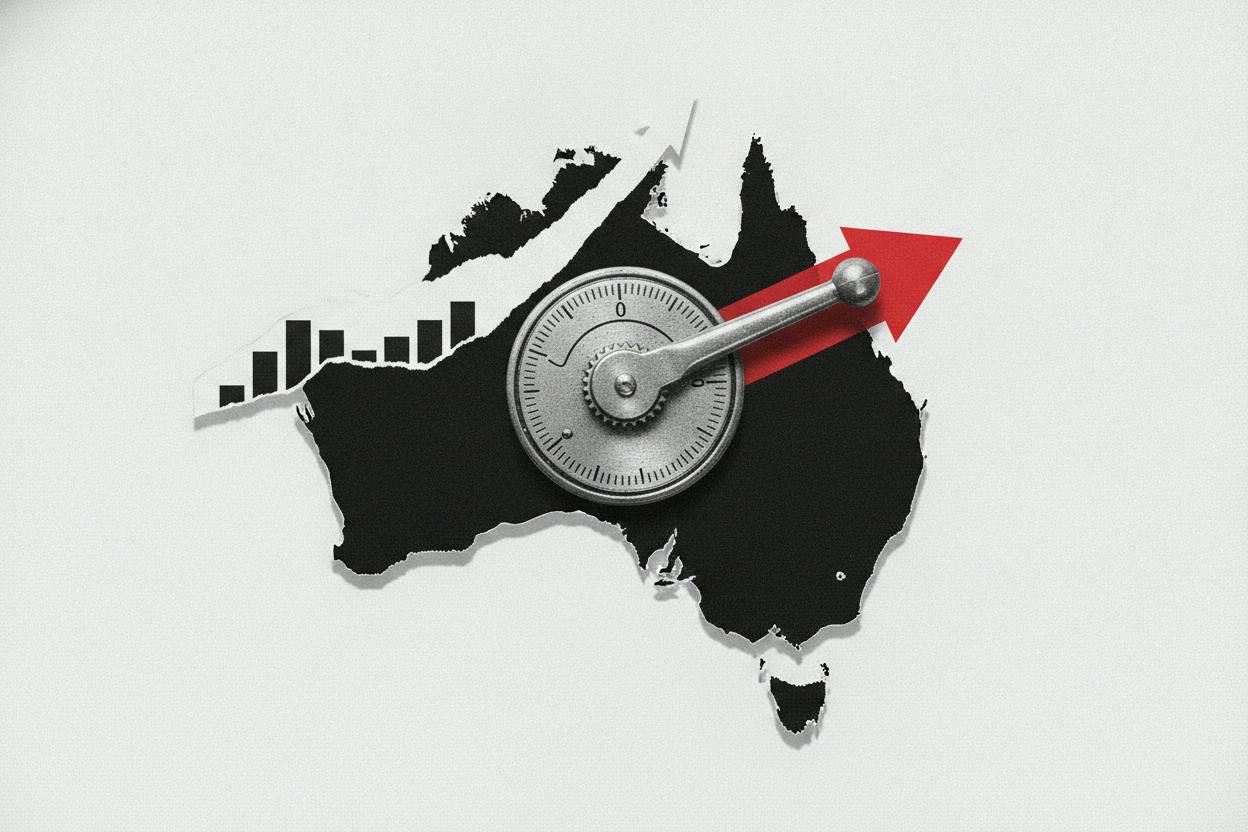
That upbeat tone spread across much of Asia, but Australia's market stayed muted. The reason: attention has shifted to what happens next with interest rates, and the central bank's own deputy governor has made clear the path is far from certain.
RBA deputy governor: rate decision is 'genuinely open'
RBA deputy governor Andrew Hauser said tighter monetary policy is slowing the economy, but a worsening inflation outlook has left him unsure whether rates might need to rise again at next month's meeting, according to Reuters. His comments underscore that the central bank is still wrestling with the same dilemma that has defined much of the past year: how to bring inflation down without tipping the economy into a downturn.
For everyday investors, the key takeaway is that the next RBA decision is not a foregone conclusion. Markets had been pricing in a period of stable rates, but Hauser's remarks suggest a hike is still on the table if inflation proves stickier than expected.
That uncertainty matters because interest rates act as the 'discount rate' that links future corporate profits to today's share prices. When the expected path of rates shifts, investors revalue stocks accordingly. Companies whose value depends heavily on earnings expected years from now—often called 'long-duration' stocks—are particularly sensitive to even small changes in the expected peak rate.
That helps explain why Australia lagged the US-led rally. While Wall Street cheered strong earnings, Australian investors were busy marking down rate-sensitive growth names. A clear example is data-center operator NEXTDC, which cut its fiscal 2027 net revenue guidance. For a company already facing a tougher rate backdrop, a downgrade to long-term revenue expectations can hit the share price hard.
Consumer spending still holding up
Adding to the mixed picture, National Australia Bank (NAB), one of the country's biggest lenders, said consumer spending rose 1.1% month-on-month in September. That suggests demand is still holding up, which is a double-edged sword for the RBA: strong spending can keep inflation elevated, but it also signals the economy is not collapsing.
For investors, resilient consumer spending is generally positive for banks and retailers, but it also raises the odds that the RBA might need to keep rates higher for longer. That tension is likely to keep the market on edge until the central bank's next decision.
What it means for investors
For Australian investors, the immediate takeaway is that the ASX 200 is likely to remain range-bound until the RBA's next meeting. The index's flat close at 8,831.30 reflects a market that is waiting for clarity on rates rather than following the global risk-on mood.
Investors should watch for any further commentary from RBA officials, as well as upcoming inflation data, which will be crucial in shaping the rate decision. If inflation surprises to the upside, expect more volatility in rate-sensitive sectors like technology and real estate. If it cools, the market could catch up to the US rally.
In the meantime, the divergence between Asia and Australia is a reminder that local factors—especially central bank policy—can override global sentiment. As strong US earnings ease recession worries in other markets, Australia's focus remains squarely on the RBA.
For those with exposure to growth stocks, the NEXTDC guidance cut is a cautionary tale about the risks when rate expectations shift. As NEXTDC's recent plunge highlighted, even well-positioned companies can suffer when the market reprices for higher rates.
Overall, the message for investors is to stay diversified and be prepared for more two-way movement in the ASX until the RBA's next move becomes clearer.