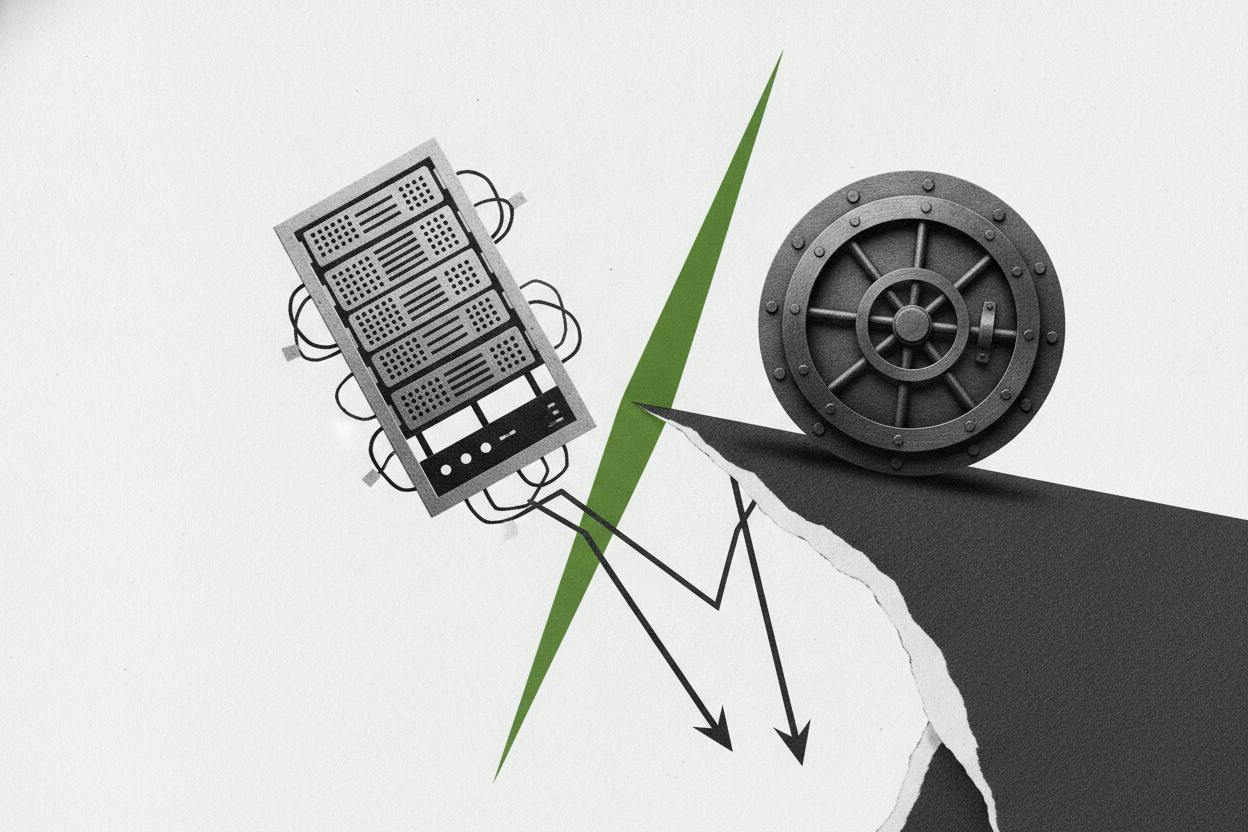
Australian shares ended a choppy session slightly higher on [day], as investors sought safety in bank stocks while a sharp sell-off in data-center operator Nextdc and a fresh warning from the central bank rattled sentiment.
The S&P/ASX 200 index closed up 0.2%, with the so-called 'Big Four' banks all finishing in the green, rising about 1% on average. The move into lenders was widely seen as defensive, a classic rotation when investors worry about economic uncertainty.
Nextdc's worst day in nearly a decade
The standout loser was Nextdc, which tumbled more than 45% — its steepest one-day drop in almost nine years. The company cut its revenue outlook and said it would pause future developments, a reset that sent shockwaves through the tech sector and dragged it sharply lower.
Nextdc builds and operates data centers, the physical facilities that house servers and computing equipment for cloud services and artificial intelligence workloads. Its growth has been tied to the booming demand for digital infrastructure, but that expansion has hit a wall: power supply constraints, particularly in Melbourne, have delayed capacity that was expected to come online by 2027, pushing it out to 2028. As we noted in our earlier coverage of the power grid risks for data-center stocks, these delays are not unique to Nextdc — the entire sector is wrestling with how to secure reliable electricity for energy-hungry facilities.
The company's decision to pause future developments is a significant strategic shift. It suggests that management sees more risk than reward in committing capital to projects that may not be able to get power in time. For investors, it's a reminder that even high-growth tech stories can stumble when the underlying infrastructure doesn't keep pace.
RBA's inflation warning adds to jitters
Adding to the cautious tone, the Reserve Bank of Australia (RBA) warned that inflation still looks 'materially worse' than previously thought. That language is a clear signal that the central bank is not ready to cut interest rates anytime soon — and could even consider raising them again if price pressures persist.
Higher interest rates are generally bad for growth stocks like Nextdc, because they reduce the present value of future earnings. They also increase borrowing costs for companies that rely on debt to fund expansion, which is exactly what data-center operators do. This helps explain why the tech sector bore the brunt of the selling on [day].
For everyday investors, the RBA's stance means that borrowing costs for mortgages and business loans are likely to stay elevated for longer. That can weigh on consumer spending and corporate profits, which in turn affects the broader stock market.
What it means for investors
The rotation into banks is a classic defensive move. Banks tend to be less volatile than tech stocks and often benefit from higher interest rates, as they can charge more for loans. But they are not immune to economic downturns — if the RBA's tightening tips the economy into a slowdown, loan losses could rise.
For those holding tech stocks, the Nextdc slide is a stark reminder of the risks in that sector. While the long-term demand for data centers and cloud computing remains strong, the near-term challenges — power shortages, rising costs, and higher interest rates — are real. As we've seen with other companies, such as Intuitive Surgical trimming its growth outlook, even market leaders can disappoint when they face operational hurdles.
Investors should also keep an eye on the broader market. The ASX 200's modest gain masks a wide divergence: banks are propping up the index while tech and other rate-sensitive sectors are struggling. This kind of split often signals that investors are nervous about the economic outlook, not confident.
Looking ahead, the key dates to watch are the RBA's next policy meetings and any further updates from companies on their growth forecasts. If inflation data continues to come in hot, the central bank may be forced to act, which could trigger more volatility. On the other hand, if price pressures ease, there is room for a relief rally.
For now, the message from the market is clear: caution is the watchword. Diversification across sectors — not just piling into the hottest tech names — remains a sensible strategy for weathering these uncertain times.