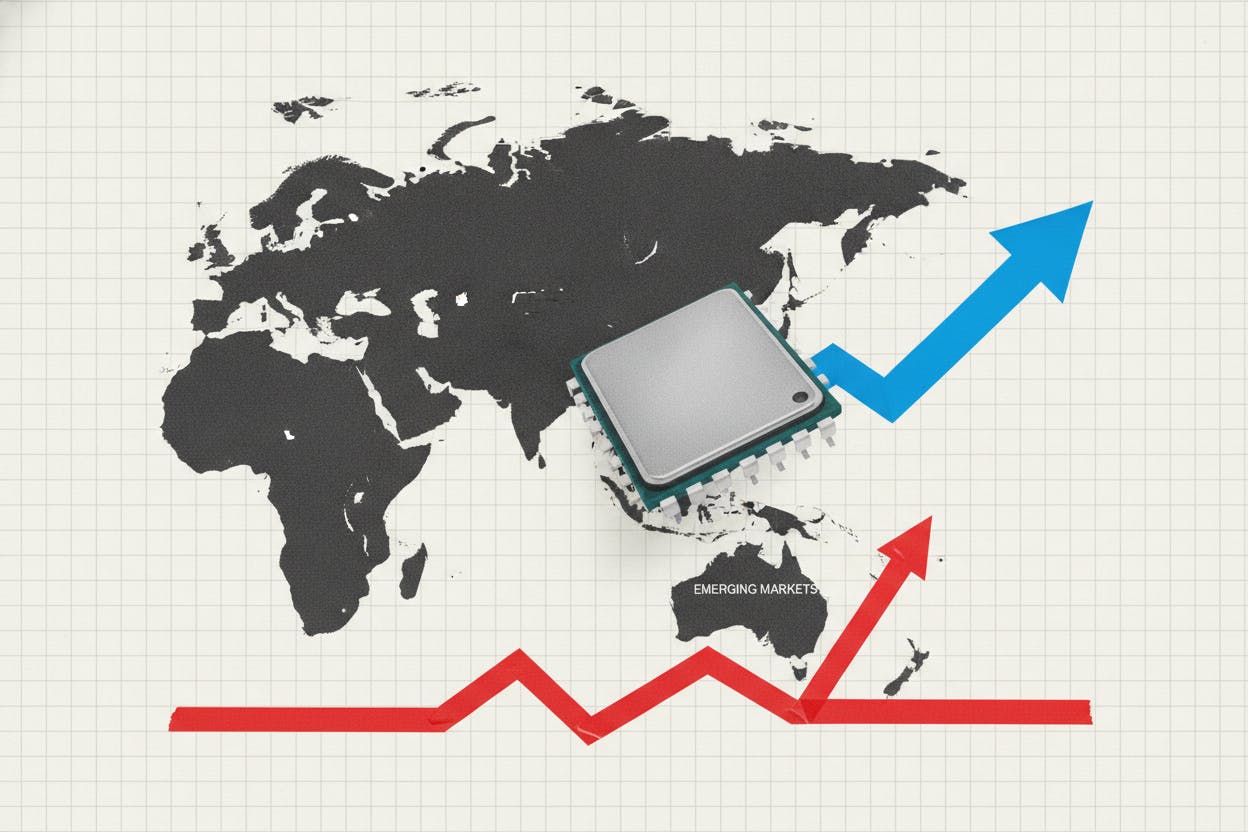
Emerging-market stocks pushed higher on Thursday, shaking off a sharp rise in oil prices as a surge in Asian semiconductor stocks fueled gains. The MSCI emerging markets index climbed 1.2%, according to Reuters, even as crude oil jumped 4% and investors turned their attention to upcoming interest rate decisions in Turkey and South Africa.
The day's advance was driven largely by South Korea's tech-heavy KOSPI index, which soared 4.4%. Chipmaking giants SK Hynix and Samsung Electronics led the charge after fresh optimism around artificial intelligence spending. Both Alphabet and Tesla recently flagged higher capital expenditure plans, reinforcing expectations that demand for AI chips and data center infrastructure will remain strong.
Why Chip Stocks Matter for Emerging Markets
South Korea is a heavyweight in the MSCI emerging markets index, and its semiconductor sector is a key driver of broader EM performance. When chip stocks rally, they can pull the entire index higher—even when other parts of the market are under pressure. That's exactly what happened Thursday: the oil price spike, which typically weighs on energy-importing emerging economies, was offset by the tech-led gains.
The dollar held steady during the session, while emerging-market currencies showed mixed results. That suggests the move was stock-specific rather than a broad shift in investor sentiment toward EM assets. For everyday investors, the takeaway is that sector concentration matters. A handful of large tech companies can sometimes mask weakness elsewhere in the index.
Oil's 4% Jump: A Familiar Headwind
Oil prices rose sharply on Thursday, adding to recent volatility in energy markets. The move comes amid ongoing supply concerns, including disruptions in the Red Sea and broader geopolitical tensions. For emerging markets, higher oil prices are a double-edged sword: they benefit oil-exporting nations like Saudi Arabia but hurt importers such as India, Turkey, and South Africa.
Investors have been watching oil closely, as sustained price increases could feed into inflation and complicate central bank policy. The recent surge past $100 earlier this year rattled markets, though prices have since moderated. Thursday's 4% jump is a reminder that energy costs remain a wild card for EM stocks.
Rate Decisions in Turkey and South Africa
Markets are also looking ahead to monetary policy decisions from Turkey and South Africa, two of the more closely watched emerging-market central banks. Both countries have struggled with high inflation and currency depreciation, and their rate choices will signal how aggressively they are tackling price pressures.
Turkey's central bank has been on a tightening path after years of unorthodox policy, while South Africa's Reserve Bank has held rates steady as it balances inflation with sluggish growth. The outcomes could affect local currencies and bond yields, which in turn influence foreign investor flows into EM assets.
What It Means for Investors
For everyday investors with exposure to emerging markets—whether through index funds, ETFs, or individual stocks—Thursday's move highlights the importance of understanding what's under the hood. The MSCI emerging markets index is not a monolith; it includes everything from Chinese tech giants to Brazilian miners to South Korean chipmakers. A rally in one sector can lift the whole index, but that doesn't mean all EM stocks are doing well.
The AI-driven optimism around chip stocks is a genuine tailwind, but it's also a reminder that emerging markets remain sensitive to global interest rates, commodity prices, and currency moves. The fact that the index rose despite a 4% oil jump is encouraging, but investors should watch whether oil stays elevated and how central banks in Turkey and South Africa respond.
As always, diversification matters. A broad EM index fund gives you exposure to these dynamics, but it also means you're along for the ride when chip stocks surge—or when oil spikes. For those looking to understand the forces driving their portfolios, keeping an eye on both tech earnings and energy markets is a good starting point.