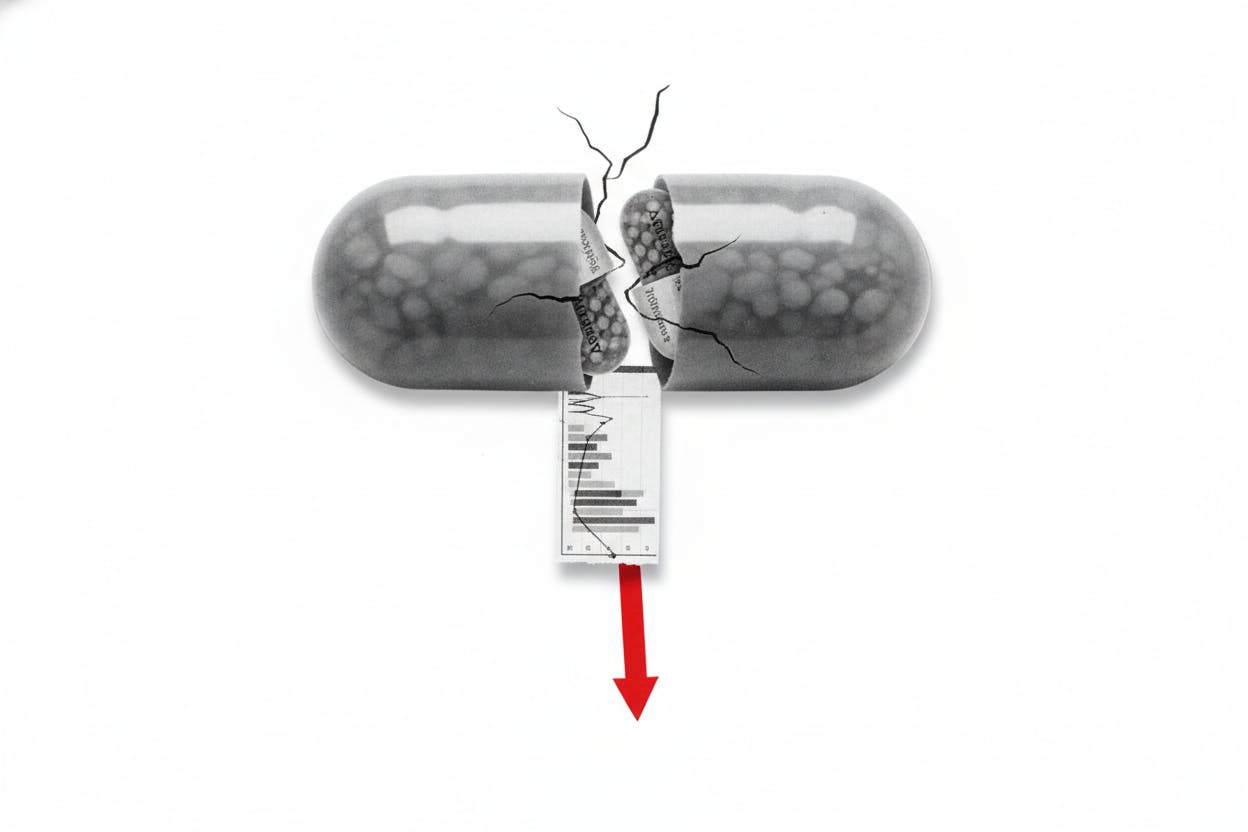
AstraZeneca shares fell sharply in early trading Monday after Reuters reported that the British drugmaker and US rival Bristol Myers Squibb have held early talks about a possible combination. The news, which echoed an earlier Financial Times report, sent AstraZeneca's stock down about 7% as investors weighed the potential mega-merger.
According to Reuters, citing a person familiar with the matter, the two companies have discussed a tie-up that could create a pharmaceutical giant worth nearly $400 billion combined. As of Friday's close, Reuters put AstraZeneca's market value at $264.11 billion and Bristol Myers' at $133.41 billion.
Why investors are skeptical
Despite the sheer size of the potential deal, the market's initial reaction was far from enthusiastic. Analysts and shareholders told Reuters they struggled to see the strategic logic behind combining the two companies. The skepticism reflects a broader pattern in the pharmaceutical industry, where mega-mergers often promise cost savings and pipeline synergies but can also bring integration headaches and cultural clashes.
AstraZeneca has been a standout performer in the sector, with a strong oncology franchise and a pipeline that has delivered steady growth. Bristol Myers, meanwhile, has faced challenges including patent expirations on key drugs and a need to replenish its portfolio. A merger could theoretically diversify risk, but investors appear to question whether the combined entity would be more than the sum of its parts.
“The numbers are eye-catching, but the strategic fit is less obvious,” said one analyst quoted by Reuters. The market's reaction suggests that many shareholders would rather see AstraZeneca continue on its own path than take on the risks of a massive integration.
What a deal could mean for the pharma landscape
If the talks were to progress, a combined AstraZeneca-Bristol Myers would rank among the world's largest drugmakers by revenue and market value. Such a deal would likely face intense regulatory scrutiny, given the overlap in areas like oncology and immunology. Antitrust regulators on both sides of the Atlantic have become more aggressive in reviewing large pharmaceutical mergers, often demanding divestitures to protect competition.
For Bristol Myers, a tie-up with AstraZeneca could provide access to a broader pipeline and a stronger global footprint. For AstraZeneca, it could offer scale in the US market and help diversify beyond its core oncology focus. But those potential benefits are exactly what investors are questioning—whether the promised synergies would materialize or whether the combined company would become unwieldy.
The news also comes at a time when the pharmaceutical sector is under pressure from drug pricing reforms and the looming loss of patent exclusivity on several blockbuster drugs. Companies have increasingly turned to mergers and acquisitions to bolster their pipelines, but the track record of mega-deals is mixed. Some, like Pfizer's acquisition of Wyeth, are seen as successes, while others have struggled to deliver value.
What it means for investors
For everyday investors, the immediate takeaway is that merger speculation can cause significant short-term volatility. AstraZeneca's 7% drop shows how quickly sentiment can shift when a deal is rumored, even if the talks are preliminary and may not lead to anything.
If you hold AstraZeneca shares, the slide reflects the market's concern that a deal could be value-destructive. If you don't, the news is a reminder that pharmaceutical mega-mergers are complex and often face long regulatory reviews. The outcome is far from certain, and investors should be prepared for more headlines—and more price swings—as the story develops.
In the meantime, the broader market context is worth noting. European stocks have been buoyed by rising oil prices and US-Iran talks, but pharma-specific news can move individual names regardless of the overall trend. For those watching the sector, the recent Bristol Myers earnings report highlighted both strengths and challenges, including launch delays that have tempered enthusiasm.
Investors should also keep an eye on how regulators and shareholders react if the talks become more formal. Any deal would require approval from both companies' boards and shareholders, and antitrust hurdles could be significant. Until then, the situation remains speculative, and the market's skepticism may persist.
As always, it's wise to focus on the fundamentals of any company you own rather than reacting to every rumor. The pharma sector offers long-term growth potential, but mega-mergers are not guaranteed to create value. This episode is a reminder that even the biggest deals can be met with doubt.