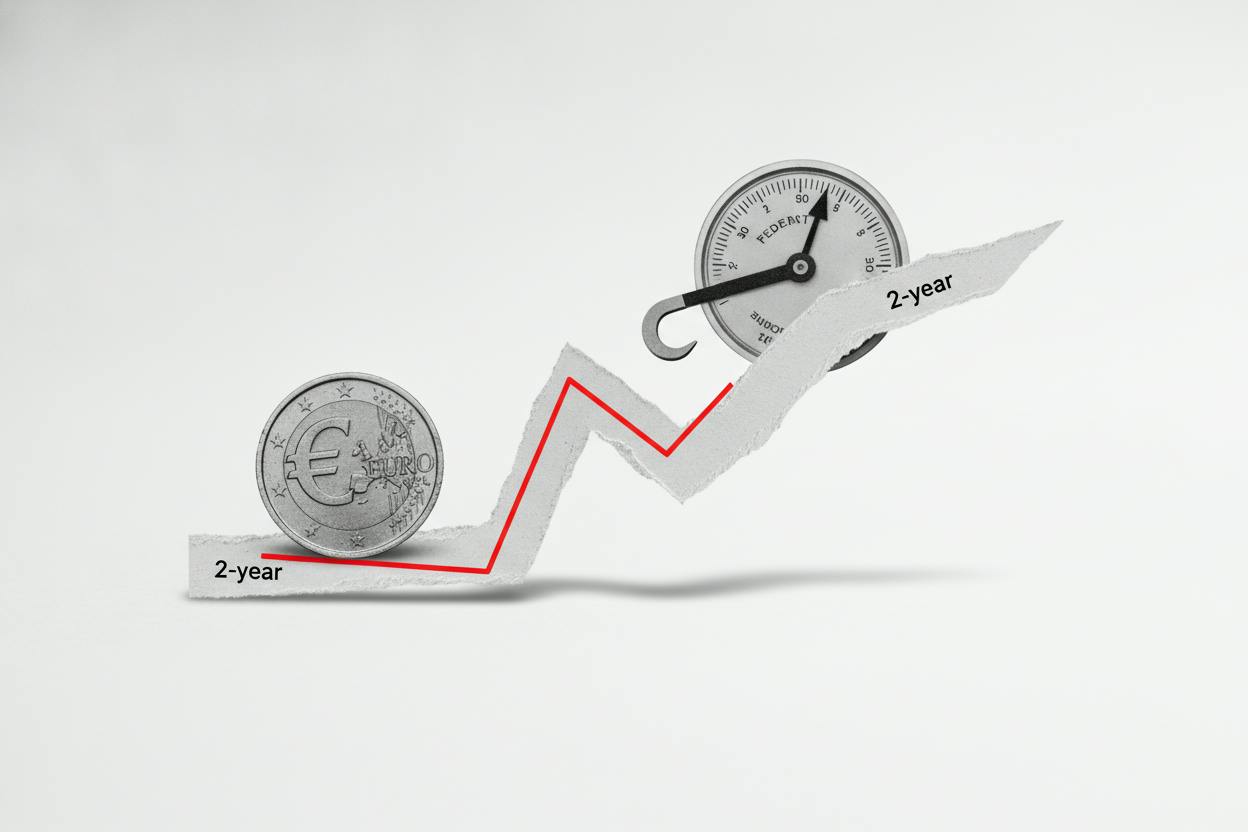
Short-dated eurozone bond yields ticked higher on Thursday, as investors digested the Federal Reserve's latest rate increase and its signal that more tightening could follow. The move rippled across global markets, with Europe's bond market feeling the impact most acutely in shorter-term debt, where yields are closely tied to central-bank policy expectations.
Germany's 2-year yield rose 3.5 basis points to 3.247%, while the 10-year yield edged up 1.5 basis points to 3.526%, still hovering near its recent 17-year high. A basis point is one-hundredth of a percentage point. When bond prices fall, yields rise, and the increase reflects investors demanding higher returns to hold government debt.
Why the Fed's move matters for Europe
The Federal Reserve raised its benchmark interest rate to a range of 3.75% to 4% and signaled that it could hike again, depending on incoming data. That hawkish stance—meaning the central bank is leaning toward further tightening—prompted investors to reassess how far other major central banks might go.
Because the US dollar and Treasury market are the linchpins of global finance, shifts in Fed policy tend to echo through bond markets worldwide. In Europe, the immediate effect was on short-dated yields, which are most sensitive to expectations for the European Central Bank's next moves. Markets now price in a greater-than-40% chance that the ECB will raise rates at its October meeting, a notable jump from earlier in the week.
The Fed's hike also lifted the dollar, which has been pressuring currencies and markets globally. For a look at how the dollar's strength is affecting Asia, see our piece on the dollar's seven-week high.
What this means for investors
For everyday investors, the key takeaway is that central-bank policy remains the dominant driver of bond markets. When the Fed moves, it doesn't just affect US Treasuries—it influences borrowing costs and investment returns around the world.
Higher yields on government bonds can be a double-edged sword. On one hand, they offer savers and investors better returns on low-risk assets like German bunds. On the other, they raise borrowing costs for governments, companies, and households, which can weigh on economic growth and corporate profits.
For those holding bond funds or ETFs, rising yields mean falling bond prices in the short term, though the income from new bonds becomes more attractive. For equity investors, higher yields can make stocks look less appealing relative to bonds, particularly for growth companies that rely on future cash flows.
The Fed's hawkish signal also has implications for the ECB. If the US central bank keeps tightening, the ECB may feel pressure to follow suit to support the euro and keep inflation in check. That could mean more rate hikes in Europe, which would further push up yields and potentially slow the region's economy.
Investors will be watching closely for the ECB's next policy meeting and any hints from policymakers about their intentions. The market's pricing of an October hike suggests that traders are bracing for more action.
For a broader view of how the Fed's move is affecting global markets, you can read about the Fed's 25bp hike and its impact on stocks and yields.
Looking ahead
The immediate reaction in eurozone bond markets is a reminder that no central bank operates in a vacuum. The Fed's decisions have global consequences, and investors need to stay alert to how policy shifts in one region can ripple through others.
In the coming weeks, attention will turn to economic data on both sides of the Atlantic. Strong US jobs or inflation numbers could reinforce the Fed's hawkish stance, while weak European data might temper expectations for ECB action. Either way, bond market volatility is likely to persist.
For now, the message from the markets is clear: central banks are still in tightening mode, and that means higher yields and more uncertainty for investors. As always, diversification and a long-term perspective remain prudent strategies.