Wall Street finished in the red on Wednesday after the Federal Reserve raised its benchmark interest rate by 0.25 percentage points and signaled that more increases could be on the way. The move, which was widely expected, still managed to unnerve investors because the central bank's guidance pointed to a higher peak rate than many had hoped for.
Typically, a rate hike that is well telegraphed can calm markets by removing uncertainty. This time, the opposite happened. Stocks slipped, Treasury yields climbed, and the dollar strengthened as traders adjusted to the prospect of a longer and more aggressive tightening cycle.
Why higher rates hit stocks
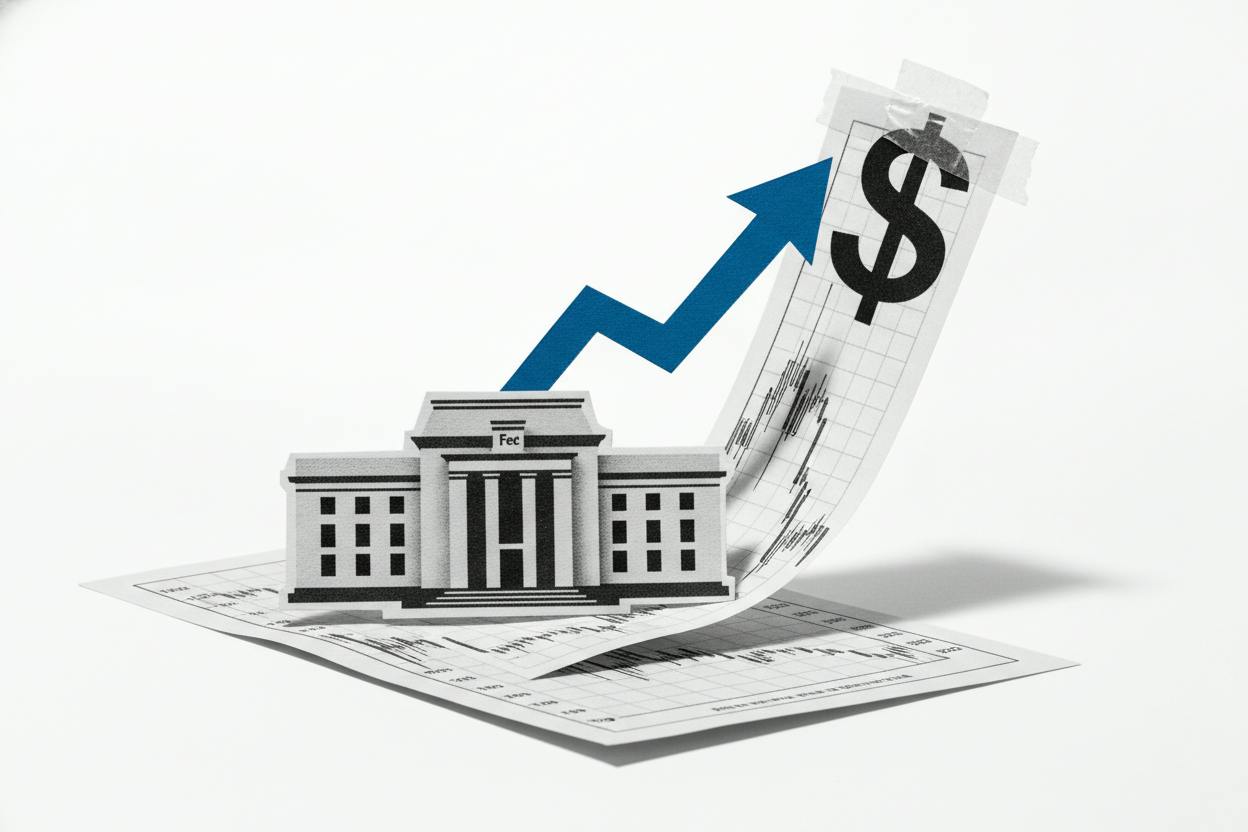
The mechanics behind the selloff are straightforward. When the Fed raises its policy rate, the yields investors demand on US government bonds tend to rise. Higher bond yields make stocks look less attractive because future corporate profits are discounted at a higher rate, reducing their present value. In plain terms, money parked in safer assets like Treasuries now offers a better return, so investors demand a bigger potential payoff from stocks to take on the risk.
The Fed's forward guidance matters just as much as the immediate move. If investors start pricing in a higher peak rate, borrowing costs can rise across the economy even without another immediate hike. Mortgages, corporate loans, and credit cards all become more expensive, which can slow spending and business investment. That sensitivity showed up in the market's reaction, with rate-sensitive sectors like technology and real estate among the hardest hit.
This is not the first time a Fed move has rattled markets. Earlier in the year, the first rate hike in years sent stocks on a wild ride, and the current episode follows a similar pattern. Investors are now focused on how high the Fed will ultimately go, and every hint from policymakers is being parsed for clues.
What the higher yields and stronger dollar mean
The rise in Treasury yields is a direct consequence of the Fed's action. As yields on short-term and long-term government bonds climb, they pull up borrowing costs for consumers and businesses. For everyday investors, this can mean higher interest payments on variable-rate debt, while savers may finally see better returns on cash deposits and money market funds.
A stronger dollar is another side effect. When the Fed raises rates, US assets become more attractive to foreign investors, boosting demand for the dollar. A firmer greenback can be a headwind for multinational companies that earn a large share of their revenue overseas, because those foreign earnings are worth less when converted back into dollars. It can also weigh on commodity prices, since many are priced in dollars, though that effect was not immediately visible in this session.
The broader context is that central banks around the world are grappling with similar inflation pressures. The Bank of Canada has held rates but flagged multiple hikes ahead, and other central banks are moving in the same direction. This global tightening cycle is a reminder that the era of ultra-low interest rates is over, and investors need to adjust their expectations accordingly.
What it means for investors
For ordinary investors, the key takeaway is that the Fed's fight against inflation is far from over. The central bank has made clear it will keep raising rates until price pressures are under control, even if that means slower economic growth. That creates a tricky environment for stocks, where valuations are being squeezed by higher discount rates and the risk of a recession looms.
Investors should not panic, but they should be prepared for more volatility. Diversification across asset classes, including bonds and cash, can help cushion the impact of stock market swings. It is also worth reviewing any variable-rate debt, as borrowing costs are likely to keep climbing.
The market's reaction also highlights the importance of paying attention to the Fed's guidance, not just its immediate decisions. As the rise in Treasury yields after the hike shows, the path of future rates is often more important than the current level. Investors will be watching every speech and data release for signs of whether the Fed will stick to its hawkish stance or eventually pivot.
In the meantime, the dollar's strength and higher yields are likely to persist, which could continue to pressure stocks, especially those in rate-sensitive sectors. The slide in oil prices earlier in the day added to the cautious mood, though energy stocks were not the main driver of the selloff.
Ultimately, this is a reminder that the Fed's actions ripple through every corner of the market. For investors, staying informed and keeping a long-term perspective is more important than reacting to any single day's move.