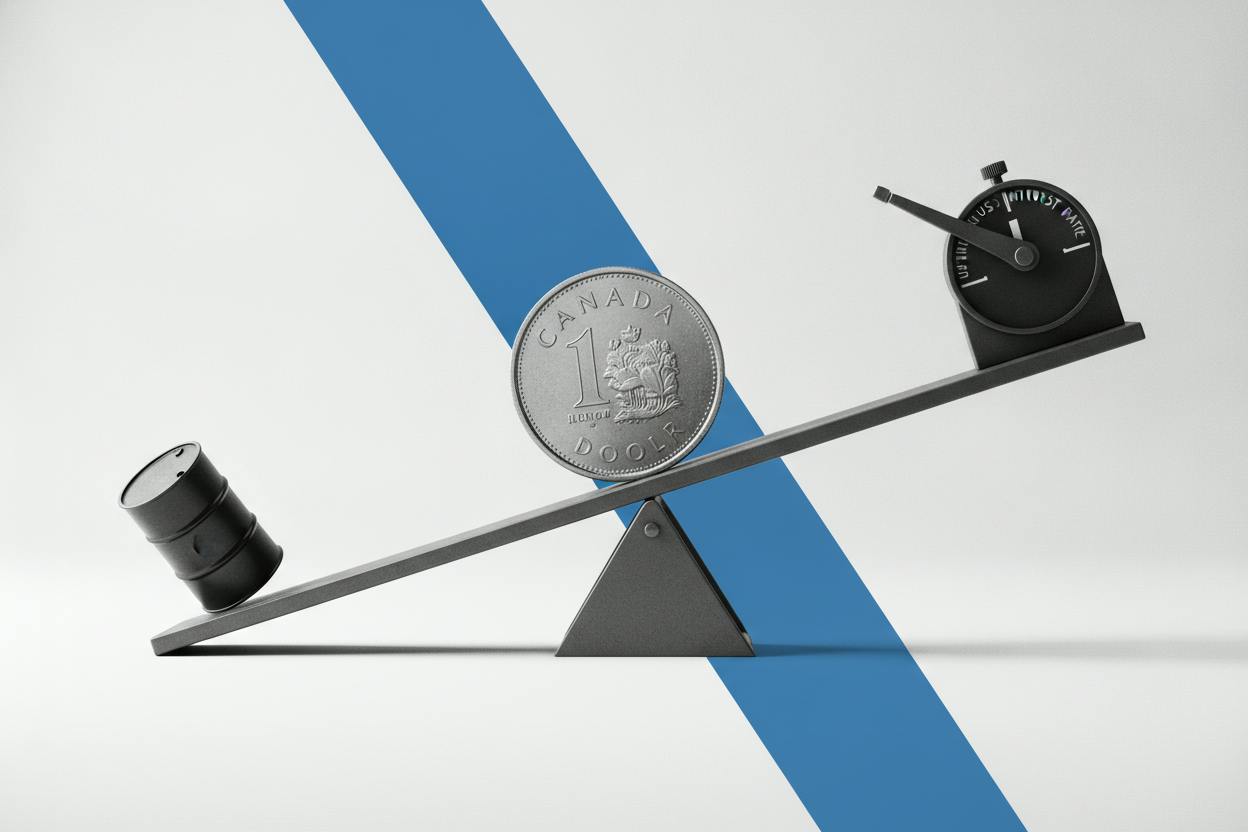
Canada's dollar, affectionately known as the loonie, slipped to a six-week low on Tuesday, trading near 1.3990 per US dollar. The move came as investors increasingly bet that the Federal Reserve will keep interest rates higher for longer, while a sharp drop in oil prices added extra pressure on the currency.
Oil, one of Canada's biggest exports, fell 3.2% to $102.43 a barrel. That combination—a stronger US dollar and weaker crude—created a one-two punch for the loonie, which has now given back much of the gains it made earlier this year.
Why the Fed matters for the loonie
Currencies are heavily influenced by interest-rate expectations. When investors believe the Federal Reserve will keep raising rates or hold them at elevated levels, US assets become more attractive. That tends to pull money into the US dollar and push other currencies, including the Canadian dollar, lower.
The Fed has been on a tightening path for over a year, and recent comments from policymakers have suggested they are not done yet. That has kept the US dollar firm against most major currencies, not just the loonie. The US dollar has been holding firm as traders await the next Fed decision and key economic data.
For Canada, the situation is a bit more complicated. The Bank of Canada has also been raising rates, but it recently held its key rate at 2.25% while signaling that more hikes could be on the way. That pause, combined with the Fed's hawkish stance, has made the interest-rate gap between the two countries less favorable for the loonie.
Oil's double-edged sword
Oil is a major driver of the Canadian economy and its currency. When crude prices rise, Canada tends to benefit because it exports more energy, bringing in more US dollars. When prices fall, the opposite happens—fewer dollars flow into the country, which can weaken demand for the loonie.
Tuesday's 3.2% drop in oil to $102.43 a barrel is a reminder of how sensitive the currency is to energy markets. The decline came amid concerns about global demand and the possibility of further interest-rate hikes slowing economic growth.
For everyday Canadians, a weaker loonie has mixed effects. On one hand, it makes Canadian exports more competitive, which can help manufacturers and other businesses that sell abroad. On the other hand, it makes imported goods more expensive, which can feed into inflation. That's a particular concern for a country already dealing with high consumer prices.
What it means for investors
For investors, the loonie's slide is a signal that currency risk is back in focus. If you hold US stocks or other US-dollar assets, a weaker loonie means your returns in Canadian-dollar terms could be boosted. Conversely, if you're planning to travel to the US or buy imported goods, your money won't go as far.
It's also worth watching how the Bank of Canada responds. If the Fed keeps hiking while the Bank of Canada stays on hold, the gap between the two countries' interest rates could widen further, putting more downward pressure on the loonie. That could eventually force the Bank of Canada to reconsider its stance, though it has to balance that against the risk of slowing the economy too much.
Some analysts note that investors should expect less from stocks in this environment, as higher rates and currency swings add volatility. The loonie's weakness is just one piece of that puzzle.
For now, the loonie's path will likely depend on two things: the Fed's next moves and the price of oil. If oil stabilizes and the Fed signals it's nearing the end of its hiking cycle, the loonie could find some footing. But if the Fed stays hawkish and oil keeps sliding, the currency could test lower levels.
As always, it's important to remember that currency movements are normal and part of the global economic cycle. For most investors, the key is to stay diversified and not make sudden moves based on short-term swings.