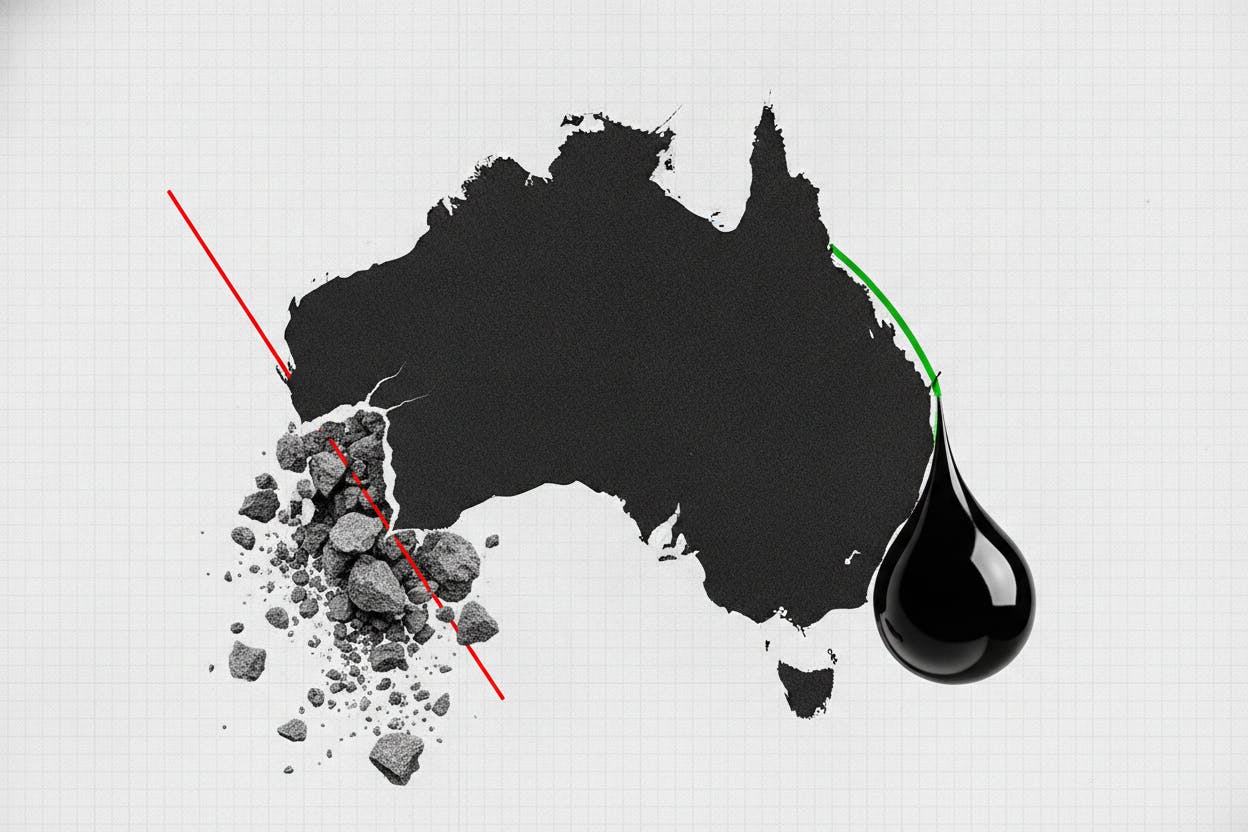
Australia's benchmark stock index fell 1% on Wednesday, as a sharp decline in mining stocks on weaker iron ore prices more than offset a rally in energy shares fueled by rising oil prices after fresh US military strikes on Iran.
The ASX 200 closed at 8,720.50, its weakest level in nearly five weeks, in a session that pitted two powerful forces against each other: commodity-driven sector rotations and geopolitical risk.
Miners hit hard by iron ore slump
The mining sector sank 2.6% to a three-month low, as iron ore prices fell overnight. That dragged down heavyweight stocks including BHP, Rio Tinto, and Fortescue, which together carry outsized weight in the index. Materials stocks make up a large portion of the ASX 200, so a coordinated move lower in that group can easily pull the entire benchmark down.
Iron ore is a key input for steelmaking, and its price is sensitive to demand expectations from China, the world's largest steel producer. When iron ore weakens, it often signals concerns about global industrial demand or Chinese economic growth, and Australian miners tend to move in lockstep.
Energy stocks surge on oil price jump
On the other side of the ledger, energy stocks climbed 3.3% in their best session in more than three months. The rally came after oil prices rose sharply following US strikes on Iran, which followed attacks on vessels in the Strait of Hormuz, a critical chokepoint for global oil shipments.
Woodside gained 3.6% and Santos rose 5.2%, as investors priced in the risk of supply disruptions from the Middle East. The Strait of Hormuz is a narrow waterway through which about 20% of the world's oil passes, so any escalation there tends to lift crude prices and energy stocks.
For context, this is not the first time oil has spiked on geopolitical tensions. Earlier this year, oil jumped 2.7% after US strikes on Iran, causing stocks and bonds to wobble on inflation fears. That pattern repeated Wednesday, though the impact on the broader market was more muted because the energy sector is smaller than mining.
Other sectors fail to cushion the fall
Financials, another heavyweight group, slipped 0.8%, with the Big Four banks falling as much as 1.5%. That added to the downward pressure. Gold stocks dropped 3.5% as bullion prices weakened, removing another potential support.
The broad-based selling meant that even a strong energy rally could not lift the index. The ASX 200's day-to-day direction tends to track the combined performance of materials and banks more than any single sector, so when both are under pressure, the index struggles.
What it means for investors
Wednesday's session is a reminder that the ASX 200 is not a monolith. Different sectors can move in opposite directions based on their own drivers, and the index's overall direction depends on which groups carry the most weight.
For everyday investors, this means that a headline about oil prices rising does not automatically translate into a rising stock market. In fact, the same geopolitical event that boosts energy stocks can hurt other sectors if it raises inflation fears or weighs on global growth expectations.
Investors should also watch how the iron ore weakness evolves. If it persists, it could continue to drag on miners and the broader index. Meanwhile, the energy rally may be short-lived if oil prices stabilize or fall back, as they have after previous geopolitical spikes.
The broader backdrop includes ongoing concerns about inflation and interest rates. Higher oil prices can feed into inflation, which may keep central banks cautious about cutting rates. That dynamic has been a recurring theme this year, as seen in earlier episodes where oil surges stirred inflation fears.
For now, the ASX 200 remains in a tug-of-war between commodity-driven sector moves and broader macroeconomic forces. Wednesday's 1% drop shows that when miners and banks both slide, even a strong energy rally is not enough to keep the index in positive territory.