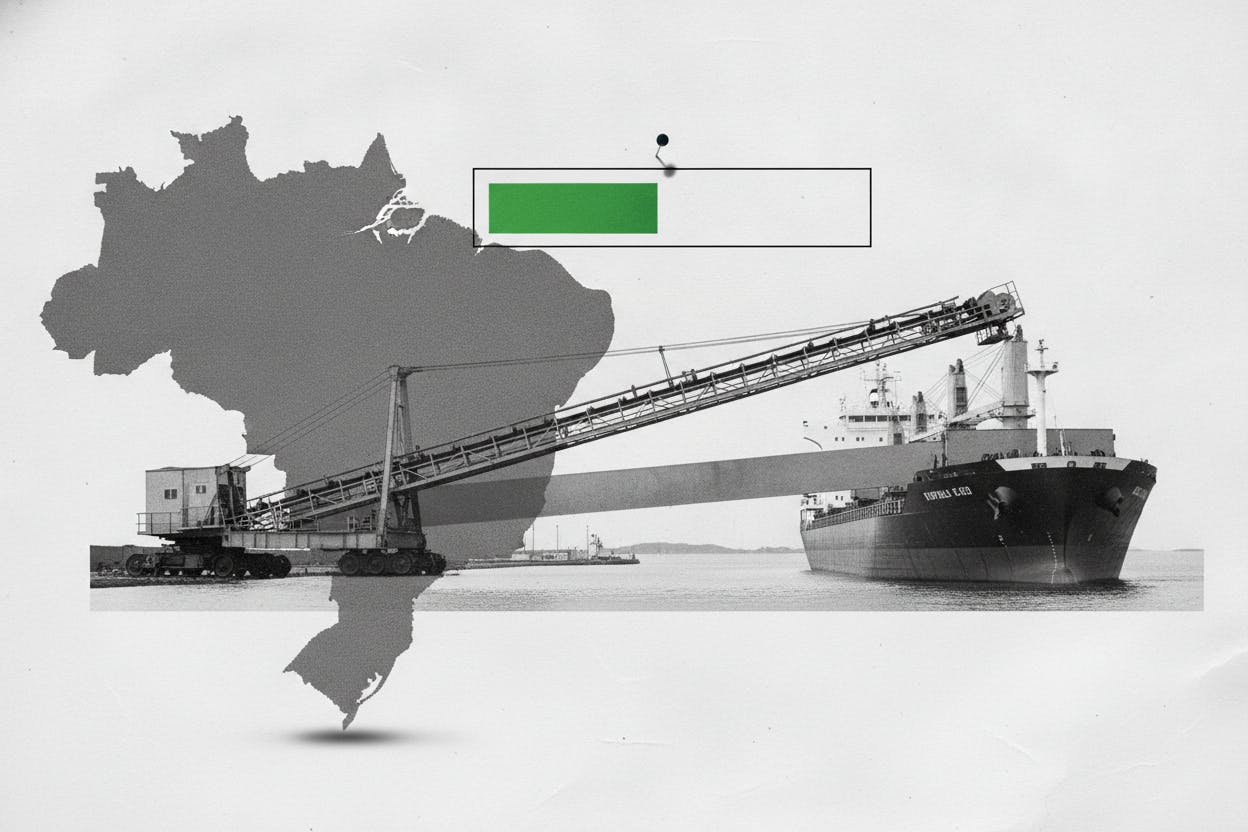
BlackRock's Global Infrastructure Partners and Stonepeak are among the suitors lining up bids for Porto Sudeste, a major Brazilian iron ore export port that Bloomberg estimates is worth around $5 billion. Binding offers are due by the end of the month, according to a report from the news service.
The port, located near Rio de Janeiro, is currently owned by commodity trader Trafigura and Abu Dhabi-backed Mubadala Capital, who have held the asset since 2014. The sale process is drawing interest from some of the biggest names in infrastructure investing, reflecting the growing appetite for assets tied to global commodity flows.
Who is bidding and why
BlackRock's infrastructure arm is teaming up with Brazilian mining giants Vale and Gerdau, giving the consortium a built-in source of iron ore shipments. Stonepeak, meanwhile, is partnering with M Resources, an Australia-based commodities firm, to pursue the asset.
The logic behind these partnerships is straightforward. Ports have high fixed costs, meaning that once they cover their basic operating expenses, additional volume flows almost directly to the bottom line. Porto Sudeste moved a record 27.8 million metric tons of iron ore in 2025, but that is still only a little over half of its roughly 50 million-ton annual capacity. The key question for bidders is not whether the port works today, but who can bring the steady ore flows needed to push throughput closer to that ceiling.
Infrastructure investors prize predictable cash flows, but predictability often hinges on utilization rates. When a port runs below capacity, each extra shipload can add meaningfully to earnings because many operating costs do not rise much with volume. That is why consortiums with captive supply matter: partners like Vale and Gerdau in BlackRock's group, or M Resources alongside Stonepeak, can effectively pre-book demand and reduce the risk that the asset sits underused.
What it means for investors
For everyday investors, this deal illustrates a broader trend in infrastructure investing. Large asset managers like BlackRock are increasingly turning to private markets for returns, often through funds that invest in ports, pipelines, and energy assets. These investments can offer steady income, but they also come with risks tied to commodity prices and global trade volumes.
The math behind the $5 billion valuation is simple: 27.8 million tons versus 50 million tons of capacity. In auctions like this, the winning bid is often the one that can show the most believable path from current volumes toward full capacity, since that ramp-up is what can make a high price look reasonable over time.
The deal also highlights the ongoing flow of capital into infrastructure, a theme that has gained momentum as governments and companies invest in everything from data centers to energy grids. For context, Amazon recently tapped the bond market for $25 billion to fund AI infrastructure, and big tech companies are collectively spending nearly $700 billion on infrastructure. While those are different types of assets, the same investor appetite for long-term, income-generating projects is driving demand for ports like Porto Sudeste.
For investors in publicly traded companies like Vale and Gerdau, the deal could provide a strategic advantage. By securing access to port capacity, these miners can better control their export costs and avoid bottlenecks that might otherwise slow shipments. That is particularly important for iron ore, where Brazil competes with Australia for market share in China, the world's biggest steelmaker.
The sale process is still in its early stages, and the final price could shift depending on how binding offers come in. But the interest from BlackRock and Stonepeak underscores a simple reality: in the world of infrastructure, assets with spare capacity are often the most valuable, because they offer a clear path to growth without the need for massive new construction.