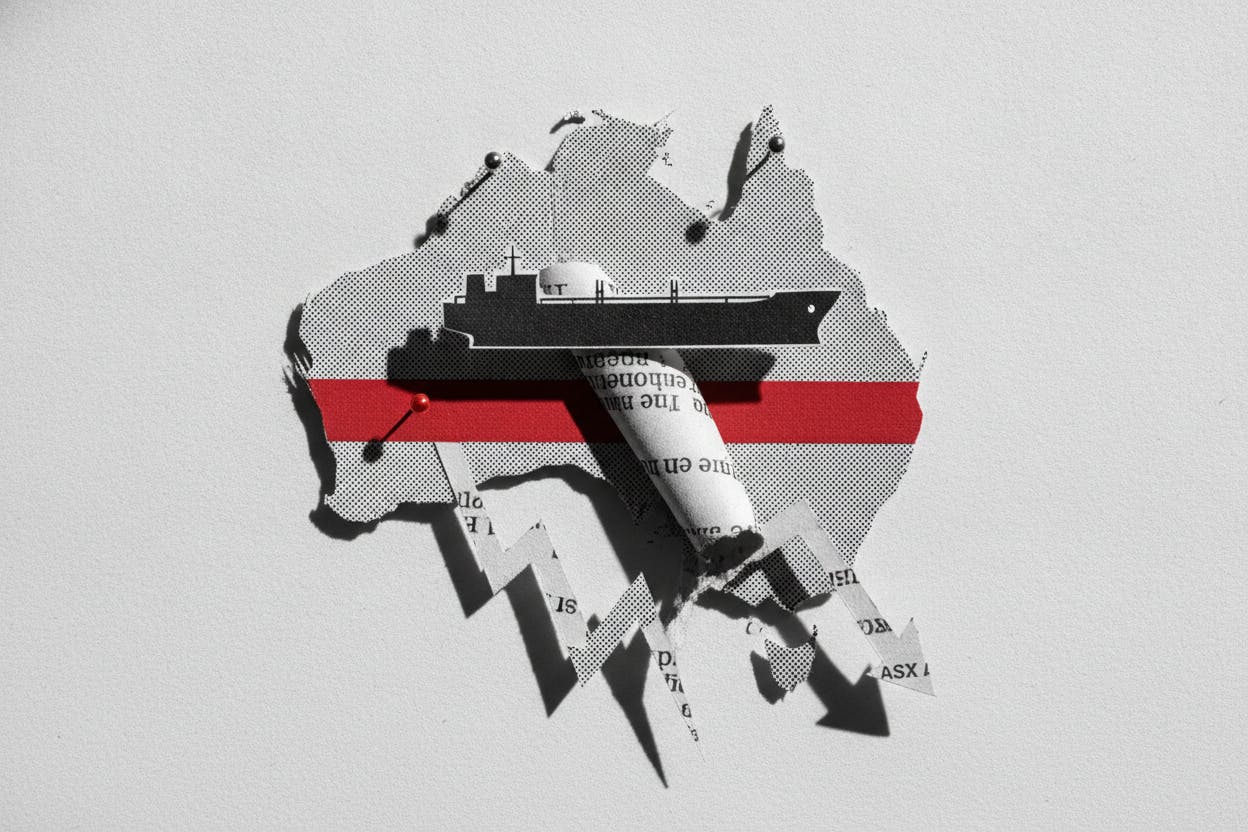
Australian shares closed lower on Friday, with the S&P/ASX 200 index falling 0.7% to 9,128.50, according to Reuters. The decline put the benchmark on track for its biggest weekly drop in nearly four months, as weaker metal prices weighed on the country's heavyweight mining sector.
The losses were led by resources stocks. The mining sub-index fell 2.8%, with BHP sliding 3.8%, Rio Tinto dropping 2.4%, and Fortescue losing 1.6%. Gold stocks also fell 2.8% as the price of bullion softened. In contrast, technology shares managed to climb, providing some support to the broader market.
Investors were also monitoring the ongoing standoff between the United States and Iran, particularly around the Strait of Hormuz. Reuters reported that sentiment weakened after the US threatened to maintain a prolonged naval blockade of Iran, a reminder that any disruption to shipping through the strait could have significant implications for global energy supplies.
Why miners are feeling the pinch
Mining stocks are a major part of the Australian market, and their performance is closely tied to the prices of commodities like iron ore, copper, and gold. When metal prices fall, investors often sell off mining shares, which can drag the entire index down.
Friday's decline in metal prices came after a period of volatility, with some investors taking profits after recent gains. The drop in gold stocks was particularly notable, as bullion prices eased from recent highs. Gold is often seen as a safe-haven asset, but its price can be sensitive to changes in interest rate expectations and the strength of the US dollar.
The broader context is that global markets have been grappling with mixed signals on inflation and central bank policy. Recent data showing flat producer prices in the US has boosted hopes that the Federal Reserve may pause its rate hikes, which could be supportive for risk assets. However, the ongoing geopolitical tensions in the Middle East have added a layer of uncertainty.
Hormuz risk and what it means for oil
The Strait of Hormuz is a narrow waterway between the Persian Gulf and the Gulf of Oman, through which about a fifth of the world's oil passes. Any threat to shipping there can cause oil prices to spike, which has ripple effects across the global economy.
The US-Iran standoff has been a recurring theme in markets this year. Earlier this week, oil prices slid despite escalating rhetoric, as traders weighed the risk of supply disruptions against concerns about weaker demand. That tension has also been reflected in other markets, such as Gulf stocks, which have been mixed as shipping risks clash with softer oil demand.
For Australian investors, the key takeaway is that any escalation in the Hormuz situation could push oil prices higher, which might benefit energy companies but could also increase costs for businesses and consumers. It's a delicate balance that markets are watching closely.
What it means for everyday investors
For the average investor, Friday's move is a reminder that markets can be volatile, and that sector-specific news can have a big impact on the overall index. If you hold a diversified portfolio, a drop in mining stocks might be offset by gains in other areas, such as technology.
It's also worth noting that the ASX 200's decline was relatively modest, and the index remains near record highs. Pullbacks are a normal part of market cycles, and they can sometimes present opportunities for long-term investors.
Looking ahead, investors will be watching for any further developments in the US-Iran situation, as well as upcoming economic data that could influence central bank policy. The flat producer prices report has already boosted hopes for a Fed pause, which could support markets in the near term.
As always, it's important to focus on your own financial goals and time horizon, rather than reacting to short-term market movements. A well-diversified portfolio is often the best defense against volatility.