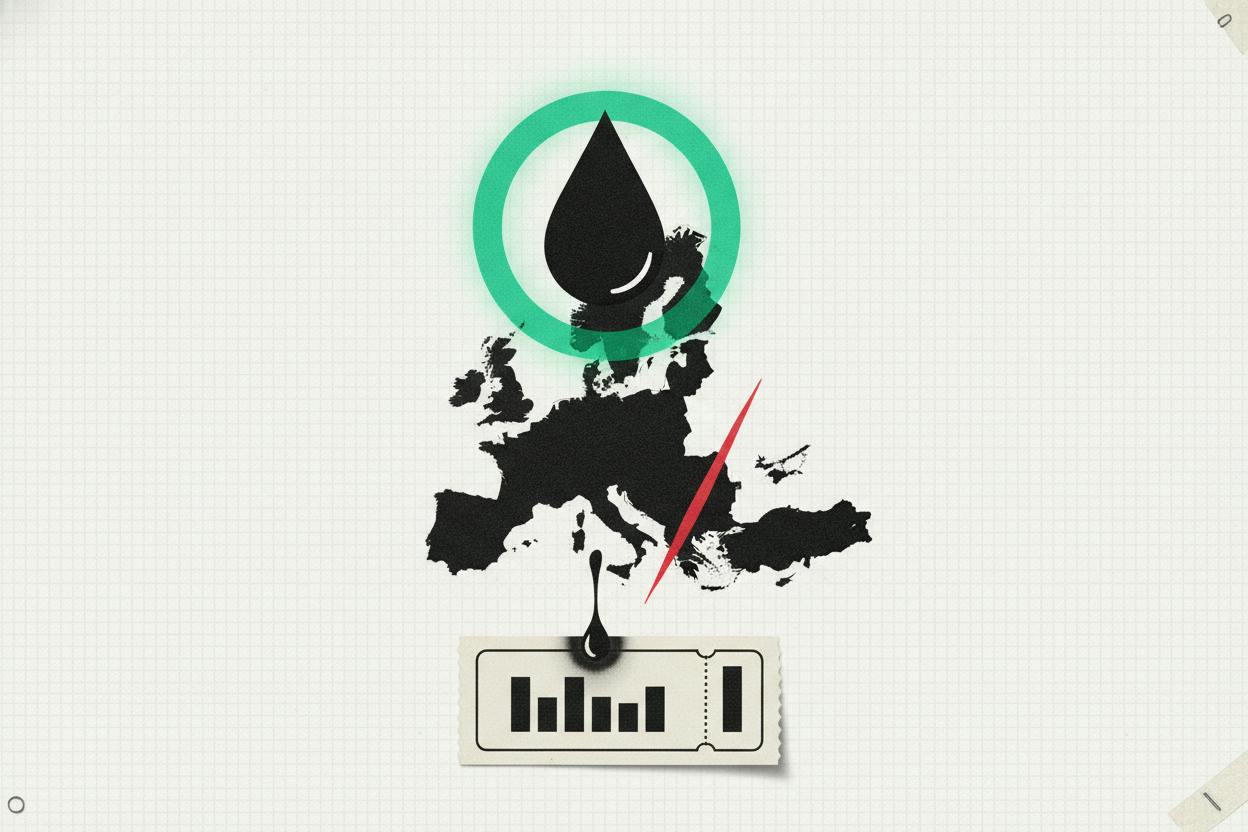
European stocks managed a modest gain on Monday, even as oil prices surged past $100 a barrel on renewed geopolitical tensions in the Middle East. The Stoxx Europe 600 index rose 0.2%, a small move that masked a clear tug-of-war beneath the surface: higher crude prices are a boon for energy producers but a headache for a region that imports most of its fuel.
Brent crude, the international benchmark, climbed more than 3% to $100.41 a barrel after President Donald Trump signaled there would be no talks with Tehran over tensions around the Strait of Hormuz, a critical shipping lane for global oil supplies. The news reignited worries about supply disruptions in a region that already accounts for a significant share of the world's crude exports.
Energy leads, tech lags
The sector moves on Monday told the story. The Stoxx Europe 600 Oil and Gas Index rose 1.4%, as investors piled into companies that directly benefit from pricier crude. In contrast, the Technology Index slipped 0.4%, reflecting a shift toward businesses with more immediate cash flows from higher energy prices and away from those whose valuations depend on profits expected further in the future.
This rotation is a familiar pattern when oil spikes. Energy firms see their revenues and margins expand almost immediately, while tech companies—especially those with high growth expectations—face the double whammy of higher input costs and the possibility that central banks will keep interest rates higher to fight inflation. As Treasury yields near multi-decade highs, the pressure on growth stocks is a theme that has been playing out across global markets.
What higher oil means for Europe
For Europe, the oil price jump is a double-edged sword. On one hand, the region is home to some of the world's largest energy companies, including Shell and BP, which stand to gain from higher crude prices. On the other, Europe is a net importer of oil and gas, so every dollar increase in the price of crude translates into higher energy bills for businesses and households.
That dynamic can weigh on consumer spending and corporate profits, and it can keep inflation worries alive just as the European Central Bank is trying to bring price growth back to its 2% target. Rising energy bills threaten European consumer confidence, and Monday's move adds to those concerns.
The situation around the Strait of Hormuz is particularly sensitive. Roughly a fifth of the world's oil passes through the strait, and any disruption there can have an outsized impact on global prices. President Trump's statement that there would be no talks with Tehran suggests that diplomatic avenues are not being pursued, at least for now, leaving the market to price in a higher risk of supply disruption.
What it means for investors
For everyday investors, the key takeaway is that oil prices are a powerful force that can move markets in different directions at the same time. A spike like Monday's tends to lift energy stocks, but it can also drag down sectors that are sensitive to fuel costs or that rely on cheap borrowing to fund growth.
If you hold a broad European index fund, you might see only a small overall change, as the gains in energy are offset by losses elsewhere. But if you own individual stocks, the impact can be much more pronounced. Energy producers could see their shares rally further if tensions escalate, while airlines, logistics companies, and other fuel-heavy businesses could feel the pinch.
Investors should also keep an eye on how central banks react. Higher oil prices can feed into inflation, which might prompt the European Central Bank and others to keep interest rates higher for longer. That would be a headwind for bonds and for stocks that are valued on future earnings, as we've seen with the tech sector's underperformance on Monday.
The situation is fluid, and markets could swing quickly if there are any diplomatic breakthroughs or further escalations. For now, the message from the market is clear: oil is back above $100, and that has consequences for everything from your energy bill to the performance of your portfolio.
As always, it's wise to stay diversified and not make hasty decisions based on a single day's move. The oil market has been volatile in recent months, and Monday's jump could easily reverse if tensions ease. But for the moment, the geopolitical risk premium is firmly back in the price of crude.