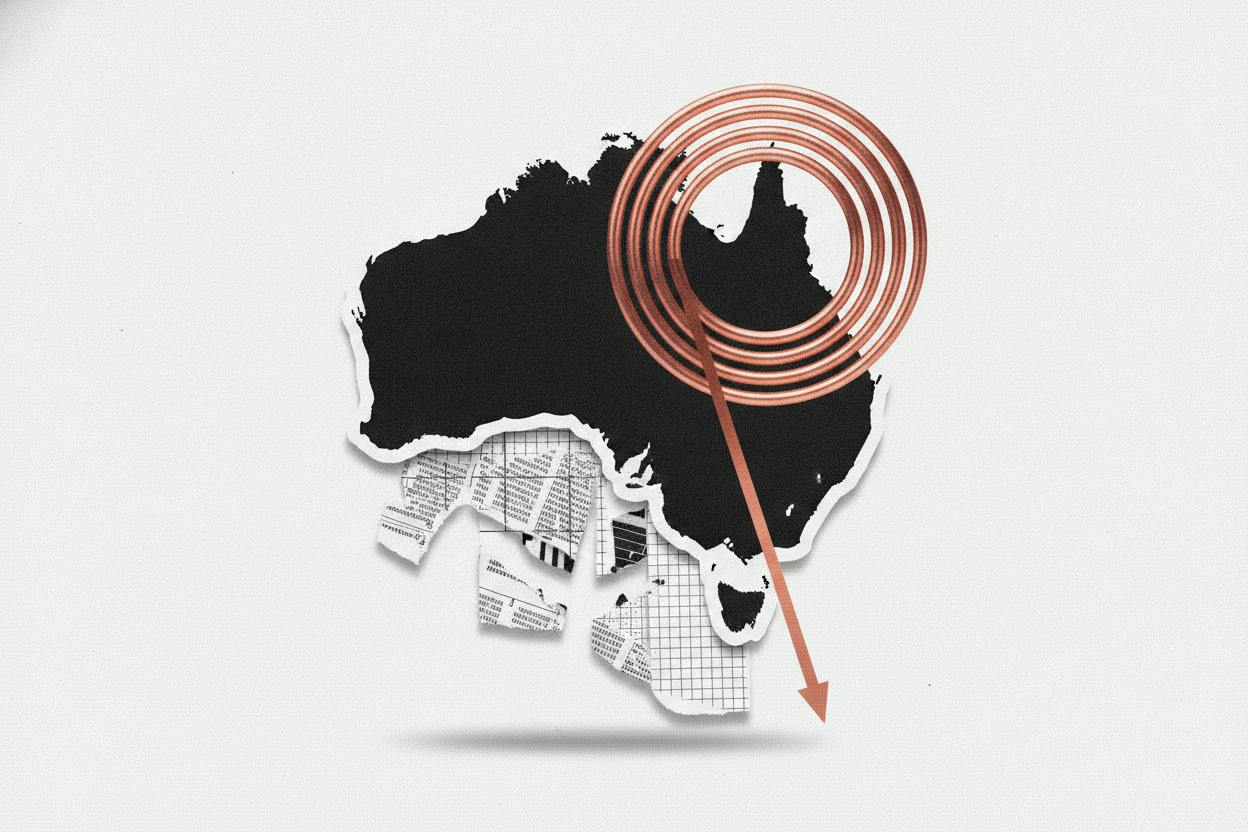
Australian shares slipped on Wednesday, with the benchmark ASX 200 falling 0.4% to 8,692.2, as a sharp drop in copper prices pulled major miners lower. The decline partially unwound Tuesday's rebound and highlighted how heavily the index is influenced by a handful of heavyweight sectors.
Investors were also positioning ahead of Australia's October inflation data, which is due later in the day. The reading is closely watched for clues on the Reserve Bank of Australia's next policy move, but on this day, global commodity moves took center stage.
Copper's slide hits miners hard
Copper fell nearly 6% in the previous session, its biggest one-day drop in months, and the selling spilled into Australian resources stocks. The sector dropped 2.5%, with giants BHP and Rio Tinto each sinking 2.7%, even though iron ore prices were higher. Gold miners also slipped as bullion eased, adding to the broad-based weakness in the resources complex.
The move underscores a key characteristic of the Australian market: a large portion of its value is tied to mining companies. When a key metal swings sharply, analysts quickly adjust their “price deck” – the set of assumed commodity prices that underpin earnings forecasts. Because mining costs typically don't fall as fast as revenue when prices drop, even a small change in the metal price can translate into a much larger change in expected profit and cash flow.
That means global metals sentiment can overpower local economic news, even on a day with a closely watched inflation print on the calendar. For everyday investors, this is a reminder that the ASX 200 is not just a proxy for the Australian economy – it's also a play on global industrial demand.
Energy stocks buck the trend
Not all sectors were in the red. Energy shares rose 1.1% after oil prices jumped on reports of fresh attacks on vessels near the Strait of Hormuz, a key shipping route for global crude. The geopolitical tension added a risk premium to oil, benefiting local producers like Woodside and Santos.
The divergence between resources and energy highlights how different commodity drivers can move the market in opposite directions on the same day. While copper is sensitive to global growth and industrial demand, oil is more reactive to supply disruptions and geopolitical events.
For investors, this means diversification within the commodity space can matter. A portfolio heavily weighted toward miners may have felt Wednesday's pain, but those with energy exposure saw some offsetting gains.
What it means for investors
For markets, copper's near-6% slide can move the ASX 200 more than the October inflation print. Because miners make up such a large share of the index, sharp copper moves can ripple straight into the benchmark. A reset in commodity assumptions tends to hit big, diversified producers first – like BHP and Rio Tinto – and then spreads across the broader resources complex.
The result is that day-to-day volatility in Australian equities can be driven less by domestic data and more by what's happening to global metals prices. That's a crucial point for anyone trying to understand why the market moves the way it does.
For those watching the inflation data, the numbers will still matter for the RBA's rate path. But on a day like this, the copper market is doing the heavy lifting. Investors should keep an eye on both – and remember that in Australia, the two are often intertwined.
As the session progresses, all eyes will be on the inflation release and whether it changes expectations for the central bank. But for now, the message from the market is clear: when copper sneezes, the ASX catches a cold.