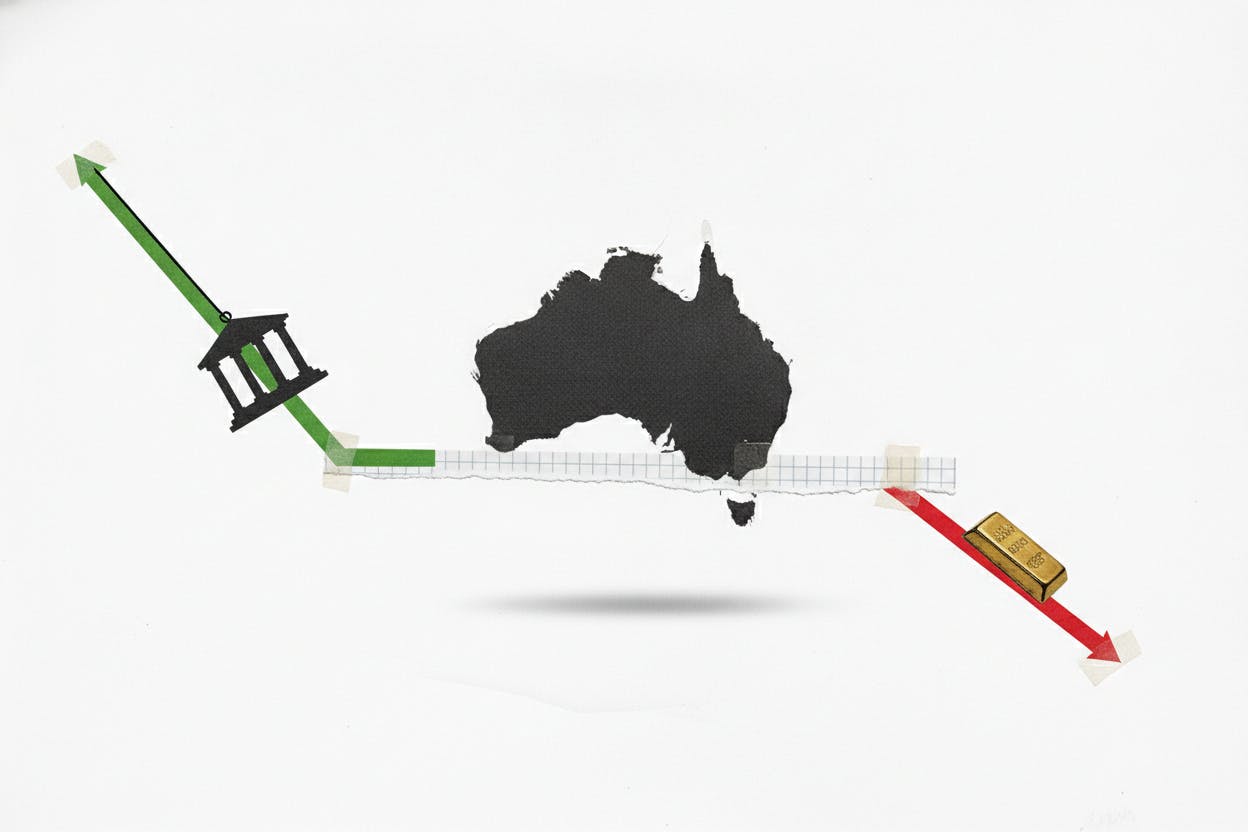
Australian shares ended the session essentially unchanged, with the S&P/ASX 200 hovering near 9,095, as two powerful forces pulled the market in opposite directions. Banks climbed on growing expectations that the Reserve Bank of Australia (RBA) could raise interest rates again, but gold miners tumbled after hawkish remarks from a top US Federal Reserve official weighed on bullion prices.
Banks benefit from rate-hike expectations
The banking sector was the main bright spot. A hotter-than-expected inflation reading earlier this week has led traders to price in a higher probability that the RBA will lift its cash rate at its next policy meeting. When interest rates rise, banks typically benefit because they can earn more on loans, and the increase in lending rates often outpaces the rise in deposit costs, widening their net interest margins.
This dynamic helped lift bank shares, providing a solid counterweight to weakness elsewhere. For everyday investors, a stronger banking sector can be a sign that the financial system is healthy, but it also reflects expectations of higher borrowing costs for households and businesses.
Gold miners slide on hawkish Fed comments
On the other side of the ledger, gold producers were the biggest drag on the market. The sector fell as much as 4.2% after Kevin Warsh, a Federal Reserve official, delivered hawkish remarks at the Jackson Hole symposium. Warsh suggested the US central bank would “have work to do” on inflation, hinting that interest rates may need to stay higher for longer or even rise further.
Higher interest rates tend to be bad for gold, which pays no interest or dividend. When bond yields rise, the opportunity cost of holding gold increases, making the precious metal less attractive to investors. As a result, gold prices weakened, and Australian gold miners—many of which are among the world’s largest—felt the pinch.
The drop in gold stocks was a reminder of how sensitive commodity producers are to global monetary policy. For investors with exposure to gold miners, the news underscores the importance of watching central bank signals, not just the price of the metal itself.
What it means for investors
The flat close on the ASX masks a clear divergence beneath the surface. Banks and gold miners are both heavily weighted in the index, so their opposing moves largely cancelled each other out. But for investors, the day’s action highlights how different sectors can react very differently to the same macroeconomic news.
If the RBA does raise rates, bank stocks could continue to outperform, but higher rates also raise borrowing costs for consumers and businesses, which can weigh on economic growth and corporate profits. Meanwhile, gold miners may face further headwinds if the Fed stays hawkish, but they could also rebound quickly if inflation cools or rate expectations shift.
Warsh’s comments also have implications beyond Australia. They echo the pressure on other markets and have already boosted odds of a September rate hike in the US, as seen in moves in the FTSE 100. Investors globally are watching the Fed closely, and the upcoming US jobs report will be a key data point for the direction of rates.
For Australian investors, the key takeaway is that the market is being driven by interest rate expectations, both at home and abroad. While banks may benefit in the short term, the broader economy could feel the pinch if rates keep climbing. Gold miners, meanwhile, are a reminder that even safe-haven assets are not immune to the forces of monetary policy.
As always, diversification remains a sensible strategy. A portfolio that holds both banks and gold miners is, in effect, betting on both outcomes—and today’s session shows why that can be a prudent approach.



