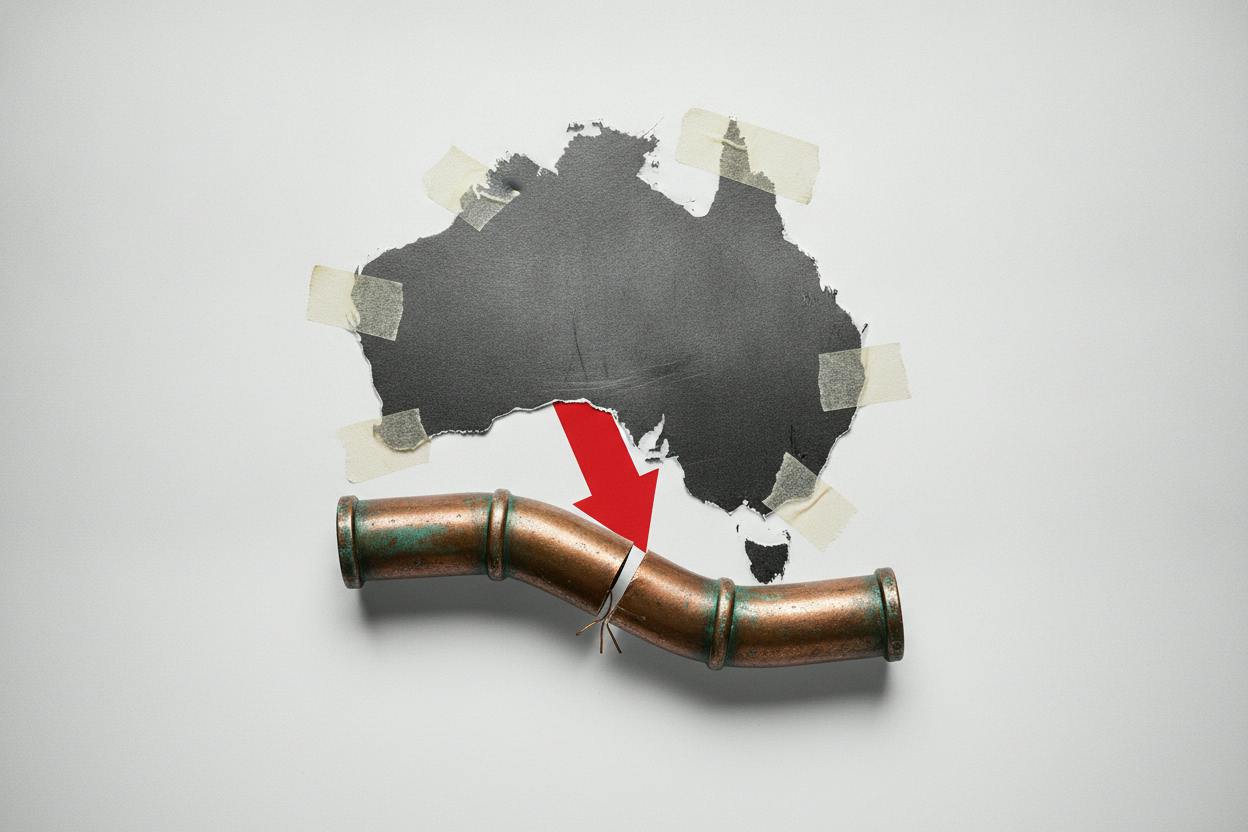
Australian shares fell again on Thursday, with the S&P/ASX 200 dropping 0.9% as a slide in copper prices dragged mining stocks to their lowest level since late March. The move underscores how heavily the local market is tied to commodity prices, and investors are now turning their attention to the country's October jobs report for clues on the Reserve Bank of Australia's (RBA) next interest rate decision.
Miners bear the brunt
The mining sub-index fell 3.5% on the day, following copper's drop to a seven-month low. Even a brief uptick in iron ore futures wasn't enough to offset the broader weakness. Over the past few sessions, the mining sub-index has fallen about 14%, a sharp reversal that has weighed heavily on the overall market.
Big names did much of the damage. BHP, Australia's largest miner, fell 3.8% to its lowest level since early April, while Rio Tinto hovered near its weakest point since last December. These companies are heavyweight constituents of the ASX 200, so their moves have an outsized impact on the index's daily performance.
The cautious mood extended beyond miners. Gold stocks dropped 3.6% after the precious metal hit a 14-month low, pressured by signals from the US Federal Reserve that interest rates may stay higher for longer.
Why copper matters so much
Copper is often called "Dr. Copper" because its price is seen as a barometer for global economic health. It's used in everything from construction to electronics, so when its price falls, it often signals weaker demand or a slowdown in industrial activity.
For miners like BHP and Rio Tinto, copper is a major revenue source. When the metal's price drops, analysts typically lower their cash flow forecasts for these companies. That can lead to sharp share price moves because miners have high fixed costs—equipment, energy contracts, and staffing—that don't fall as quickly as revenue. A small change in commodity prices can therefore translate into a much bigger change in profit expectations.
That's why a 3.5% sector slide can quickly pull the resource-heavy ASX lower, even if iron ore gets a short-lived bounce. Until copper steadies, the index's day-to-day direction may remain unusually tied to the next leg in that metal.
Jobs data in focus
Attention now turns to Australia's October employment report, due at 0030 GMT. The data is closely watched because it could influence the RBA's interest rate path.
Last month, RBA Governor Michele Bullock said the labor market looked tighter than the central bank had previously thought. If Thursday's jobs report shows strong employment growth, it could reinforce expectations that inflation will stay sticky, making it less likely the RBA will cut rates anytime soon.
That matters for more than just miners. A less forgiving rate outlook affects banks, mortgage holders, and any stock valued mainly on future growth. Higher-for-longer rates tend to pressure valuations, especially for companies whose earnings are expected to grow far in the future.
What it means for investors
For everyday investors, the key takeaway is that the Australian market's heavy reliance on commodities means it can be particularly sensitive to global price swings. When copper or iron ore fall, the ASX often follows, even if the broader economy is doing fine.
This week's moves are a reminder that diversification matters. Investors who hold a broad mix of assets—including international shares, bonds, or cash—may be better positioned to weather the volatility that commodity price swings can bring.
It's also worth watching how the RBA responds to the jobs data. If the labor market stays tight, the central bank may keep rates higher for longer, which could continue to weigh on both miners and rate-sensitive sectors like property and consumer discretionary.
For now, the market's direction may hinge on two things: whether copper can find a floor, and what the jobs report says about the health of the Australian economy. Both will be in focus in the coming sessions.