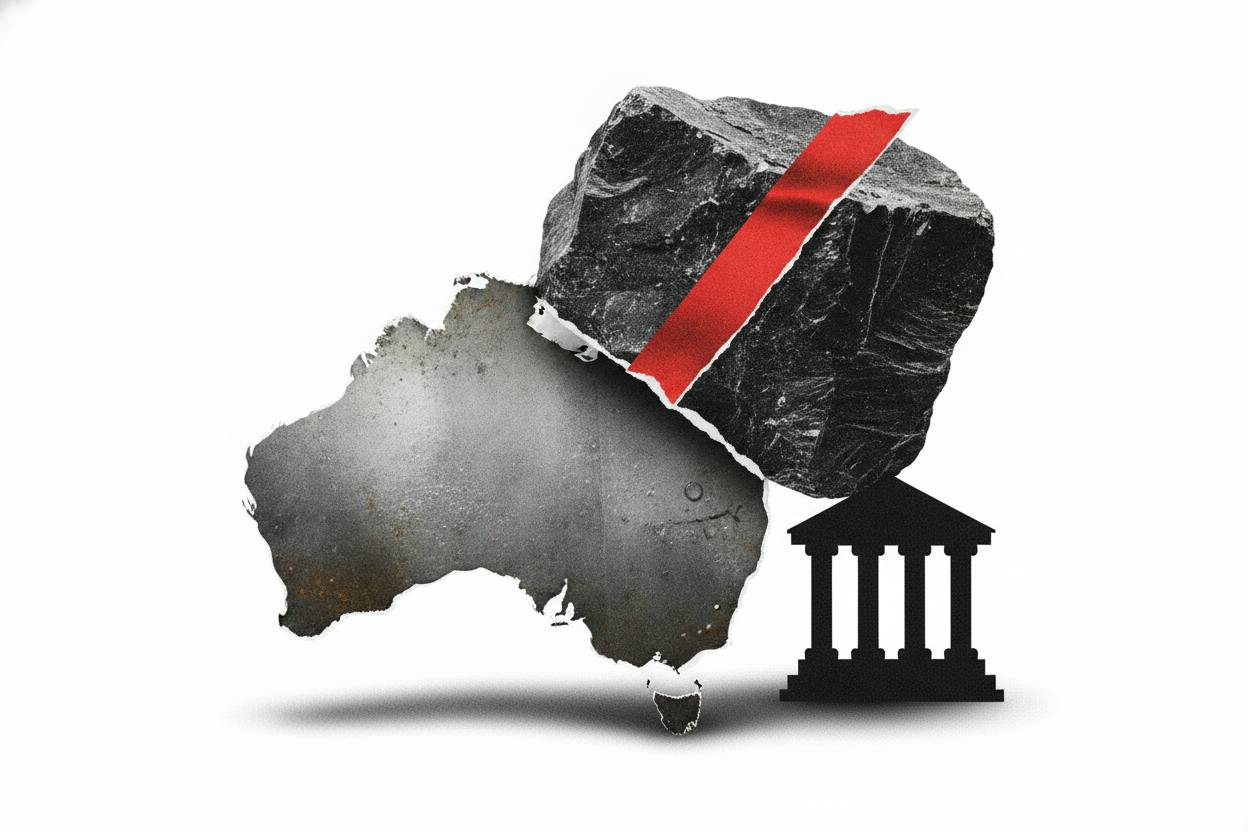
Australia's share market slipped on [day], with the S&P/ASX 200 falling 0.4% as weaker prices for key commodities dragged down mining heavyweights, even as bank stocks moved higher.
The session was a classic tug-of-war between two of the index's biggest sectors. Miners including Rio Tinto and BHP slid as traders marked down what iron ore and copper might earn in the near term, pulling the resources-heavy benchmark lower. Banks, another large slice of the index, rose and helped limit the overall damage.
Why miners are feeling the pinch
Iron ore and copper are Australia's most valuable commodity exports, and their prices are sensitive to global demand signals, particularly from China, the world's biggest buyer of both. When those prices soften, investors quickly reassess how much profit miners will generate in the coming months.
That reassessment can be amplified by company-specific news. Rio Tinto announced it will spend $1.9 billion on the Kangwinan bauxite project in Queensland, adding 20 million tonnes of annual output to its Weipa operations. While expansion projects can boost long-term production, they also consume cash in the short term.
Large capital spending like this can pressure a miner's free cash flow — the money left after operating costs and investment — which is the pool that funds dividends and share buybacks. When commodity prices are already softening, a fresh spending headline can heighten worries about execution risk and returns on investment.
Because miners carry such a heavy weight in the S&P/ASX 200, a broad reassessment of their earnings outlook can quickly become an index-level drag. For context, copper prices have recently hit five-week lows as stockpiles on the London Metal Exchange climbed for a fourth straight day, a sign of softer near-term demand.
Banks provide a counterweight
While miners struggled, financial stocks moved in the opposite direction. Banks are the other major pillar of the Australian market, and their gains helped cushion the benchmark's fall. Investors often rotate into defensive or income-oriented sectors like banks on days when commodity-linked stocks are out of favour.
That rotation is a reminder that the ASX 200 is not a single bet — it's a collection of sectors that can move in different directions. On this day, the strength in banks offset some of the pain in mining, though not enough to push the index into positive territory.
Oil rises on Gulf tensions, but energy shares fall
Outside Australia, oil added a layer of nerves. Reuters reported that escalating tensions in the Gulf helped lift Brent crude to a five-month high on supply worries. Higher oil prices are typically a tailwind for energy producers, as they mean more revenue for every barrel sold.
Yet local energy shares still fell, a reminder that broad "risk-off" days can swamp company-level tailwinds. Even when a sector has a positive catalyst, a general mood of caution across the market can override it. This mirrors a pattern seen in other markets, where energy stocks have fallen despite oil price jumps.
What it means for investors
For everyday investors, this session highlights how diversified the Australian market is — and how different forces can pull it in opposite directions. A portfolio that owns the whole index gets exposure to both the miners that drag it down and the banks that lift it up.
The bigger question is what happens next with commodity prices. If iron ore and copper continue to soften, miners could keep underperforming, which would put more pressure on the index. On the other hand, if banks continue to hold up, they may provide a buffer.
Rio Tinto's spending announcement also serves as a reminder that growth projects come with trade-offs. While expansion can boost future production, it can also reduce the cash available for dividends and buybacks in the near term. Investors who rely on mining dividends should watch how much of their free cash flow goes to capital spending.
Oil's rise on Gulf tensions adds another layer of uncertainty. Higher energy prices can feed into inflation, which could influence central bank policy. For Australian investors, that could mean watching how the Reserve Bank responds, especially with global risk sentiment already fragile.
As always, the key is to focus on the long-term fundamentals of the companies you own, rather than reacting to daily swings. Days like this are normal in markets — sectors rotate, prices move, and the index reflects the balance of those forces.



