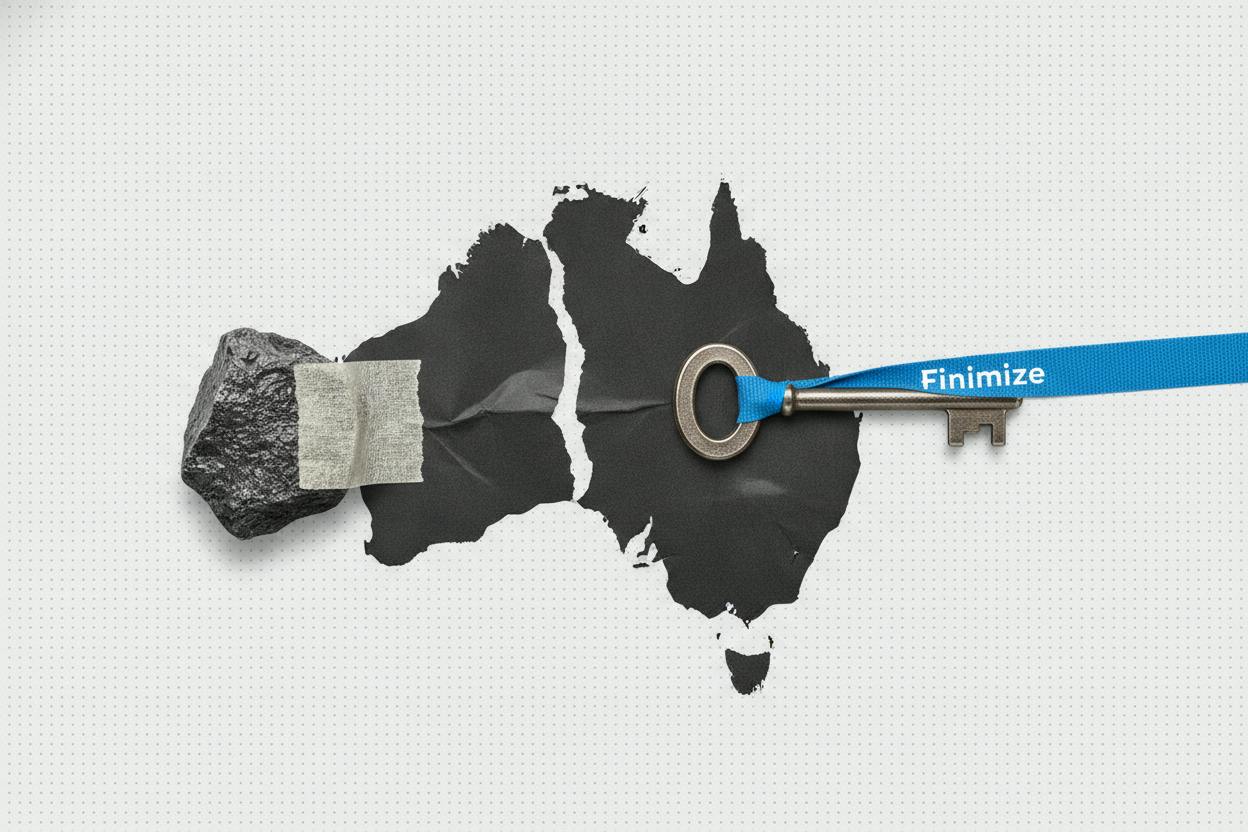
Australia's benchmark stock index slipped on Tuesday, as weakness in commodity prices dragged down heavyweight miners, offsetting gains in the banking sector after Commonwealth Bank posted a solid profit update.
The S&P/ASX 200 edged lower after two consecutive sessions of gains, with the market's direction hinging on a tug-of-war between two of its most influential sectors: resources and financials.
Miners drag on weak metal prices
BHP and Rio Tinto, two of the country's largest listed companies, both fell as iron ore prices remained range-bound and copper prices weakened. The softer metals backdrop weighed on the broader resources sector, which had recently been a leader but quickly turned into a laggard.
Gold miners also eased as bullion prices dropped, adding to the commodity-driven pressure. The pullback in metals comes amid ongoing uncertainty about global demand, particularly from China, the world's biggest consumer of industrial metals.
For everyday investors, the moves highlight how sensitive the Australian market is to commodity prices. When metal prices fall, the earnings outlook for miners like BHP and Rio Tinto dims, and their share prices often follow. That can ripple through the entire index, given the outsized weight of resources stocks.
Banks lift on CBA's profit beat
On the other side of the ledger, bank shares provided support. Commonwealth Bank, Australia's largest lender, said its first-quarter cash profit rose 8% compared with the same period a year earlier. Cash profit is a key measure for Australian banks, as it strips out one-off items and volatility to give a clearer picture of underlying earnings.
The result was well received by investors, lifting CBA's shares and helping the banking sector hold up even as miners stumbled. Banks are a major component of the ASX 200, so strength in the sector can cushion broader market declines.
CBA's update comes at a time when Australian banks are navigating a mixed economic environment. While higher interest rates have boosted net interest margins—the difference between what banks earn on loans and pay on deposits—there are concerns about slowing loan growth and rising mortgage stress among borrowers.
What it means for investors
For investors, the day's action is a reminder of the importance of diversification. A portfolio heavily weighted toward mining stocks would have felt the pain of falling metal prices, while one tilted toward banks would have benefited from CBA's strong result.
The divergence between miners and banks also underscores how different sectors can react to the same macro forces. Commodity prices are driven by global supply and demand, while bank profits are more tied to domestic economic conditions, interest rates, and credit quality.
Looking ahead, investors will be watching commodity prices closely, particularly iron ore and copper, for signs of whether the weakness is a temporary blip or the start of a broader trend. They will also be monitoring upcoming earnings from other major banks, which could provide further clues about the health of the Australian financial sector.
For those with exposure to Australian equities, the key takeaway is that market moves are rarely uniform. Even on a day when the overall index slips, there can be winners and losers beneath the surface. Understanding what is driving those moves—whether it's commodity prices, interest rates, or company-specific news—can help investors make more informed decisions.
As always, it's important to remember that short-term market movements are normal. The ASX 200 has had a strong run recently, and a modest pullback after two up days is not unusual. Long-term investors should focus on the fundamentals of the companies they own, rather than reacting to daily fluctuations.
In the meantime, the tug-of-war between miners and banks is likely to continue, with commodity prices and bank earnings reports providing the next catalysts for the market.



