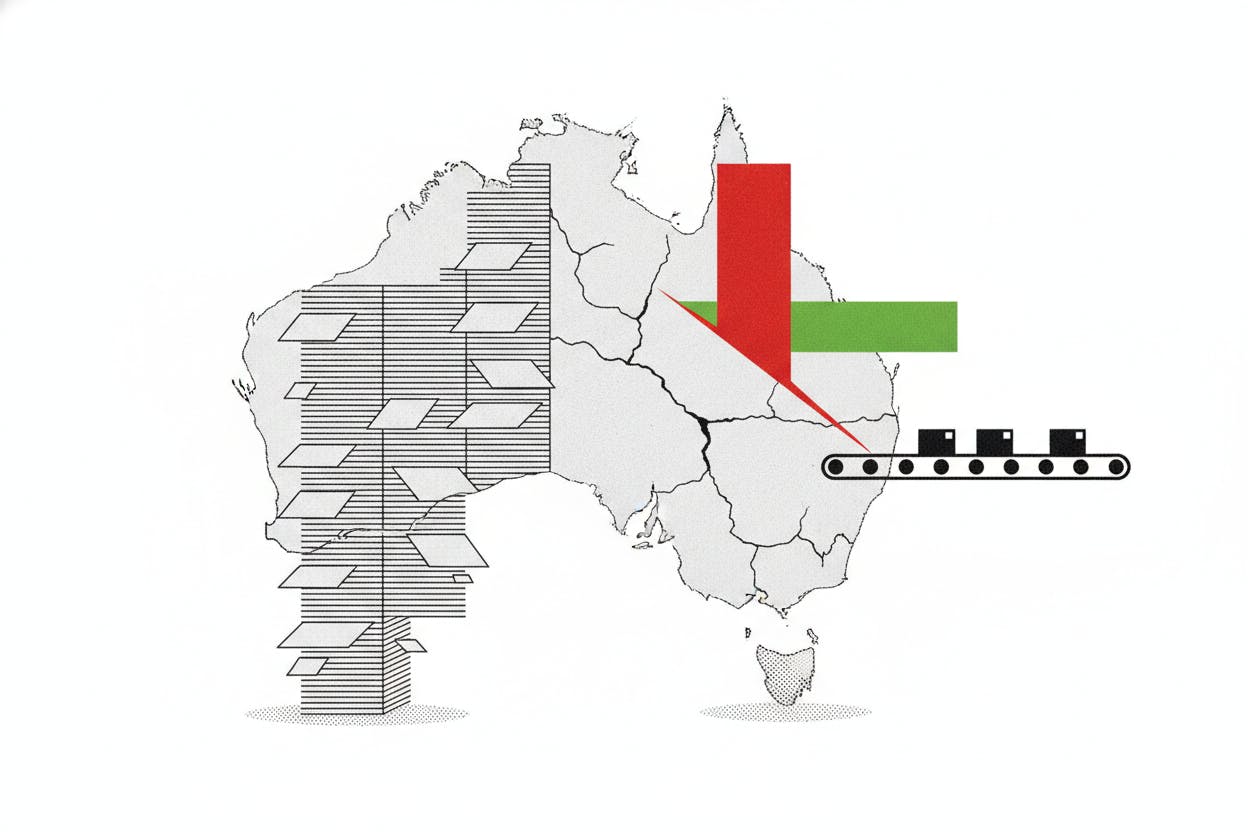
Australia's private sector kept growing in August, but the expansion is looking increasingly lopsided. S&P Global's flash composite Purchasing Managers' Index (PMI) eased to 52.5 from 53.2 in July, still above the 50 mark that separates growth from contraction. That marks a third consecutive month of overall expansion, but beneath the headline number, the picture is more mixed: services are doing the heavy lifting while factory output has slipped into contraction.
The flash composite index, which combines activity in both services and manufacturing, is a closely watched gauge of private-sector health. A reading above 50 signals expansion, while below 50 points to contraction. The latest figure suggests the broader economy continues to grow, albeit at a slightly slower pace than the month before.
Services hold the line, manufacturing stumbles
The services sector, which accounts for the bulk of Australia's economic output, remained in solid growth territory. The Services PMI Business Activity Index cooled to 52.9 from 53.6 in July, but it stayed comfortably above the expansion threshold. That resilience in services is a key reason the composite index remains positive.
Manufacturing, by contrast, is struggling. The headline Manufacturing PMI held at 52, but the sub-index tracking factory output fell to 49.7, dipping into contraction for the first time in recent months. The divergence suggests that while new orders or sentiment in manufacturing may still look okay, actual production is weakening. This split is not unusual in an economy where services dominate, but it does signal that the industrial side of the economy is losing momentum.
The manufacturing weakness could reflect softer demand, both domestically and globally. Australia's manufacturers are also dealing with higher input costs and supply chain pressures, though the brief does not detail those factors. What is clear is that the factory sector is no longer contributing to overall growth.
What this means for the economy and the RBA
The mixed PMI reading comes at a delicate time for the Reserve Bank of Australia (RBA), which has been navigating a tricky path between taming inflation and supporting growth. The central bank has held interest rates steady for several months, and recent data has been giving it room to stay on hold. For instance, Australia's July jobs dip suggested the labour market is cooling, which reduces the urgency for another rate hike.
At the same time, consumer spending has shown some resilience, with Australian spending rising 1.1% in July, led by leisure. That strength in services demand is consistent with the services PMI staying in expansion. But the manufacturing contraction could be an early warning that higher interest rates are starting to bite in interest-rate-sensitive sectors.
For everyday investors, the key takeaway is that the economy is still growing, but the growth is uneven. Services are holding up, while manufacturing is faltering. This could have implications for company earnings, particularly for firms with heavy exposure to industrial production.
What it means for investors
For investors, the PMI data offers a snapshot of the economy's health and can influence market sentiment. A composite reading above 50 is generally positive for risk assets, as it suggests the economy is not heading into a recession. However, the manufacturing contraction is a caution flag, especially for investors in industrial stocks or companies that rely on factory output.
The services sector's resilience is a positive for consumer-facing businesses, particularly in leisure and hospitality, which have been benefiting from strong spending. But the manufacturing weakness could weigh on exporters and companies tied to global trade, especially given the disappointing growth data from China and Japan, which are key trading partners for Australia.
It is also worth noting that the PMI is a 'flash' estimate, based on early survey responses. The final reading, due later in the month, could be revised. Still, the trend is clear: the Australian economy is growing, but the engine is sputtering in places.
For investors, the message is to watch the divergence between services and manufacturing. If manufacturing continues to contract while services slow further, the composite index could dip below 50 in the coming months, which would signal a broader economic slowdown. That would be a more serious concern for the RBA and for corporate earnings.
In the meantime, the data supports the view that the RBA is likely to keep rates on hold, which is generally supportive for equities and property. But investors should stay alert to any signs that the manufacturing weakness is spreading to the wider economy.