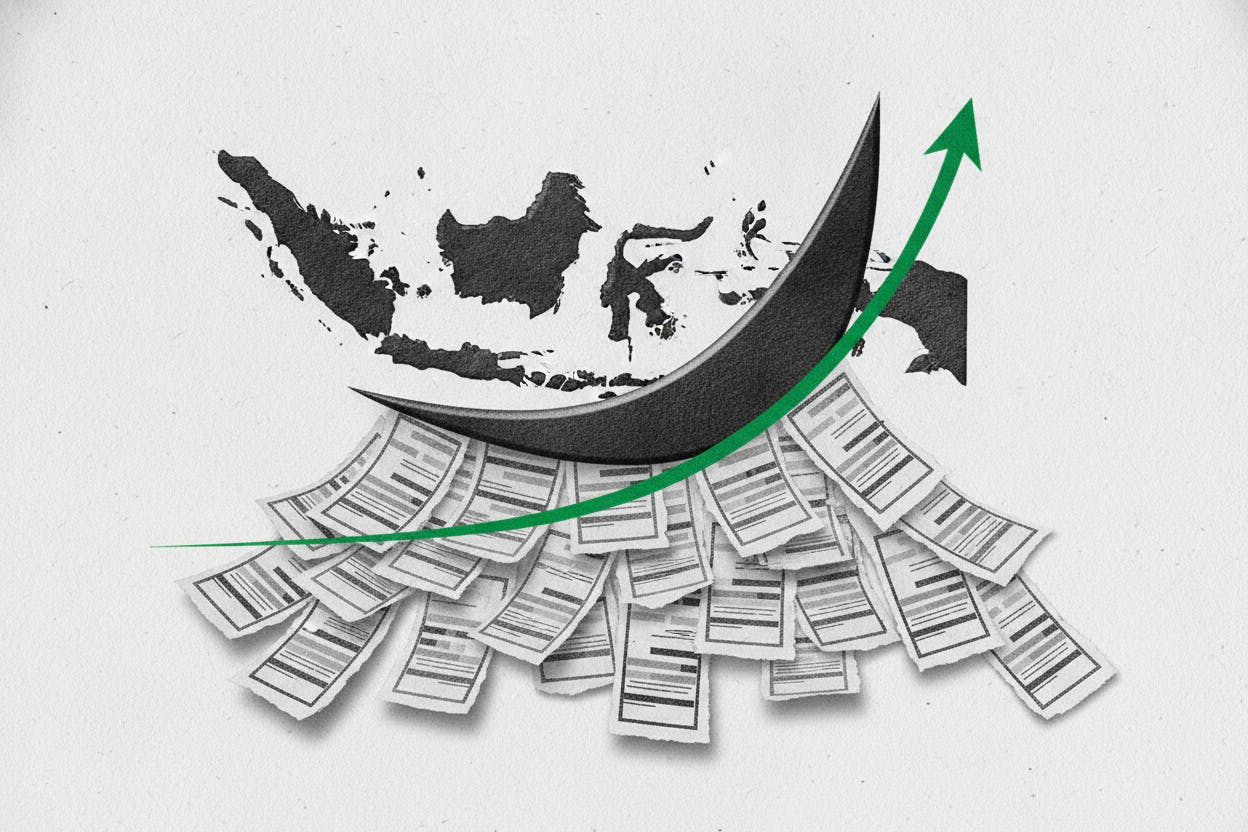
The Reserve Bank of Australia (RBA) may not need to raise interest rates again to slow the economy, according to a new analysis from Bank of America Securities. The bank argues that financial conditions in Australia are already restrictive enough to cool demand, and global forces could tighten them further even if the RBA keeps its cash rate steady.
What's driving the view?
Bank of America Securities points to three key factors that are already weighing on the Australian economy: higher real interest rates, a softening housing market, and rising funding costs linked to the US Federal Reserve's monetary policy.
Real interest rates — which adjust for inflation — have climbed in Australia as inflation has eased while the RBA's cash rate has stayed elevated. That makes borrowing more expensive in real terms, even if the nominal rate doesn't change. For households and businesses, that means higher effective costs for loans and mortgages, which can dampen spending and investment.
The housing market, a key driver of consumer confidence and wealth, is also showing signs of cooling. Slowing price growth and reduced buyer demand can feed into weaker household spending, as homeowners feel less wealthy and are less likely to take on new debt.
Meanwhile, global funding conditions are being shaped by the US Federal Reserve, which has kept its own interest rates high to fight inflation. That pushes up borrowing costs worldwide, including for Australian banks and companies that raise money in international markets. Even if the RBA doesn't move, these external pressures can tighten financial conditions domestically.
What this means for the RBA
The RBA has held its cash rate at 4.35% since November 2023, after a series of hikes that took it from a record low of 0.10% in early 2022. The central bank has signaled it remains cautious about inflation, but has also acknowledged that the economy is slowing.
Bank of America's analysis suggests that the RBA may not need to act further to cool demand — the tightening is already happening through other channels. That could reduce the pressure on the RBA to hike again, even if inflation remains above its 2-3% target band.
However, the bank also notes that if financial conditions ease — for example, if global rates fall or the housing market stabilizes — the RBA might still need to step in. The key variable is how much the economy slows on its own.
What it means for investors
For everyday investors, the message is that Australian interest rates may stay higher for longer, even without further RBA hikes. That has implications for a range of assets.
Bond yields, which move inversely to prices, could remain elevated as global rates stay high. That makes fixed-income investments more attractive relative to riskier assets like stocks. Higher real rates also tend to weigh on growth-oriented sectors, such as technology and real estate, which are more sensitive to borrowing costs.
The housing market's softness could affect real estate investment trusts (REITs) and homebuilder stocks. Slower price growth may also reduce consumer spending, hitting retail and discretionary stocks.
On the positive side, if the RBA can avoid further hikes, it removes one source of uncertainty for the market. Investors may also look for opportunities in sectors that benefit from a stable rate environment, such as utilities or healthcare.
It's also worth watching the Australian dollar. If the RBA holds while other central banks cut, the Aussie could weaken, which would boost exporters but raise import costs.
Broader context
Australia's economy is not alone in facing tight financial conditions. Globally, central banks have been grappling with how to bring inflation down without triggering a recession. The US Fed's rate decisions have outsized influence on global funding costs, as seen in the Euro Zone bond market, where yields have risen despite cooling inflation.
Commodity prices, a key driver of Australia's export income, have also softened. Australia's commodity prices dipped in June, with base metals weakening, which could further cool the economy by reducing mining revenues and investment.
Bank of America's view aligns with a broader market expectation that the RBA is done hiking, but that rates will stay high for some time. Markets are pricing in a first rate cut in mid-2025, but that could shift if inflation proves sticky or the economy weakens faster than expected.
The bottom line
Bank of America Securities' analysis highlights that the RBA may not need to do more to cool the economy — the tightening is already happening through higher real rates, a softer housing market, and global funding pressures. For investors, that means a period of elevated rates and slower growth, with implications for bonds, stocks, and currencies. The key risk is that if these forces ease, the RBA might still have to act.