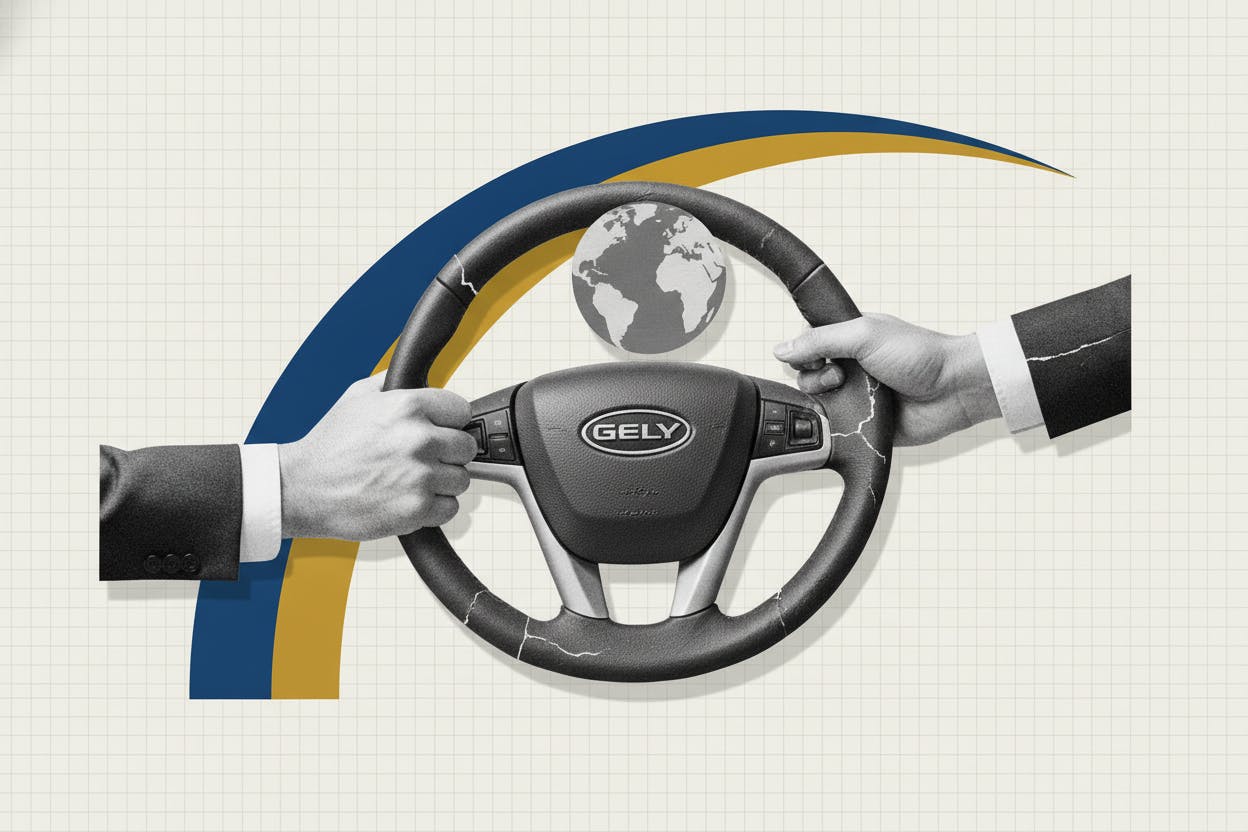
Geely founder Eric Li is handing over the chairmanship of Geely Auto to executive An Conghui, a move that signals the Chinese carmaker's growing focus on international markets. The company said the change is part of a planned succession, with Li remaining as chair of parent company Geely Holding Group.
What's happening
Geely Auto announced that An Conghui, previously an executive at the company, will become chair of the listed unit, effective Tuesday. The reshuffle also sees executive director Gan Jiayue promoted to CEO, replacing Gui Shengyue, who moves to vice chair. Geely said Gan's management background supports its long-term goals.
Eric Li, who founded Geely decades ago, will stay at the helm of Geely Holding Group, the parent company that owns a portfolio of automotive brands including Volvo Cars and Polestar. The separation of roles is a common step for family-founded companies as they mature, allowing founders to focus on broader strategy while professional managers run day-to-day operations.
Why overseas sales matter
The leadership change comes as Geely sets its sights on a significant expansion beyond China. The company is targeting two-thirds of its sales from overseas markets, a major shift for a carmaker that has historically relied heavily on its domestic market.
Chinese automakers have been pushing aggressively into Europe, Southeast Asia and other regions, driven by slowing growth at home and intensifying competition in the world's largest auto market. Geely's strategy includes leveraging its ownership of Volvo and Polestar to build brand recognition abroad, as well as developing its own international models.
Export growth has become a key theme for Chinese carmakers, particularly as domestic EV price wars squeeze margins. Geely itself has faced pressure from these dynamics, with its record revenue failing to lift profit as the EV price war bites, as we reported earlier.
What it means for investors
For everyday investors, the leadership transition is a signal about Geely's strategic direction. The appointment of An Conghui, who has deep experience in the company's international operations, suggests that overseas expansion will be a top priority under the new management team.
Succession plans can be a positive sign for investors when they are orderly and well-communicated, as they reduce uncertainty about who will lead the company. However, the real test will be execution: whether Geely can achieve its ambitious export targets while maintaining profitability.
Investors should also watch how the new leadership handles the competitive pressures in China's EV market, where price cuts have eroded margins across the industry. The company's ability to grow overseas sales could help offset some of that domestic pressure, but it also brings new challenges, including tariffs, regulatory hurdles and brand-building in unfamiliar markets.
Geely's move is part of a broader trend among Chinese automakers, many of which are looking to international markets for growth. The success of these efforts will depend on factors such as product quality, local partnerships and the ability to navigate geopolitical tensions.
For now, the leadership change appears to be a carefully planned transition rather than a sudden shift. Li's continued involvement as chair of the parent company provides some continuity, while the new team at Geely Auto will be responsible for delivering on the company's overseas ambitions.
As with any major strategic pivot, investors will want to monitor quarterly results for signs of progress. Key indicators include the share of revenue coming from overseas markets, the performance of Geely's international brands, and whether the company can maintain or improve its profit margins while expanding abroad.
The broader context is also important: global auto markets are undergoing rapid change, with electrification and digital technology reshaping competition. Geely's ability to adapt to these trends, while also expanding its global footprint, will determine whether this leadership transition marks the beginning of a new growth phase or simply a change at the top.