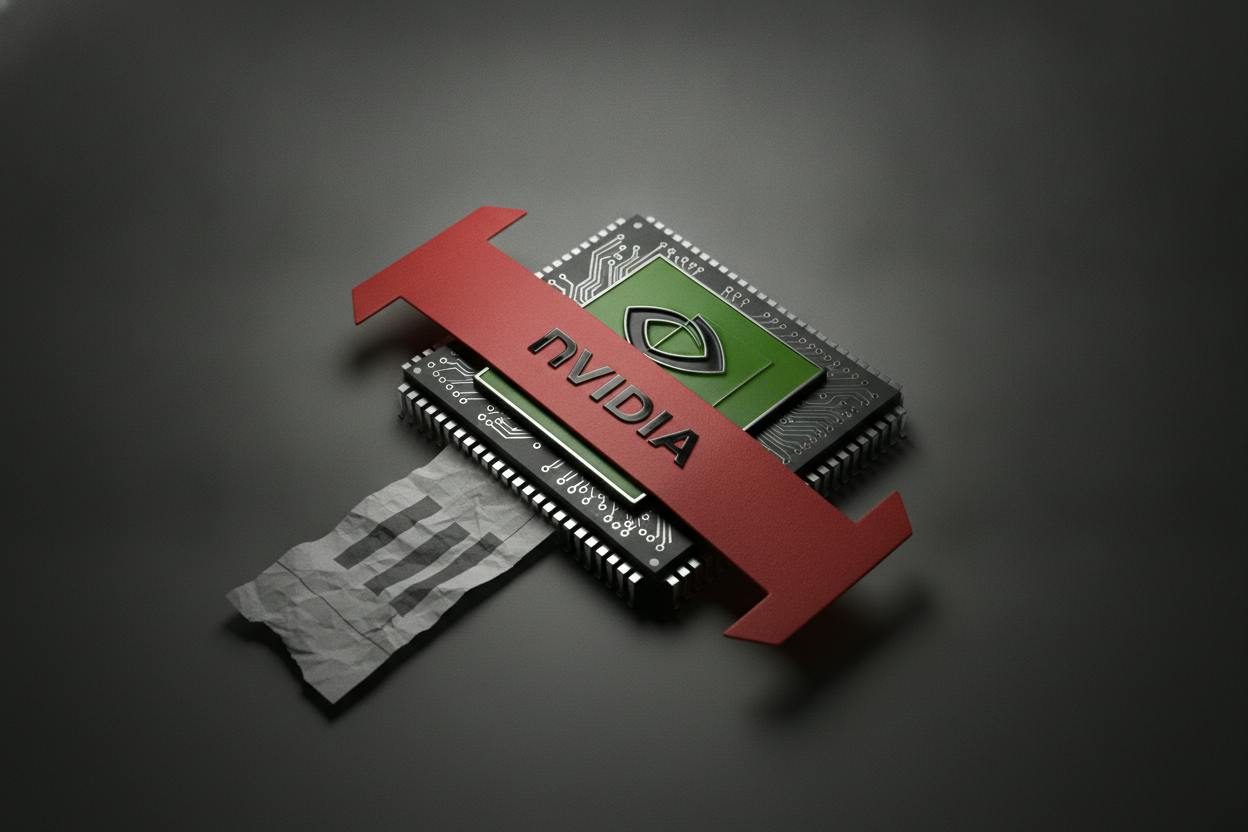
Wall Street's enthusiasm for Nvidia is cooling. On Wednesday, Baird downgraded the chipmaker to a “Neutral” rating and slashed its price target to $200 from $500, a dramatic cut that signals growing caution about the company's near-term prospects. The move comes just weeks before Nvidia is set to report earnings on November 17th.
Baird's analysts pointed to three main concerns: tighter US export rules that could limit Nvidia's sales to key markets like China, signs of softer spending on artificial intelligence infrastructure, and uncertainty around CEO leadership. Together, these factors have led the firm to take a more conservative stance on the stock.
Why the caution now?
Nvidia has been the poster child of the AI boom, with its graphics processing units (GPUs) powering everything from chatbots to data centers. But the company's fortunes are increasingly tied to geopolitical and macroeconomic forces beyond its control.
US export restrictions have already forced Nvidia to develop special chips for the Chinese market, but tighter rules could further limit its ability to sell there. China is a significant revenue source for the company, and any reduction in that business would weigh on growth.
At the same time, there are signs that the AI spending spree may be slowing. Some of Nvidia's biggest customers, including cloud providers and tech giants, have signaled they are becoming more disciplined with their capital expenditures. If that trend continues, demand for Nvidia's high-end chips could soften.
CEO uncertainty adds another layer of risk. While Nvidia's founder and CEO Jensen Huang has been a driving force behind the company's success, any leadership transition or instability could unsettle investors.
What this means for investors
For everyday investors, Baird's downgrade is a reminder that even the hottest stocks can face headwinds. Nvidia's shares have soared over the past year, but a price target cut of this magnitude suggests that Wall Street is starting to price in more risk.
It's important to note that a price target is not a guarantee of where the stock will go. It's simply an analyst's estimate of what the shares are worth. Baird's new target of $200 is still well above where Nvidia traded before the AI frenzy, but it's a significant reduction from the previous $500 target.
Investors should also keep an eye on the upcoming earnings report. Nvidia's results and guidance will provide a clearer picture of whether the concerns raised by Baird are justified. If the company reports strong numbers and upbeat guidance, the stock could recover. If not, the caution may be warranted.
The broader market context matters too. Nvidia is one of the most heavily weighted stocks in major indices like the S&P 500, so its performance can have ripple effects on the entire market. A sharp drop in Nvidia could drag down tech-heavy funds and index funds that many people hold in their retirement accounts.
Relatedly, Congress's focus on Nvidia exports is part of a larger geopolitical tug-of-war that could shape the company's future. And with China's central bank vowing more support to hit its growth target, the global economic backdrop remains uncertain.
What to watch next
Beyond the earnings report, investors will be watching for any updates on export regulations, as well as commentary from Nvidia's management about AI spending trends. The company's guidance for the coming quarters will be crucial in determining whether Baird's caution is an outlier or the start of a broader shift in sentiment.
It's also worth noting that other analysts may follow suit. When a major firm like Baird makes a bold move, it can influence others on the Street. However, it's equally possible that some analysts will see the downgrade as too aggressive and maintain or even raise their targets.
For now, the message from Baird is clear: Nvidia's growth story is still intact, but the road ahead may be bumpier than many expected. Investors should weigh these risks against the company's long-term potential and consider how Nvidia fits into their own portfolio strategy.