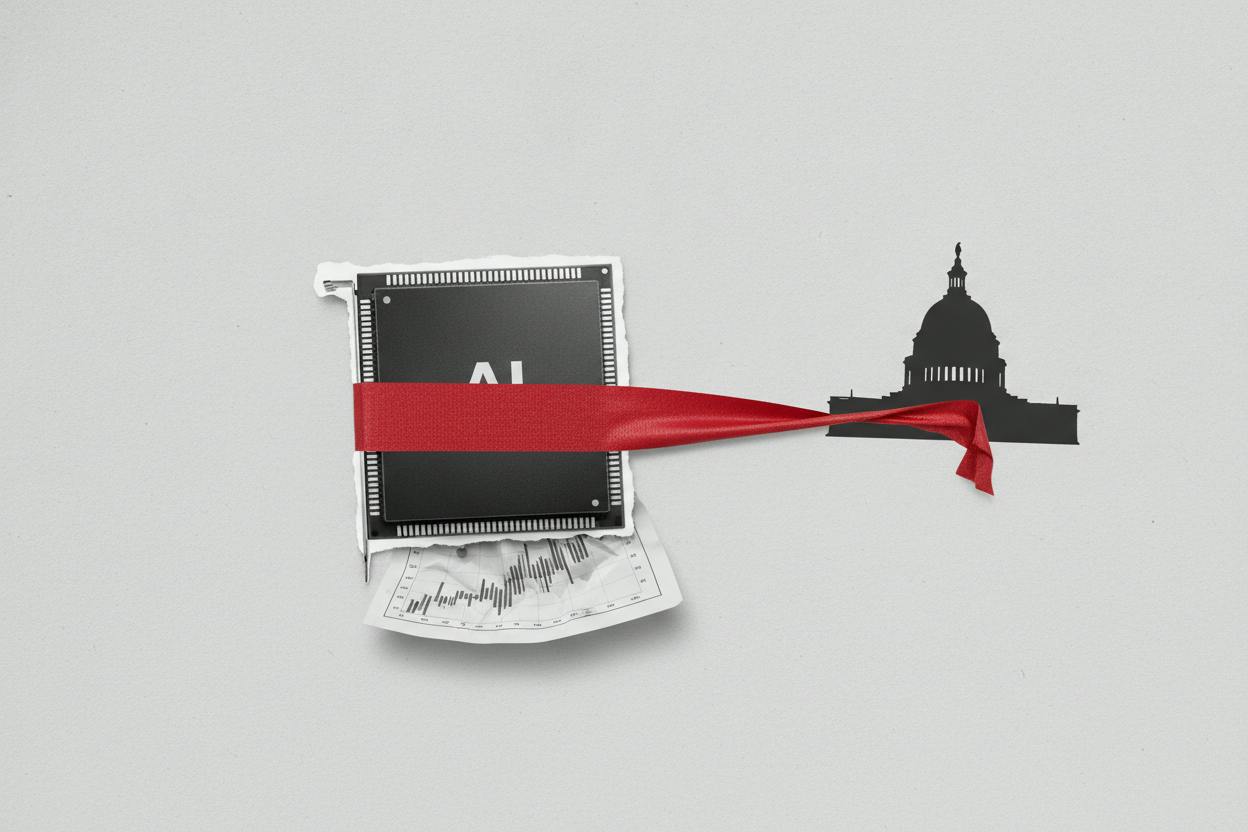
Wall Street is juggling two curveballs at once: a Federal Reserve that keeps hinting at more rate hikes, and a Congress that is suddenly focused on reining in Nvidia's AI chip exports. The combination has left Treasury futures pinned near Tuesday's lows, even as equity futures pointed slightly higher and oil held around $92.50 a barrel, according to Commerzbank Research.
With U.S. bond markets closed Wednesday for the Veterans Day holiday, investors had to digest the latest Fed commentary without the usual trading activity to guide them. Chicago Fed President Austan Goolsbee called the October inflation report “borderline disturbing,” while Dallas Fed President Lorie Logan said more rate hikes may be needed. Those remarks reinforced the market's growing belief that the central bank is not done tightening, even after a string of rate increases over the past year.
At the same time, politics is starting to look like a direct input into the AI trade. Senate Democratic Leader Chuck Schumer urged Congress to pass legislation on AI chip exports and criticized the Trump administration's handling of Nvidia. ABC News reported that House Republicans are considering subpoenaing Nvidia's CEO. And the Financial Times reported that bankers may pitch Anthropic, an AI startup, at a $1.5 trillion-plus IPO valuation. Together, these developments force markets to price both the cost of money and the rules that govern the sector's biggest growth story.
Why the Fed's words matter
Treasury futures are essentially bets on where interest rates will be in the future. When they fall, it usually means investors expect rates to stay higher for longer. The recent sell-off in Treasuries has been driven by a string of hotter-than-expected economic data, including the October inflation report that Goolsbee described as “borderline disturbing.”
Higher interest rates are a double-edged sword for investors. They make borrowing more expensive for companies, which can eat into profits. They also make safer assets like Treasuries more attractive, pulling money out of riskier investments like stocks. That is why tech stocks, which rely on future growth, tend to be especially sensitive to rate expectations. A hot inflation report can send yields up and tech shares down, as we saw recently.
Logan's suggestion that more hikes may be needed is a reminder that the Fed's fight against inflation is not over. Even if the central bank pauses at its next meeting, the door remains open for further action if price pressures persist. For everyday investors, that means volatility in both bonds and stocks is likely to continue.
The Nvidia export question
Nvidia is the world's leading maker of AI chips, the powerful processors that power everything from chatbots to data centers. Its stock has soared over the past year as demand for AI exploded, making it a bellwether for the entire sector. But its success has also made it a target for regulators and politicians worried about national security and the export of sensitive technology.
Schumer's push for legislation on AI chip exports is a significant escalation. It moves the debate from general policy talk to concrete action aimed at a specific company. Tighter export controls could lower Nvidia's expected overseas sales, especially in markets like China, which is a major buyer of its chips. That would directly hit the company's revenue and profit forecasts.
Meanwhile, the possibility of a subpoena for Nvidia's CEO adds a layer of political uncertainty. Hearings and rulemaking can drag on for months, making it harder for investors to predict future cash flows. As one analyst put it, Washington is no longer background noise for the AI trade; it is a live risk.
What it means for investors
For markets, the combination of higher rates and regulatory risk makes AI valuations more fragile. When a company like Nvidia faces the prospect of tighter export rules, investors tend to demand a higher risk premium. That can show up as lower stock prices, wider credit spreads, and more expensive options as implied volatility rises.
Because Nvidia is the bellwether for U.S. AI chips, shifts in its perceived risk often spill into the rest of the sector. Other AI-related stocks, from chipmakers to software companies, could see their valuations compress if investors start pricing in a more restrictive regulatory environment. The mixed moves in Asian ADRs this week are a reminder that sentiment can shift quickly.
For ordinary investors, the key takeaway is that the AI trade is no longer just about earnings growth. It is also about politics and interest rates. That means more volatility and less certainty. Diversification and a long-term perspective become even more important when the market is trying to digest multiple headwinds at once.
Looking ahead, investors will be watching for any concrete steps from Congress on AI chip exports, as well as the next inflation report. The upcoming CPI report will be crucial for rate expectations. If inflation stays hot, the Fed may have no choice but to keep hiking, which would put more pressure on stocks. If it cools, the market could breathe a sigh of relief.
In the meantime, the combination of Fed talk and congressional action is a reminder that markets don't operate in a vacuum. Policy decisions in Washington and at the central bank can have as much impact on your portfolio as any earnings report.



