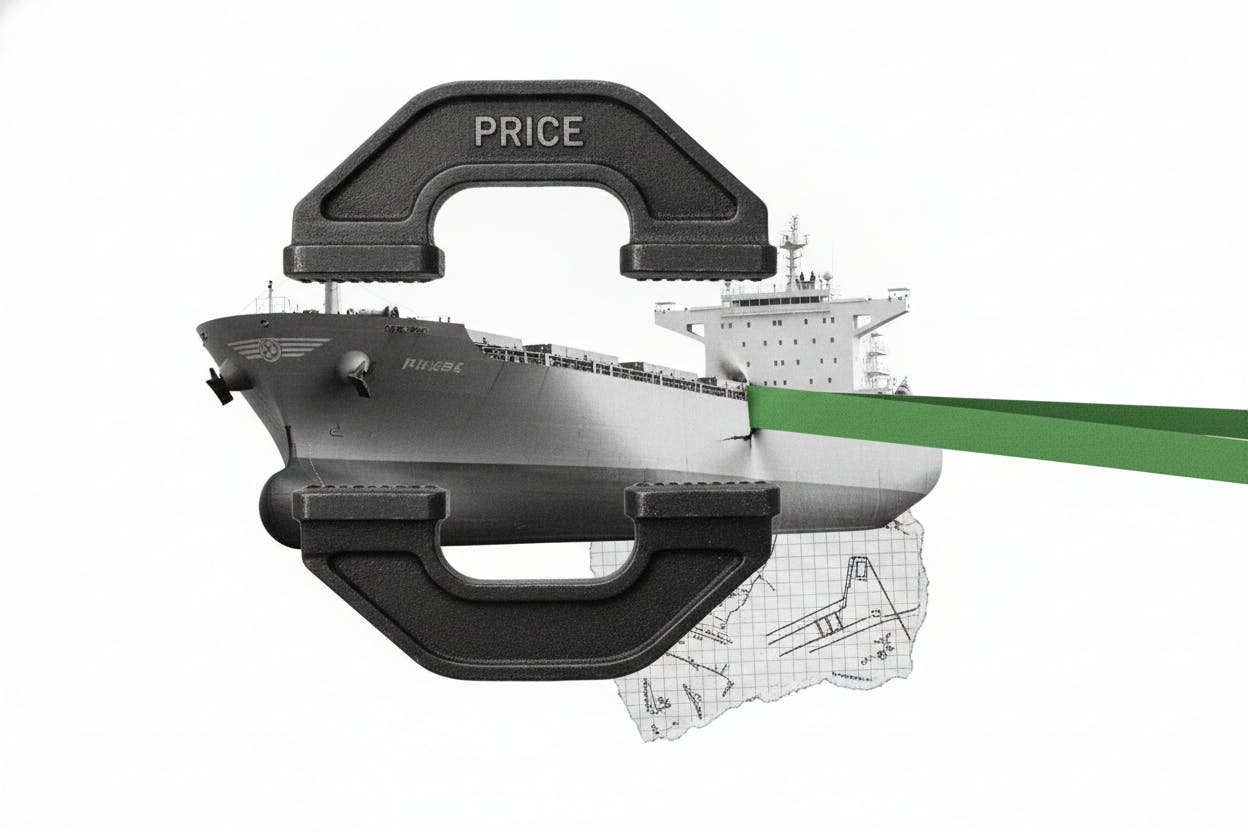
Shipping costs for dry bulk cargoes just hit their highest level in nearly five years, a sign that global demand for raw materials is firming up. The Baltic Dry Index (BDI), a key gauge of how much it costs to hire ships to move commodities like iron ore, coal, and grain, climbed 4.7% to 3,488 on the day. That's the strongest reading since October 2021, according to Reuters.
What's driving the surge?
The latest jump was led by capesize vessels, the largest class of dry bulk carriers, which are primarily used to transport iron ore. The capesize sub-index rose 7.1%, and average daily earnings for these ships reached about $51,298. Panamax and supramax rates also moved higher, suggesting that demand for moving raw materials is strengthening across different ship sizes.
Reuters attributed the strength to improving signals from the steelmaking sector, including steadier iron ore demand. Iron ore is a key ingredient in steel production, and when steelmakers expect to ramp up output, they need more of the raw material shipped from mines in places like Australia and Brazil to mills in China and elsewhere.
This isn't an isolated move. The BDI has been on a notable upward trend recently, with the index previously hitting 3,331, its highest since late 2023, on strong capesize rates. The current level marks a significant acceleration, reflecting a combination of tighter vessel supply and firmer demand for commodities.
Why the Baltic Dry Index matters
For everyday investors, the Baltic Dry Index is often seen as a leading indicator of global economic activity. Because it measures the cost of shipping raw materials, it can signal how much manufacturing and construction is happening around the world. When the index rises, it typically suggests that demand for commodities is growing, which can be a positive sign for the global economy.
However, the index is also notoriously volatile. It can be influenced by factors like fleet capacity, port congestion, and seasonal patterns, not just underlying demand. So a single day's jump, while notable, doesn't necessarily mean a sustained trend.
What it means for investors
For investors, the rise in shipping rates has several implications. First, it can be a tailwind for shipping companies, whose revenues are directly tied to freight rates. Higher rates mean better profitability for firms that own and operate dry bulk vessels.
Second, it can signal strength in the commodities complex, particularly iron ore and steel. That could be relevant for investors in mining companies or steel producers, as well as for those tracking broader industrial activity.
On the flip side, higher shipping costs can feed into the prices of goods that rely on raw materials, potentially adding to inflationary pressures. Central banks, including the Federal Reserve, are watching inflation closely, and any sustained increase in shipping costs could be a factor in their policy decisions. For instance, Fed officials have warned that rates may need to rise if inflation stays sticky, and higher input costs could contribute to that stickiness.
It's also worth noting that shipping rates can be affected by geopolitical risks. For example, tensions in the Middle East have previously put oil shipping at risk, as seen when oil held near a one-month high as Hormuz shipping risks persisted. While the current dry bulk rally is tied to iron ore demand, any disruption to key shipping lanes could have broader implications for freight costs.
What to watch next
Investors will be watching whether the BDI can sustain its upward momentum. Key factors include the pace of Chinese steel production, which is the largest driver of iron ore demand, and the availability of vessels. If demand remains firm and supply stays tight, rates could stay elevated. Conversely, any slowdown in global manufacturing or an increase in fleet capacity could quickly reverse the trend.
For those with exposure to shipping stocks or commodities, the current environment looks supportive. But as always, it's important to remember that shipping rates are cyclical and can turn quickly. Keeping an eye on the BDI and related indicators can help investors gauge the direction of the global economy and adjust their portfolios accordingly.
In the meantime, the jump to a near five-year high is a clear signal that the global trade in raw materials is heating up—a development worth noting for anyone invested in the broader market.



