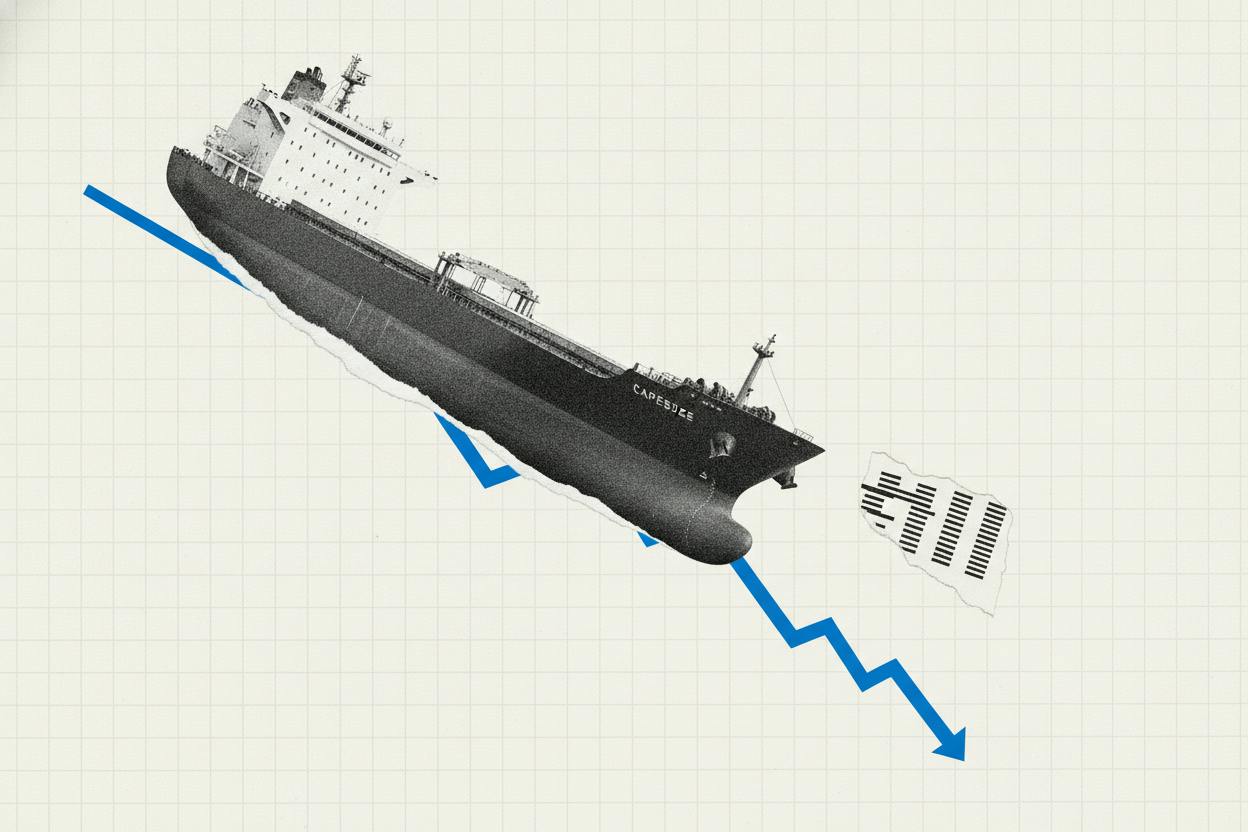
The Baltic Dry Index (BDI), a widely watched barometer of global shipping costs for dry bulk cargoes, has fallen to its lowest level in more than two months. The benchmark dropped 4.78% to 2,667 on Tuesday, marking its eighth consecutive daily decline, according to data from the Baltic Exchange.
The slide was led by a sharp pullback in capesize freight rates—the segment that carries the largest vessels and is most sensitive to industrial commodity demand. The capesize sub-index tumbled 9.11% to 3,630, while average daily earnings for these ships fell by $3,302 to $29,417, as reported by Reuters.
Why capesize rates matter
Capesize vessels are the giants of the dry bulk fleet, each capable of hauling more than 100,000 tonnes of cargo. They are the workhorses of the iron ore and coal trades, moving raw materials from major exporters like Australia and Brazil to steelmakers, primarily in China.
Because of that heavy reliance on iron ore and coal, capesize rates are a sensitive gauge of global industrial activity, especially in China, which accounts for the bulk of seaborne iron ore imports. When Chinese steel demand softens, it shows up quickly in capesize earnings.
Reuters noted that Dalian iron ore futures fell as more blast furnaces went into maintenance, a sign that steel producers are trimming output. At the same time, higher port inventories in Australia and Brazil pointed to ample supply, putting further downward pressure on rates.
The weakness, however, was not uniform across the dry bulk market. Panamax rates also slipped, but supramax rates edged higher. That divergence suggests the current softness is concentrated in the largest-ship lanes rather than across every corner of bulk shipping.
What it means for investors
For investors in dry bulk shipping companies, the drop in capesize earnings is more than just a headline number. A $3,302 daily decline in earnings can hit shipowner cash flows hard because many of their costs—such as crew wages, insurance, and loan payments—do not move as quickly as spot freight rates.
That means the effective hit to time-charter-equivalent cash flow, a key industry measure of daily profit after operating costs, can be larger than the 9.11% slide in the capesize index suggests. For shipowners with heavy capesize exposure and a reliance on spot market charters, this operating leverage can pressure near-term profits and, in turn, dividend capacity.
Investors often watch the BDI as a leading indicator for the broader shipping sector. When capesize rates are the main force pulling the index down, as they are now, market participants typically demand stronger evidence of a rebound before they are willing to pay up for shipping stocks.
The current weakness comes against a backdrop of mixed signals in global trade. While China's trade surplus recently hit a 20-month high as exports surged to a record, the softer iron ore demand suggests that the industrial side of the Chinese economy may be cooling. That divergence is something investors will be watching closely in the coming weeks.
For those with exposure to dry bulk shipping, the key question is whether this is a temporary dip or the start of a more sustained downturn. The fact that supramax rates are still rising offers some hope that the weakness is not broad-based, but the capesize segment remains the dominant driver of the index.
As always, spot freight rates can reset quickly, and a rebound in Chinese steel demand or a tightening of vessel supply could reverse the trend just as fast. Until then, the Baltic Dry Index's slide to a two-month low serves as a reminder of how quickly conditions can change in the cyclical world of shipping.