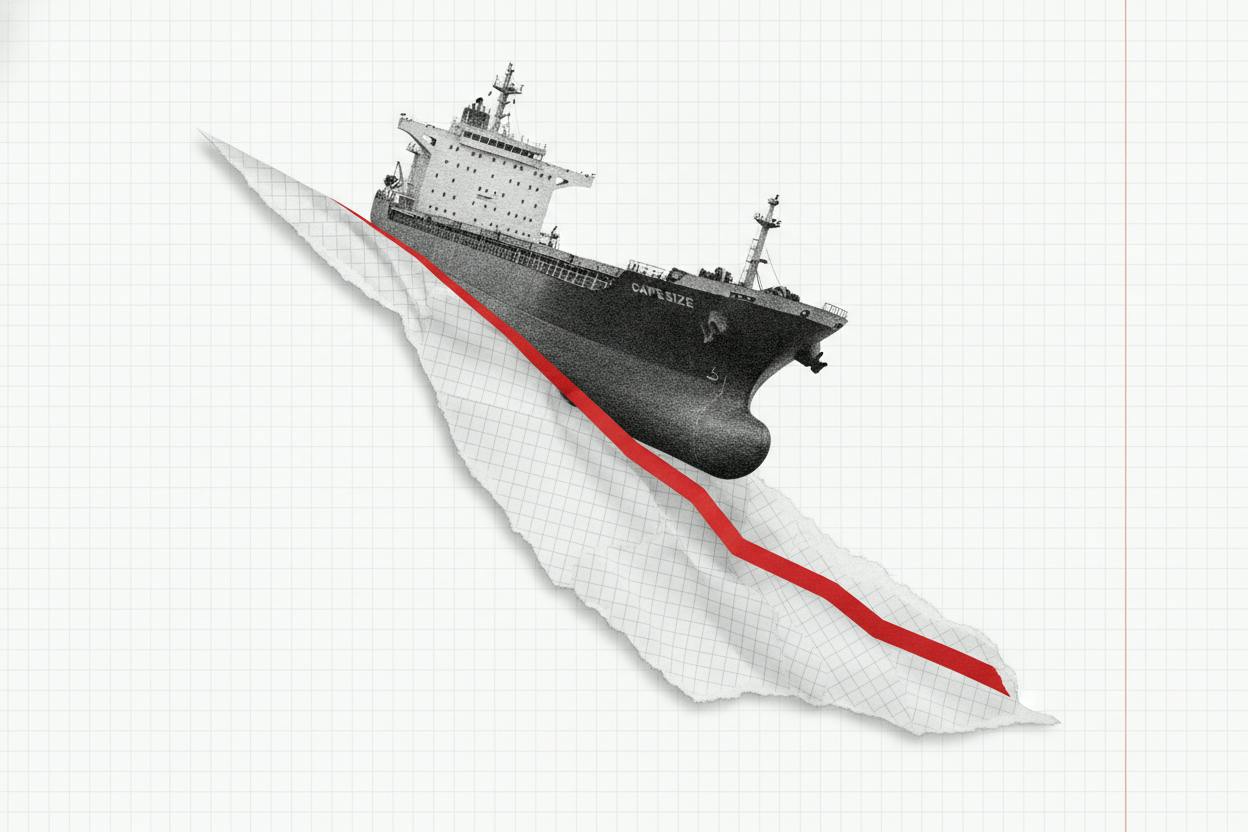
The Baltic Dry Index (BDI), a closely watched barometer of global shipping costs for bulk commodities, fell 0.7% on Thursday to 2,973, its lowest level since August 25. The decline was driven mainly by a pullback in rates for capesize vessels, the largest class of bulk carriers.
What is the Baltic Dry Index?
The BDI is compiled by the Baltic Exchange and tracks what shipowners can charge to move dry bulk commodities such as iron ore, coal, and grain across the world's oceans. Because it reflects real-time supply and demand for shipping capacity, it is often seen as a leading indicator of global economic activity. When the index rises, it usually signals stronger demand for raw materials; when it falls, it can point to softening trade.
Thursday's drop was mostly a capesize story. The capesize sub-index fell 1.9% to 4,512, and estimated daily earnings for these vessels slipped by $768 to $37,420. Capesizes are the giants of the bulk fleet, typically used to haul cargoes of around 150,000 tonnes of iron ore or coal. Their rates are particularly sensitive to demand from major steel-producing regions, especially China.
Why are rates cooling?
The softening in capesize rates aligns with weaker signals from China, the world's largest buyer of iron ore. Dalian iron ore futures hit an 18-month low after a holiday break, as weak steel profit margins and subdued demand weighed on the market. When steelmakers are not making money, they tend to reduce output, which in turn cuts the need for iron ore shipments and puts downward pressure on freight rates.
The pullback in the BDI comes after a period of strength. Earlier in the year, the index had climbed to multi-month highs, supported by robust commodity demand and supply disruptions in some shipping routes. Now, with Chinese steel demand showing signs of fatigue, the market is readjusting.
What it means for investors
For everyday investors, the BDI is not just a niche shipping metric—it can offer clues about the health of global trade and the broader economy. A sustained decline in the index could signal weaker demand for raw materials, which might affect commodity prices and, in turn, companies in sectors like mining, steel, and shipping.
However, it's important to note that the BDI is volatile and can be influenced by short-term factors such as port congestion, weather, and vessel availability. A single day's move is rarely a reason to change an investment strategy. Still, investors watching the index may want to keep an eye on Chinese economic data and steel production figures, as these are key drivers of bulk shipping demand.
The recent drop in the BDI also comes amid broader market uncertainty. Central banks, including the Federal Reserve, have signaled that interest rates may stay higher for longer, which could weigh on global growth and commodity demand. In this environment, shipping rates could remain under pressure.
Looking ahead
Market participants will be watching to see whether the BDI stabilizes or continues to slide. Key factors to monitor include Chinese iron ore demand, steel output, and any changes in global trade flows. The capesize segment, in particular, will be in focus, as it is the most sensitive to swings in bulk commodity demand.
For now, the Baltic Dry Index's dip to its lowest level in over a month serves as a reminder that the global economy is still navigating a delicate balance between supply and demand. As always, investors should view such data points as part of a broader picture rather than as isolated signals.