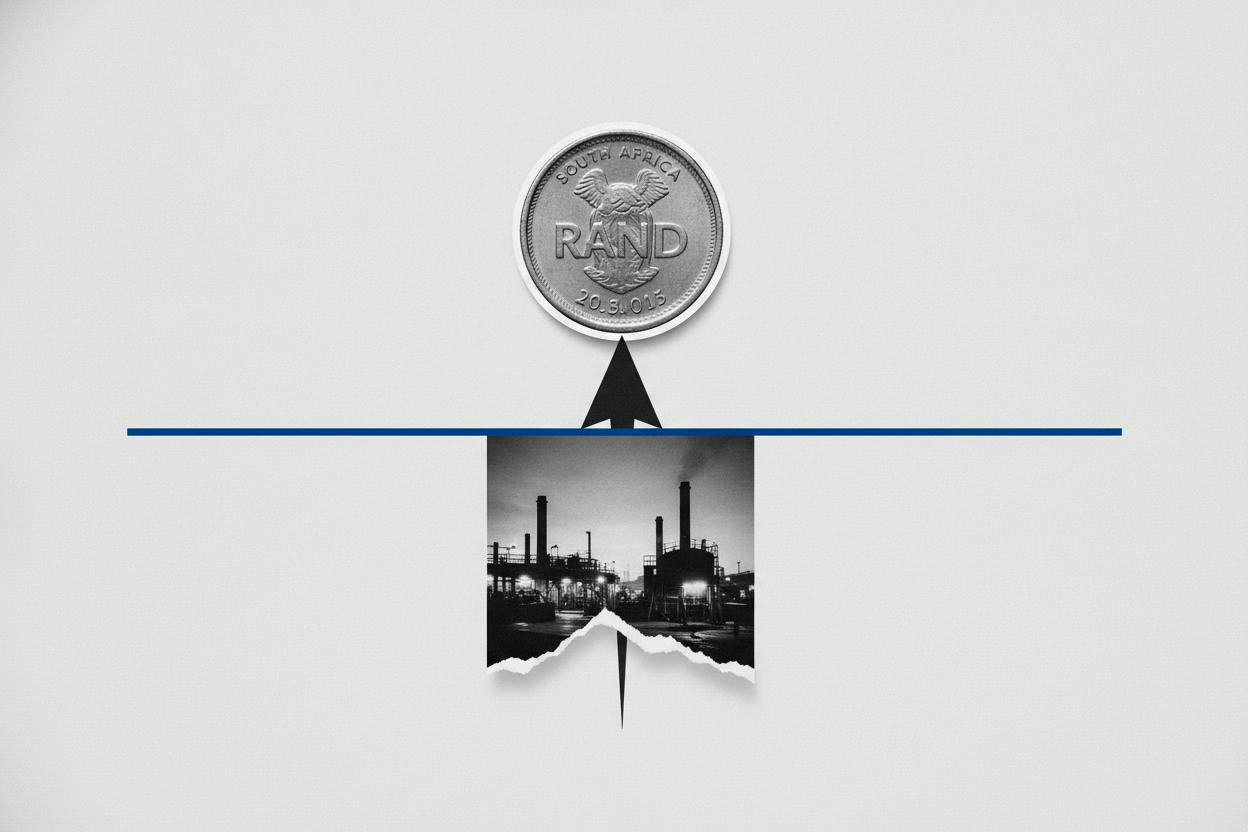
South Africa's rand showed remarkable composure on Thursday, trading near 16.6149 per US dollar, even as the country's manufacturing sector suffered a sharp contraction in August. The currency's stability came despite a 4.3% year-on-year drop in factory output, a much worse reading than economists had expected.
The muted reaction highlights how global interest rate expectations, rather than domestic economic data, are currently driving the rand. With the US dollar roughly flat and Federal Reserve policymakers appearing divided on another rate hike, the local shock did not automatically translate into a big move in the exchange rate.
Factory slump: a clear miss
August's manufacturing output fell 4.3% compared with the same month last year, a stark reversal from July's 1.1% gain. Economists polled by Reuters had forecast a 0.6% rise, making the actual figure a significant disappointment.
Nedbank, one of South Africa's largest banks, suggested that July's rebound was likely a temporary blip. The bank pointed to persistent headwinds facing producers, including high input costs, expensive and unreliable electricity supply, and ongoing supply shortages. These pressures have been a recurring theme for South African manufacturers, who have struggled with load-shedding and logistical bottlenecks for years.
For ordinary investors, the manufacturing data is a reminder that the country's economic recovery remains fragile. Weak factory output often signals softer overall growth, which can weigh on corporate earnings and employment. However, the rand's reaction shows that, at least for now, currency traders are more focused on the global interest rate picture.
Why the rand shrugged it off
The rand is highly sensitive to global interest rates because many international investors hold it for "carry" — a strategy where they borrow in low-yielding currencies like the dollar or yen and invest in higher-yielding assets like South African bonds. This can be profitable as long as the currency does not depreciate sharply, but it also makes the rand vulnerable to shifts in global risk sentiment and rate expectations.
On the day, the rand took its cue from Fed pricing rather than the factory slump. The minutes from the Federal Reserve's September meeting showed policymakers split on whether to raise interest rates again this year. That uncertainty kept the dollar steady, and the rand followed suit.
South Africa's longer-term borrowing costs also remained elevated, with the 2035 government bond yield around 8.855%. High yields can attract foreign investors seeking income, which helps support the currency even when growth data disappoints.
This dynamic is not unique to South Africa. Other emerging market currencies, such as the Ugandan shilling and the Indian rupee, have also been buffeted by dollar strength and global rate moves. The rand's relative calm stands in contrast to those currencies, which have faced more pressure.
What it means for investors
For investors with exposure to South African assets, the key takeaway is that the rand's stability could be short-lived. If US rate expectations reprice — for example, after a strong inflation report or hawkish comments from Fed officials — the dollar could strengthen, and USD/ZAR could swing sharply, even if South African data continues to point to slower activity.
Conversely, if the Fed signals it is done hiking, the rand could benefit from continued carry demand. But that would also depend on South Africa's own economic fundamentals, which remain challenged by weak growth, high unemployment, and structural constraints like electricity shortages.
For everyday investors, the main implication is that currency movements can be driven by factors far beyond a country's own economic reports. A weak factory number does not always mean a weaker currency, especially when global forces are at play. That is why it is important to look at the broader picture — including central bank policy and global risk appetite — when trying to understand exchange rate moves.
As always, diversification remains a prudent strategy. Investors who hold South African assets should be aware of the currency risk and consider how global rate changes might affect their portfolios. The rand's calm today could easily turn into volatility tomorrow, so staying informed and prepared is key.