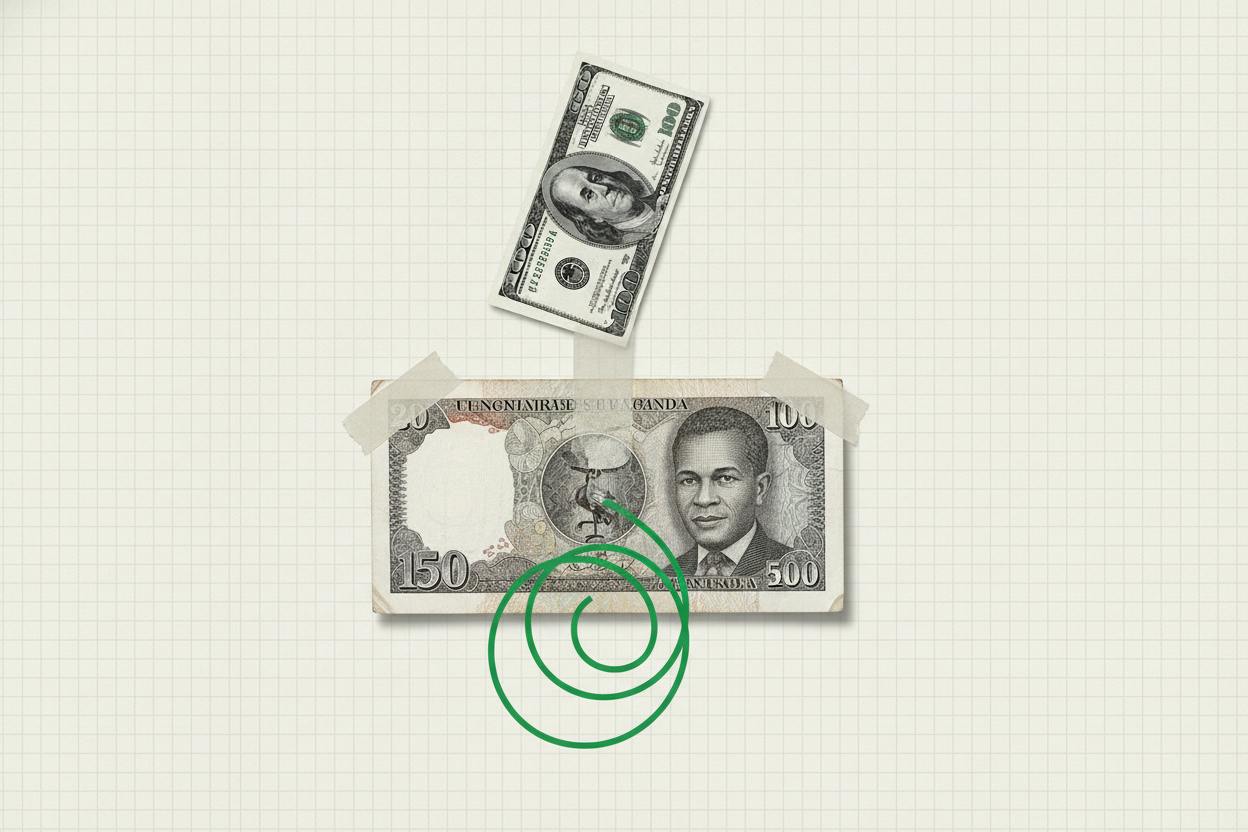
Uganda's shilling has tumbled to fresh record lows, and traders are bracing for more pain in the days ahead as local businesses scramble to buy US dollars. The currency's slide is being driven by heavy demand from importers, energy companies, and telecom firms, according to Reuters' week-ahead Africa FX preview.
Commercial banks were quoting the shilling at 4,090/4,100 per dollar, compared with 3,960/3,970 last Thursday. That marks a drop of more than 11% this year, with repeated record lows recorded this month alone.
Why the shilling is under pressure
The core issue is a surge in dollar demand that is hitting a market that can be thin on liquidity. Importers need dollars to pay for goods, energy firms need them for fuel purchases, and telecom companies require hard currency for equipment and other costs. When demand spikes, the shilling weakens quickly.
The Bank of Uganda has reiterated that it won't defend any specific exchange rate level, even if it steps in to smooth extreme swings. That stance can have a powerful effect: when a central bank signals it won't hold the line, companies that need dollars often stop waiting for a better price. They pull forward purchases to avoid paying even more later, especially ahead of a seasonal demand bump.
Alpha Capital Partners, an investment firm, said some companies are stockpiling dollars ahead of the fourth-quarter holiday peak. High energy costs are adding to the pressure, as fuel imports require more dollars at a time when the shilling is already weak.
A self-reinforcing loop
In a thin market, this dynamic can become a self-reinforcing loop. Each new low encourages more precautionary buying, which pushes the rate weaker again. For investors and businesses with Uganda exposure, that raises the odds of more record lows in the near term and faster pass-through into dollar-priced costs like fuel and other imported inputs.
The situation in Uganda is part of a broader African currency story. Ghana's cedi is also under strain on unmet dollar demand, while Nigeria, Kenya, and Zambia look steadier. Those currencies are being supported by central bank dollar sales, more reliable inflows and reserves, and hard-currency selling ahead of tax payments.
What it means for investors
For everyday investors, the shilling's slide matters in a few ways. If you hold Ugandan assets or have exposure to companies that operate there, a weaker currency can erode returns when converted back to dollars or other major currencies. It also makes imported goods more expensive, which can feed into inflation and affect consumer spending.
For those with no direct Uganda exposure, the story is a reminder of how currency moves can ripple through emerging markets. A weaker shilling can make Ugandan exports more competitive, but it also raises the cost of servicing dollar-denominated debt and can deter foreign investment if volatility persists.
The Bank of Uganda's hands-off approach is notable. By refusing to defend a specific level, it is effectively letting the market find its own equilibrium. That can be painful in the short term, but it may help avoid a more abrupt adjustment later. Still, in a thin market, the risk of overshooting is real.
Traders will be watching to see whether the central bank steps in to smooth extreme swings, and whether dollar demand from importers and energy firms eases after the holiday season. Until then, the shilling's record-low streak may continue.
For a broader view of currency pressures across the continent, see our analysis of how oil and dollar strength are affecting African markets. And for a look at how other central banks are handling similar pressures, check out how India's central bank is defending the rupee.