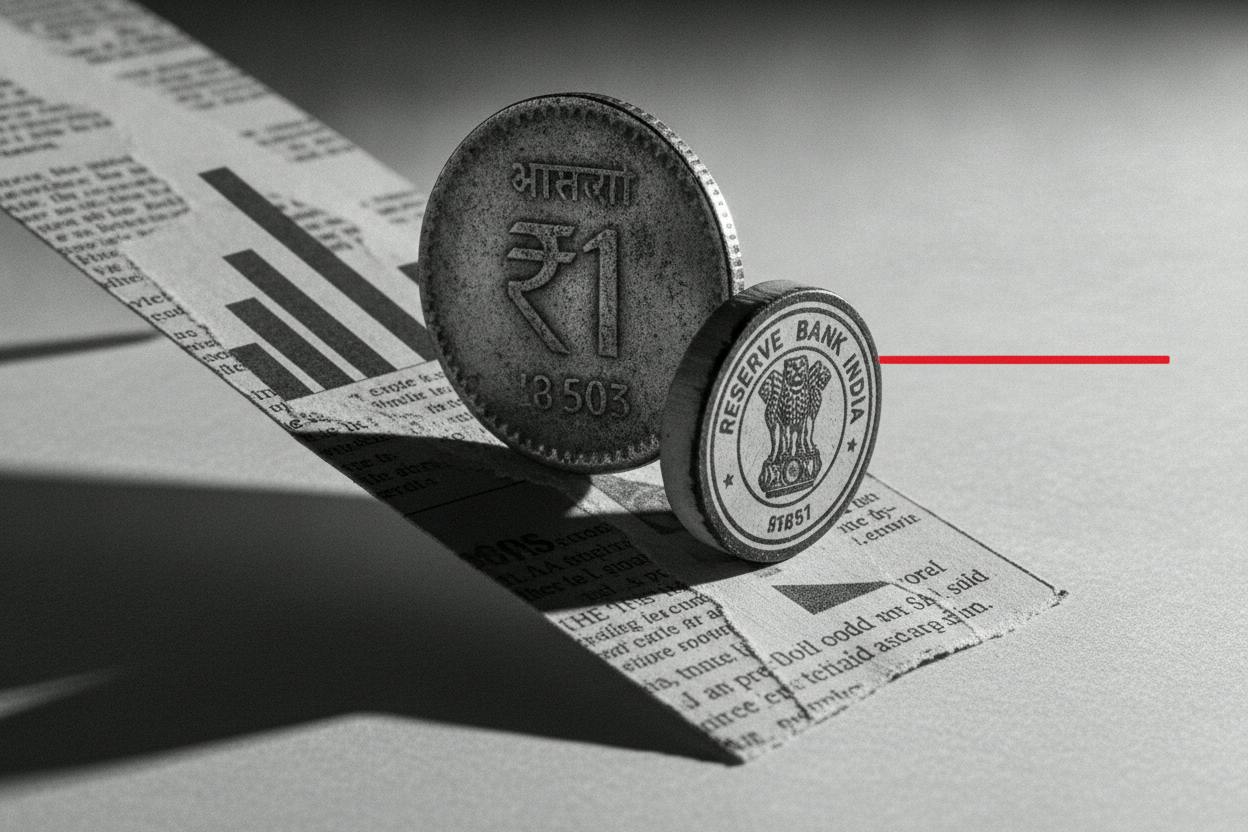
India's rupee closed Thursday near 96.78 against the US dollar, and traders say the Reserve Bank of India (RBI) had to step in to keep the currency from breaching the closely watched 97 level. The intervention came as Brent crude hovered around $104 a barrel and the Federal Reserve's hawkish outlook kept the dollar firm, a combination that has been pressuring currencies across Asia.
Why the rupee is under pressure
India is a major importer of oil, and crude is priced in dollars. So when Brent sits above $100, the country's fuel import bill swells, and demand for dollars in the local market tends to rise. That dynamic typically pushes the rupee weaker.
At the same time, the Federal Reserve has signaled that US interest rates may stay higher for longer to combat inflation. Higher US rates make dollar-denominated assets more attractive, drawing investment away from emerging markets like India. That outflow of capital adds to the downward pressure on the rupee and other Asian currencies.
The RBI has a history of intervening in the foreign exchange market to smooth sharp moves and prevent excessive volatility. By selling dollars or using other tools, the central bank can support the rupee, but it cannot hold back market forces indefinitely.
What the 97 level means
The 97 mark is seen as a psychological barrier for the rupee. When a currency approaches such a level, traders often watch closely for signs of official intervention. The RBI's presence near that level signals its willingness to defend the currency, but it also highlights the underlying weakness.
This is not the first time the RBI has had to act. Earlier, the rupee slid to 96.77 per dollar even as the central bank turned more hawkish, and the RBI's swap operations have at times muddied the forward signal for the currency. These moves show that the central bank is actively managing the exchange rate, but the pressure from global factors remains intense.
Broader Asian currency picture
The rupee is not alone in feeling the strain. Across Asia, currencies have been under pressure from the strong dollar and high energy prices. China's yuan has held up relatively well after the Golden Week holiday, but other regional currencies have not been as fortunate. The dollar itself has steadied near an 18-month high as Fed minutes suggested patience on rate cuts, adding to the headwinds for emerging-market assets.
Oil's rise has also had knock-on effects beyond currencies. For instance, palm oil futures jumped nearly 2% as India's buying picked up and crude strengthened, showing how energy prices ripple through commodity markets.
What it means for investors
For everyday investors, a weaker rupee has mixed implications. On one hand, it can make imported goods more expensive, potentially feeding into inflation. That could prompt the RBI to keep interest rates higher, which affects borrowing costs for home loans and business credit.
On the other hand, a weaker rupee can benefit exporters, as their goods become cheaper for foreign buyers. Indian IT companies, pharmaceutical firms, and textile exporters often see a boost when the rupee depreciates.
For those with investments in Indian stocks, the currency's slide can be a double-edged sword. Foreign investors may become more cautious, as a falling rupee erodes the value of their returns when converted back to dollars. That can lead to outflows, which weigh on equity markets. Indeed, India's Sensex recently hit a 32-month low as oil prices and rate hikes bit into investor sentiment.
However, the RBI's intervention suggests the central bank is keen to avoid a disorderly depreciation, which could provide some stability. Investors should watch for further moves in oil prices and any signals from the Fed about the path of US rates, as these will likely determine the rupee's next direction.
Looking ahead
The immediate focus will be on whether the RBI can hold the 97 line. If oil prices stay elevated and the dollar remains strong, the central bank may need to keep intervening, which can drain foreign exchange reserves. But if global conditions ease, the rupee could find some respite.
For now, the message from the market is clear: the rupee's fate is tied to oil and the dollar, and the RBI is doing what it can to manage the fallout. Investors would do well to keep an eye on these global factors, as they have a direct bearing on the value of their money and investments.